


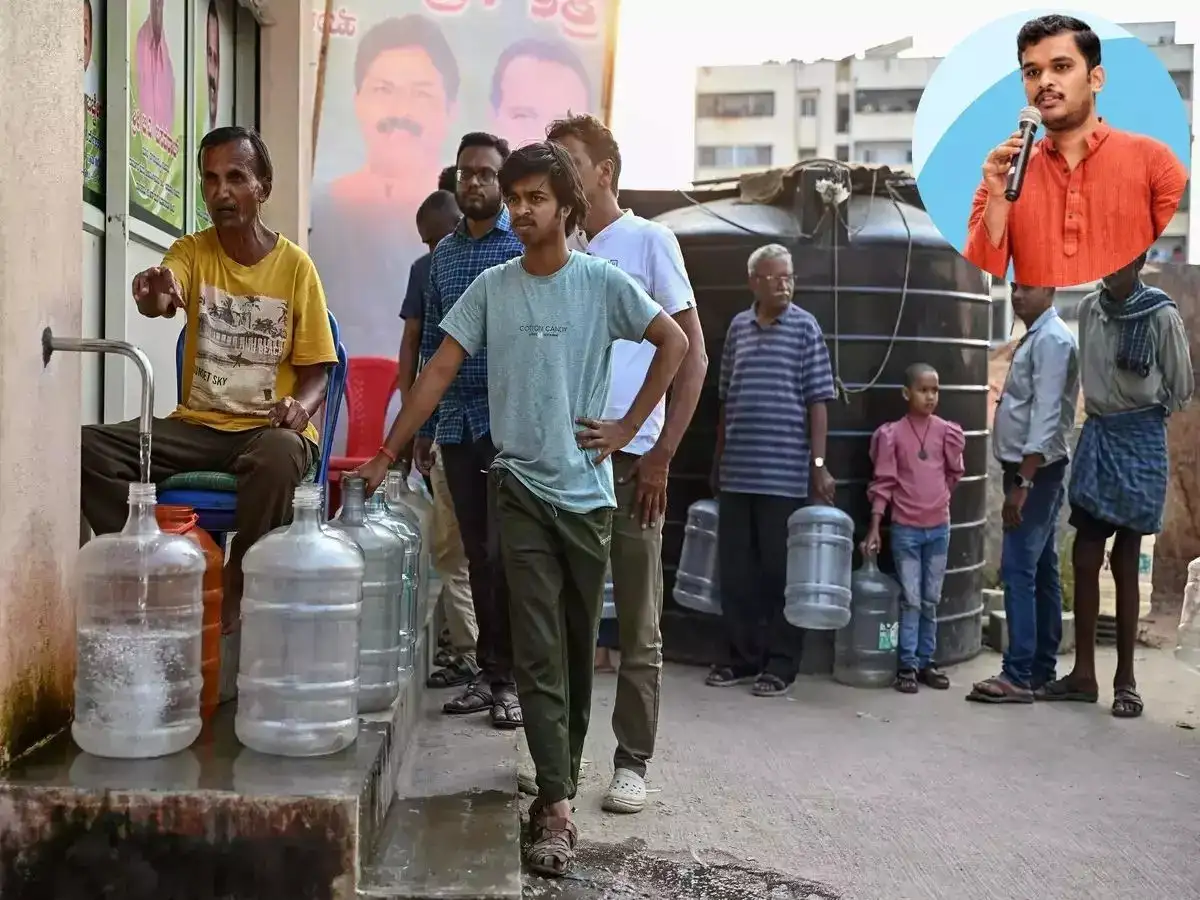
Concerns over water availability are intensifying in Bengaluru as projections of a weaker monsoon raise the risk of widespread stress across Karnataka.
With several regions expected to receive below-average rainfall, the implications for urban water security, groundwater levels, and supply systems are becoming increasingly significant.Authorities have identified multiple areas across the state that may face shortages if rainfall remains deficient, with Bengaluru’s expanding population placing additional pressure on already stretched resources. The city’s dependence on a combination of reservoir supply, groundwater extraction, and tanker networks makes it particularly vulnerable to fluctuations in monsoon performance.The emerging Bengaluru water stress scenario highlights the fragile balance between demand and supply in rapidly urbanising regions. As the city grows, water consumption continues to rise, often outpacing infrastructure expansion. A weak monsoon can quickly disrupt this balance, leading to reduced reservoir inflows and declining groundwater recharge.Urban planners warn that such conditions could trigger cascading effects across sectors.Residential areas may experience reduced supply or increased reliance on private tankers, while industries could face operational challenges. Informal settlements and low-income communities are likely to be the most affected, given their limited access to alternative sources.The risk of Bengaluru water stress also underscores long-standing issues in water management.
Leakage in distribution networks, inefficient usage, and inadequate rainwater harvesting have contributed to the city’s vulnerability.Addressing these structural challenges is critical for building resilience against climate variability.From a climate perspective, the situation reflects broader shifts in rainfall patterns across India.Irregular and less predictable monsoon cycles are becoming more common, complicating planning for water-dependent systems. For Bengaluru, this means that traditional reliance on seasonal rainfall is no longer sufficient to ensure stability.Experts suggest that a multi-pronged approach is needed to mitigate potential shortages. Enhancing storage capacity, promoting water conservation, and expanding wastewater recycling are among the measures that could help manage demand.Strengthening local water bodies and improving recharge mechanisms will also be essential for long-term sustainability.There are also governance considerations.Coordinated action between state agencies, urban local bodies, and community groups will be crucial in responding to emerging challenges. Early warning systems and transparent communication can help residents prepare for potential disruptions.As Bengaluru braces for uncertain rainfall, the focus is shifting towards proactive management rather than reactive measures.
The coming months will test the city’s ability to navigate water stress while maintaining equitable access for its diverse population.Ensuring resilience in the face of climatic uncertainty will require sustained investment, policy alignment, and community participation—factors that will ultimately shape the future of water security in one of India’s fastest-growing urban centres.
Also Read:Bengaluru Census Houselisting Shows Low Digital Uptake
