


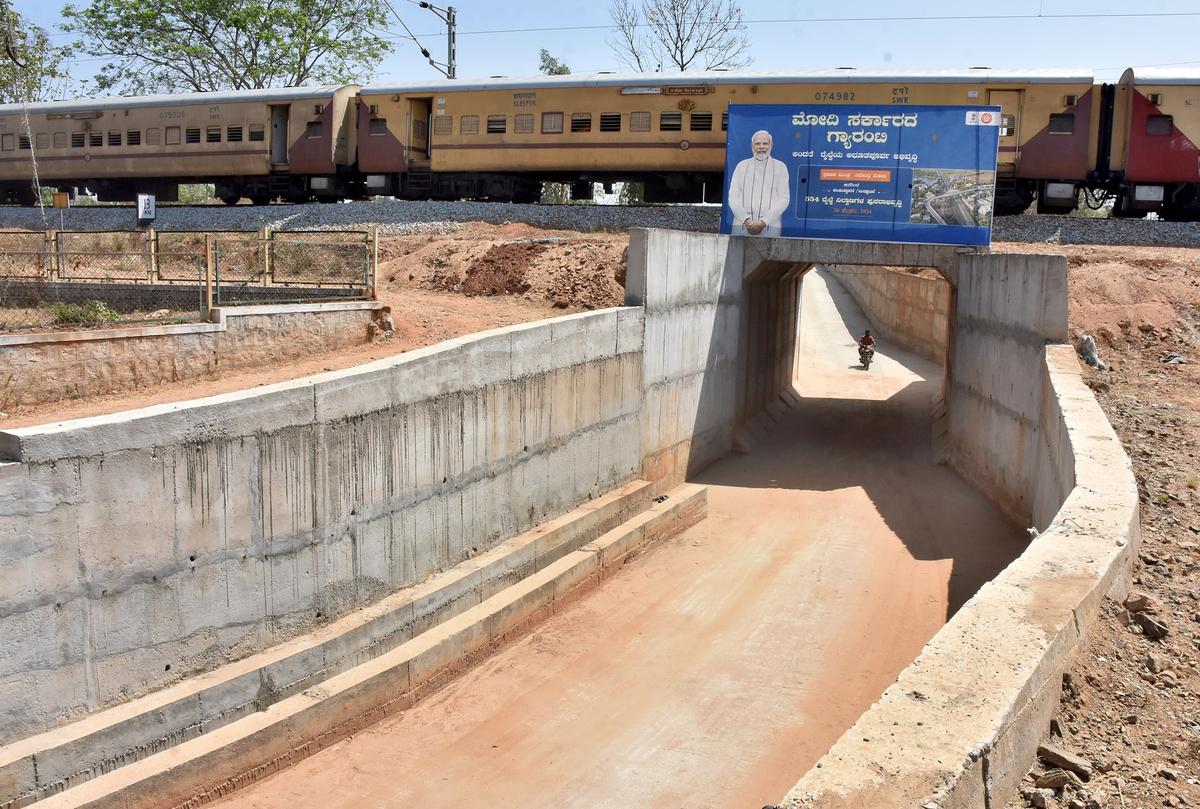
A key underbridge project in Bengaluru’s eastern corridor is nearing completion, with civic authorities preparing to open the Babusapalya railway underpass after finishing critical access road works aimed at improving local connectivity and easing traffic congestion.The infrastructure project is expected to provide smoother movement between densely populated residential neighbourhoods that have long struggled with traffic delays caused by railway crossings and fragmented road connectivity.
Officials overseeing the work indicated that final-stage road integration and surface improvements are currently underway before public access is formally permitted.The Bengaluru underbridge project comes amid growing pressure on the city’s transport infrastructure as rapid urban expansion continues to reshape peripheral and middle-income neighbourhoods. Areas around Babusapalya have witnessed significant residential growth over the past decade, intensifying demand for safer and more efficient mobility infrastructure.Urban planners say underpasses and grade separators are becoming increasingly important in Bengaluru’s evolving transport network, particularly in locations where railway crossings interrupt local traffic flow and emergency movement. Such interventions can help reduce travel delays, fuel wastage and vehicle idling in heavily used commuter corridors.The project also reflects the broader challenge of integrating legacy transport infrastructure with expanding urban development.Bengaluru’s railway lines, once positioned on the city’s outer edges, now pass through densely urbanised neighbourhoods where population growth has outpaced mobility planning and civic upgrades.
Residents in surrounding areas have previously raised concerns over long waiting times at railway crossings, especially during peak office hours and school commute periods. Transport analysts note that such bottlenecks disproportionately affect local economic activity, public transport efficiency and last-mile movement for pedestrians and small businesses.However, mobility experts caution that localised infrastructure projects must ultimately connect with larger multimodal transport planning strategies to deliver sustainable long-term benefits. While underbridges can improve operational traffic movement, they are not substitutes for comprehensive public transport systems and pedestrian-friendly urban design.The Bengaluru underbridge project is also expected to improve emergency response access and strengthen intra-neighbourhood connectivity, factors increasingly important in high-density urban environments vulnerable to congestion-related delays.Infrastructure observers say timely execution of medium-scale civic projects often carries outsized importance for public confidence in urban governance. Unlike large flagship developments that may take years to deliver, neighbourhood-level mobility improvements directly affect daily commuting experiences and local quality of life.
Authorities are expected to complete remaining finishing works and safety assessments before the corridor becomes operational. As Bengaluru continues balancing rapid real estate growth with infrastructure demands, projects such as the Babusapalya underbridge underline the increasing need for people-centric transport planning that prioritises accessibility, connectivity and resilient urban mobility systems.
Also Read:Bengaluru BRICS Summit Highlights Governance And Accountability
