


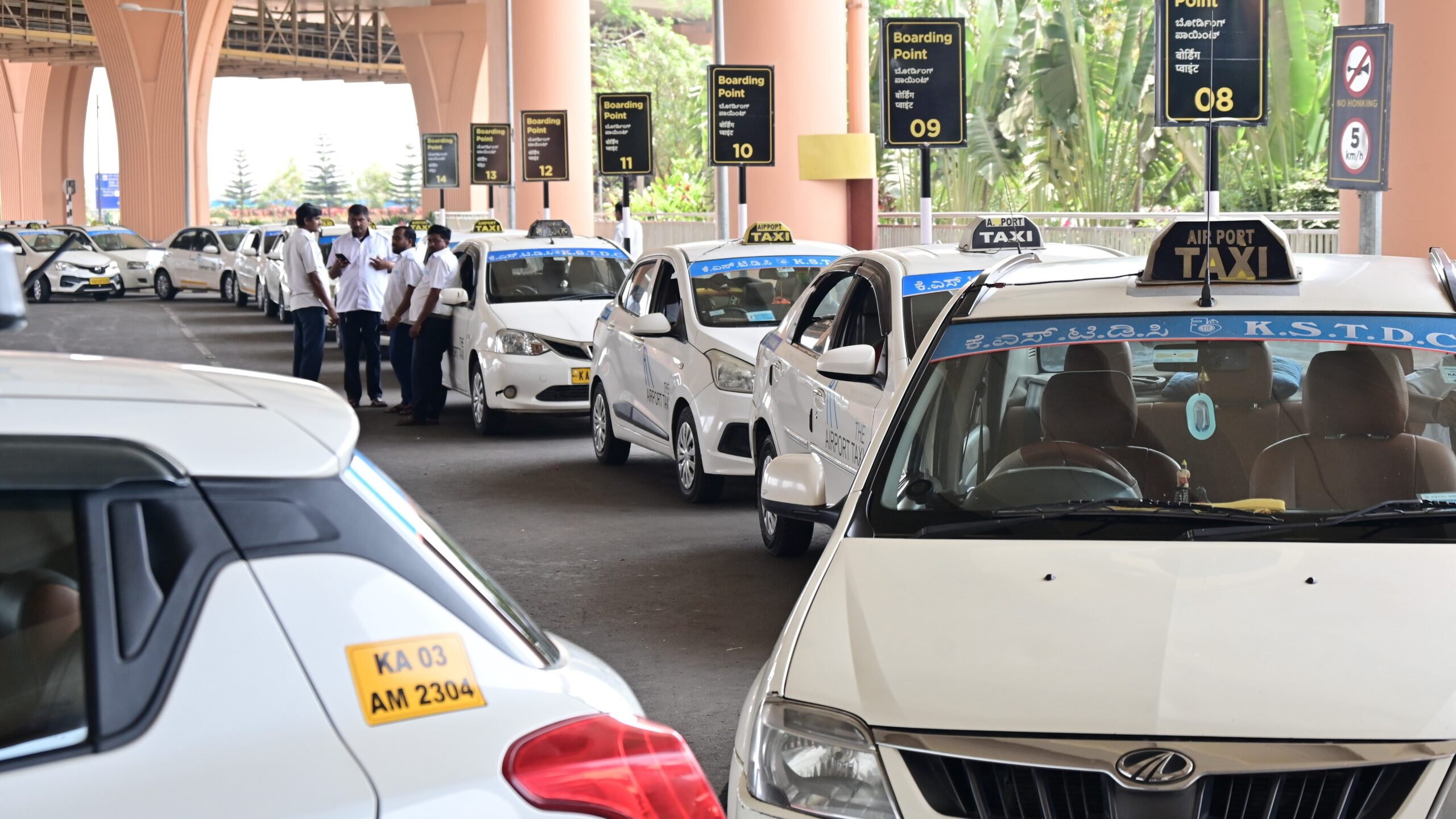
Tensions over fare structures at Bengaluru’s international airport are beginning to disrupt the city’s app-based mobility ecosystem, as many cab drivers increasingly avoid designated aggregator kiosks, citing concerns over declining earnings and unsustainable operating conditions.The issue has emerged at Kempegowda International Airport, one of India’s busiest aviation hubs, where travellers are reporting longer wait times and reduced cab availability in designated pickup zones linked to ride-hailing platforms.
Drivers associated with aggregator services argue that low airport fares, coupled with commission deductions and operational costs, are making airport trips financially unviable.The dispute highlights deeper pressures within Bengaluru’s urban mobility economy, where digital transport platforms have become central to last-mile connectivity but continue to face friction over pricing models, worker earnings and platform regulation.Transport analysts say airport connectivity systems in rapidly growing metropolitan regions increasingly depend on balancing commuter affordability with sustainable driver incomes.Bengaluru airport transport demand has risen sharply alongside passenger growth and expanding business travel in the city’s technology and startup sectors. However, drivers say rising fuel costs, airport entry fees, traffic delays and extended waiting periods have reduced profitability for airport rides, particularly under fixed or discounted fare structures.Urban mobility researchers note that such conflicts expose the fragility of platform-based transport ecosystems operating in high-demand urban corridors.While ride-hailing services have improved convenience and reduced dependence on informal transport networks, questions around labour conditions and fare transparency remain unresolved across many Indian cities.
The issue also carries broader implications for sustainable urban mobility planning. Public transport connectivity to Bengaluru airport remains limited compared with travel demand, increasing dependence on private taxis and app-based services. Experts argue that gaps in multimodal integration place excessive pressure on road-based transport systems while contributing to congestion and higher transport emissions.Passenger groups have meanwhile expressed concerns over inconsistent availability and pricing unpredictability during peak travel hours.Frequent travellers say reliable airport access is becoming increasingly important for Bengaluru’s economic competitiveness, particularly as the city positions itself as a global technology and business destination.Labour economists point out that the dispute reflects larger structural changes in India’s gig economy, where workers are seeking greater income stability and bargaining power within digitally managed service sectors. Similar tensions involving fare rationalisation and commission structures have surfaced in multiple urban transport markets across the country.Mobility planners suggest that long-term solutions may require a more integrated airport transport strategy involving stronger metro connectivity, regulated fare mechanisms and diversified public transit options capable of reducing overreliance on app-based cab services.
As Bengaluru’s aviation and urban growth continue accelerating, the evolving dynamics around Bengaluru airport transport may become a wider test of how Indian cities manage platform mobility systems while balancing commuter efficiency, worker sustainability and long-term transport resilience.
Also Read:Bengaluru Underbridge Project Moves Towards Public Opening
