Hyderabad water crackdown targets illegal motor use
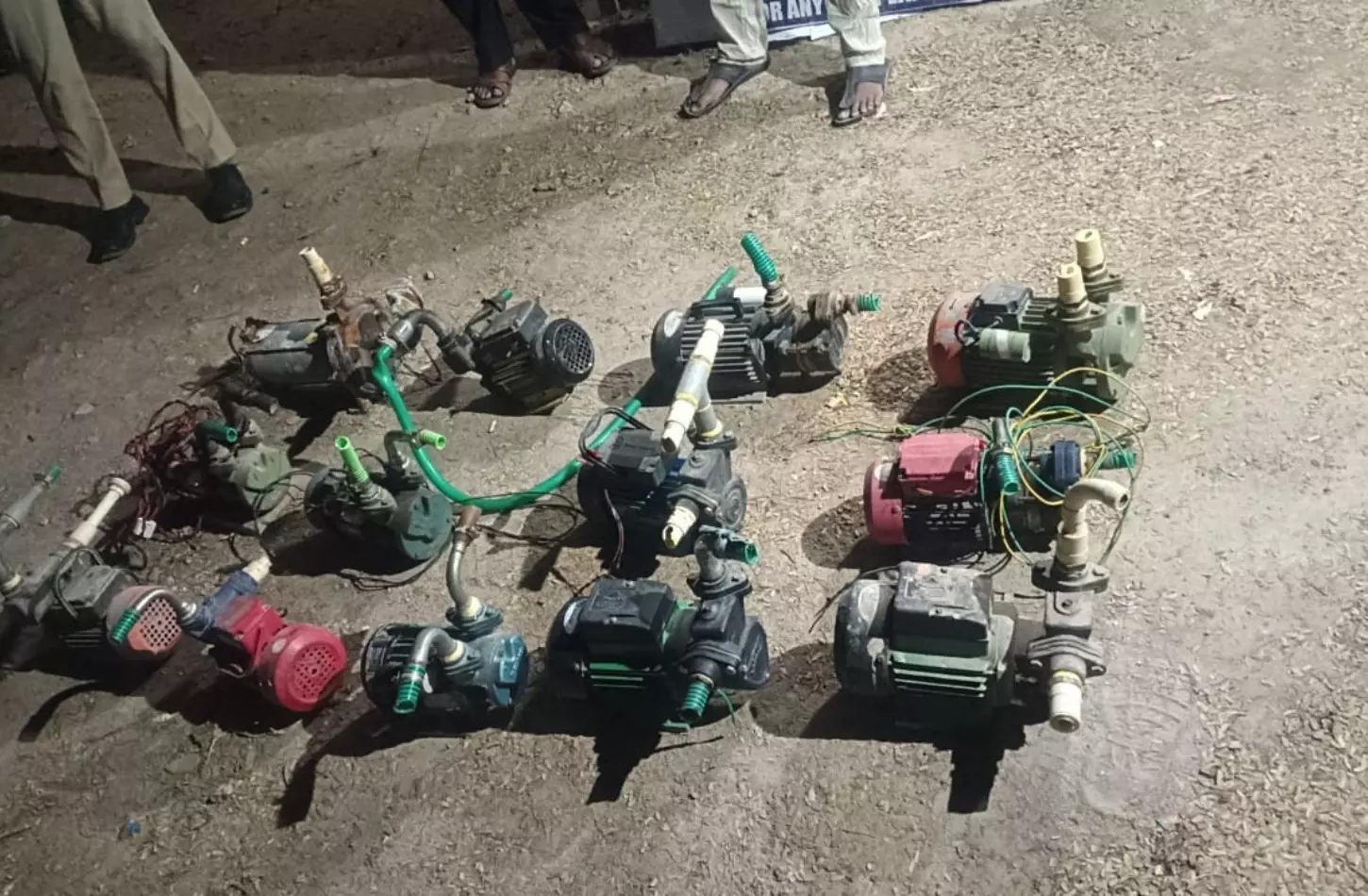
A targeted enforcement drive in Hyderabad’s Kondapur has brought renewed focus to how informal practices are reshaping access to basic urban services, after authorities seized 22 illegal motors used to draw water directly from public pipelines. The action by the Hyderabad Metropolitan Water Supply and Sewerage Board (HMWSSB) highlights growing stress on the city’s water distribution system amid rising demand and uneven supply pressures.
The inspection, carried out during active supply hours, uncovered multiple instances where households had installed electric motors to extract water at higher pressure from public lines. These devices, while boosting supply for individual users, significantly reduce pressure for surrounding households—especially those located downstream in the network. Officials have reiterated that such practices violate water distribution norms and disrupt equitable access. The seized motors were part of a wider crackdown aimed at curbing what authorities describe as “water misuse” rather than absolute shortage. Enforcement teams have warned that repeat violations could attract fines of ₹5,000 and potential legal action. The Kondapur action is part of a broader city-wide campaign that has intensified ahead of peak summer demand. Water managers estimate that a significant proportion of households use motorised pumps to augment supply, contributing to inconsistent pressure levels across neighbourhoods. In effect, this creates a two-tier system—where those with access to motors secure higher volumes, while others face reduced or erratic supply. For rapidly expanding urban zones such as Kondapur—located within Hyderabad’s high-growth western corridor—the issue reflects deeper structural challenges.
As residential density increases and dependence on piped water rises, distribution networks are being pushed beyond designed capacities. Illegal extraction methods amplify these stresses, particularly in mixed-use areas where residential demand competes with commercial consumption.Urban planners note that such enforcement drives, while necessary, address only the symptoms of a larger governance gap. The persistence of illegal water extraction points to mismatches between infrastructure provision and population growth, as well as limited real-time monitoring of distribution networks. In cities experiencing rapid outward expansion, ensuring fair allocation often becomes as critical as augmenting supply itself.The environmental dimension is equally significant. Hyderabad sources water from distant reservoirs, requiring energy-intensive pumping and transmission. Misuse at the distribution level not only undermines equity but also increases the overall resource burden, raising concerns about long-term sustainability.Experts suggest that addressing the issue will require a combination of enforcement, behavioural change, and infrastructure upgrades. Smart metering, pressure management systems, and decentralised water storage could help reduce dependence on unauthorised methods. Public awareness campaigns are also seen as key to discouraging practices that compromise collective access.
As Hyderabad navigates another summer of high demand, the Kondapur crackdown underscores a critical urban reality: access to water is not just about availability, but about how fairly and efficiently it is distributed. Strengthening governance around this essential service will be central to building a more resilient and inclusive city.