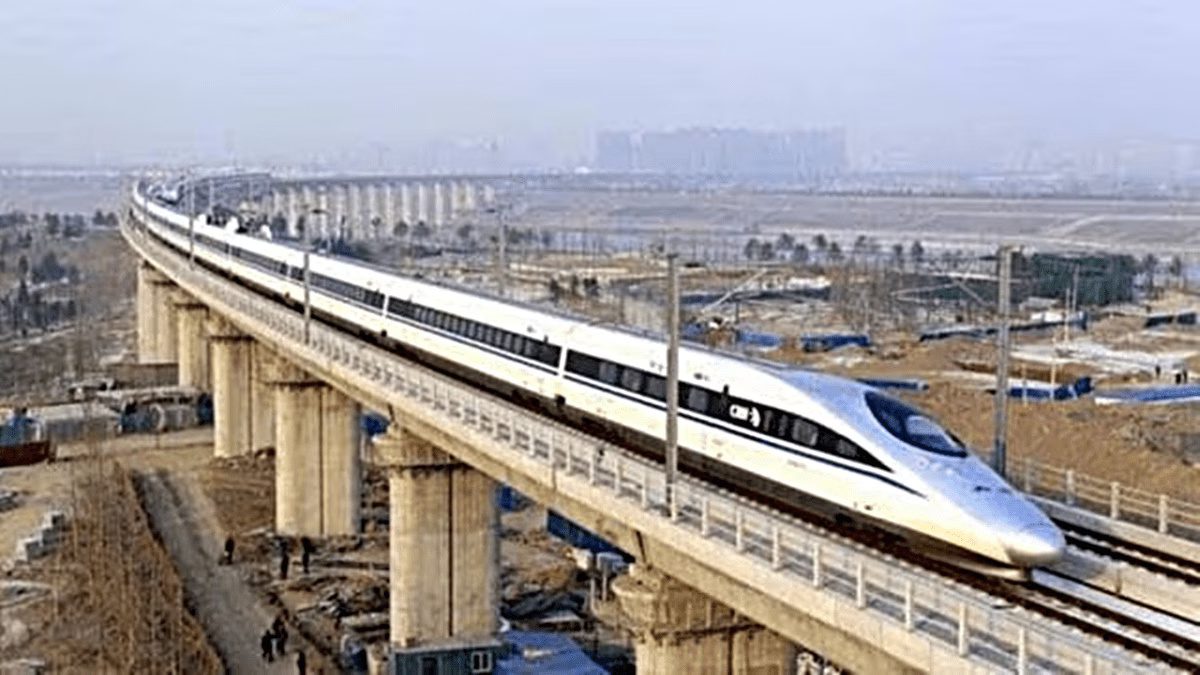
Hyderabad bullet train plan promises faster regional travel
Hyderabad is set to become a key node in India’s proposed high-speed rail network, with plans indicating that travel between the city and Amaravati could be reduced to just 70 minutes. The proposal, outlined as part of a broader southern bullet train roadmap, signals a major shift in how inter-city mobility could reshape economic geography across the region.
The plan, announced by the Union Railways Minister, places Hyderabad at the centre of a high-speed rail grid linking major southern cities. Beyond Amaravati, proposed corridors are expected to connect Hyderabad with Bengaluru, Chennai, and Pune, significantly reducing travel times and strengthening regional integration. For Hyderabad, the implications extend well beyond faster travel. High-speed connectivity could effectively expand the city’s economic footprint, allowing professionals, businesses, and logistics networks to operate across multiple cities within hours. Urban economists suggest this could lead to the emergence of a “multi-city region,” where economic activity is distributed rather than concentrated in a single metropolitan core.The proposed Hyderabad–Amaravati link, in particular, is expected to reinforce ties between two fast-growing administrative and technology centres. By compressing travel time to just over an hour, the corridor could influence commuting patterns, real estate demand, and business expansion strategies. Analysts note that such connectivity often drives the development of satellite cities and growth corridors along the route.
Infrastructure experts also point to the potential for Hyderabad to evolve into a high-speed rail hub. Earlier proposals have identified areas around Shamshabad as potential interchange points, given proximity to the airport and existing transport networks. This integration of air, rail, and road systems could position the city as a major multimodal logistics and mobility centre in southern India.However, the scale of the project raises critical questions around financing and implementation. High-speed rail corridors require significant capital investment, land acquisition, and long-term ridership viability. While the timeline for the Hyderabad-linked corridor is estimated at seven to eight years, execution will depend on detailed project reports, funding models, and coordination between states. There are also sustainability considerations. High-speed rail is often seen as a lower-carbon alternative to air travel for inter-city journeys, but its environmental benefits depend on energy sources, construction methods, and integration with local transit systems. Without strong last-mile connectivity, the advantages of speed may not fully translate into reduced emissions or improved accessibility.
For Hyderabad’s urban future, the proposed bullet train network represents both opportunity and complexity. It has the potential to redefine regional mobility, unlock new economic corridors, and reduce travel friction across southern India. At the same time, ensuring that such infrastructure aligns with inclusive growth, affordability, and climate resilience will be critical.As plans evolve, Hyderabad’s role in India’s high-speed rail ambitions will likely shape not just how people travel—but how cities themselves expand, connect, and compete in a rapidly changing urban landscape.