


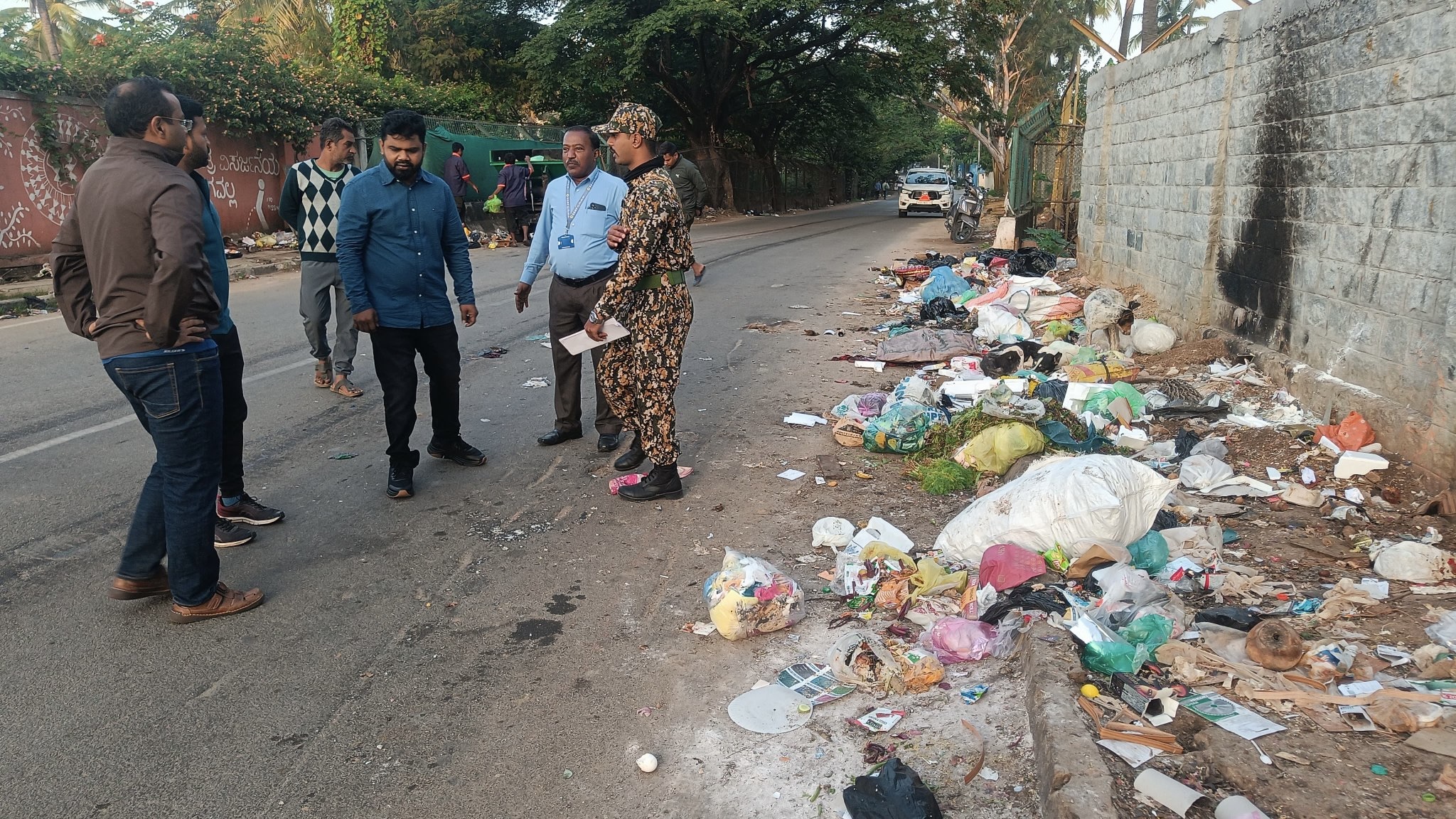
Mounting garbage piles across several Bengaluru neighbourhoods are exposing persistent weaknesses in the city’s waste management system, with disruptions in door-to-door collection services triggering sanitation concerns and renewed scrutiny of urban civic preparedness.Residents across multiple localities have reported delayed waste pickups, overflowing community bins and growing foul odour issues over recent days, particularly in densely populated residential zones.
The situation has raised fears of worsening public health risks ahead of the monsoon season, when unmanaged waste can intensify drainage blockages and vector-borne disease outbreaks.The Bengaluru waste collection system has long operated under pressure from rapid population growth, rising consumption patterns and expanding urban sprawl. Civic experts say the latest disruptions highlight structural gaps in service delivery, including labour shortages, logistical inefficiencies and uneven contractor performance across different wards.Urban planners note that solid waste management is becoming one of the most critical infrastructure challenges for India’s major metropolitan regions. In Bengaluru, where daily waste generation continues to rise alongside real estate expansion and commercial activity, maintaining consistent collection networks is increasingly central to urban liveability and environmental resilience.The impact extends beyond sanitation alone.Accumulated waste contributes to air and water pollution, increases methane emissions from decomposing organic material and places additional stress on already fragile urban ecosystems. Environmental researchers warn that poor waste segregation at source further complicates recycling and processing efforts, reducing the effectiveness of circular economy initiatives.
Several neighbourhood associations and citizen groups have also expressed frustration over inconsistent communication regarding collection schedules and complaint resolution mechanisms. Urban governance analysts argue that civic systems in fast-growing cities require stronger accountability frameworks and real-time monitoring to maintain essential public services.The recurring waste management disruptions reflect a broader challenge facing Bengaluru’s urban administration: balancing rapid economic expansion with sustainable civic infrastructure. As the city grows into a larger technology and business hub, the demand for efficient waste logistics, decentralised processing systems and environmentally responsible disposal methods is increasing sharply.Sustainability experts emphasise that long-term solutions will require more than temporary cleanup drives. Strengthening ward-level segregation systems, expanding biomethanation and composting capacity, integrating informal waste workers and improving decentralised waste processing infrastructure are seen as essential for reducing landfill dependence and improving operational resilience.The Bengaluru waste collection crisis also highlights the importance of citizen participation in urban environmental management. Experts say household-level segregation, reduced plastic consumption and community oversight can significantly improve municipal efficiency when combined with stronger governance systems.
Authorities are expected to intensify collection operations in affected areas while reviewing service disruptions across the city. For Bengaluru, the episode serves as another reminder that sustainable urban growth depends not only on high-profile infrastructure projects but equally on the reliability of everyday civic services that shape public health, environmental quality and quality of life.
Also Read:Bengaluru Underpass Project Targets Faster Traffic Movement
