Mumbai Tightens Hygiene Rules At Railway Food Stalls
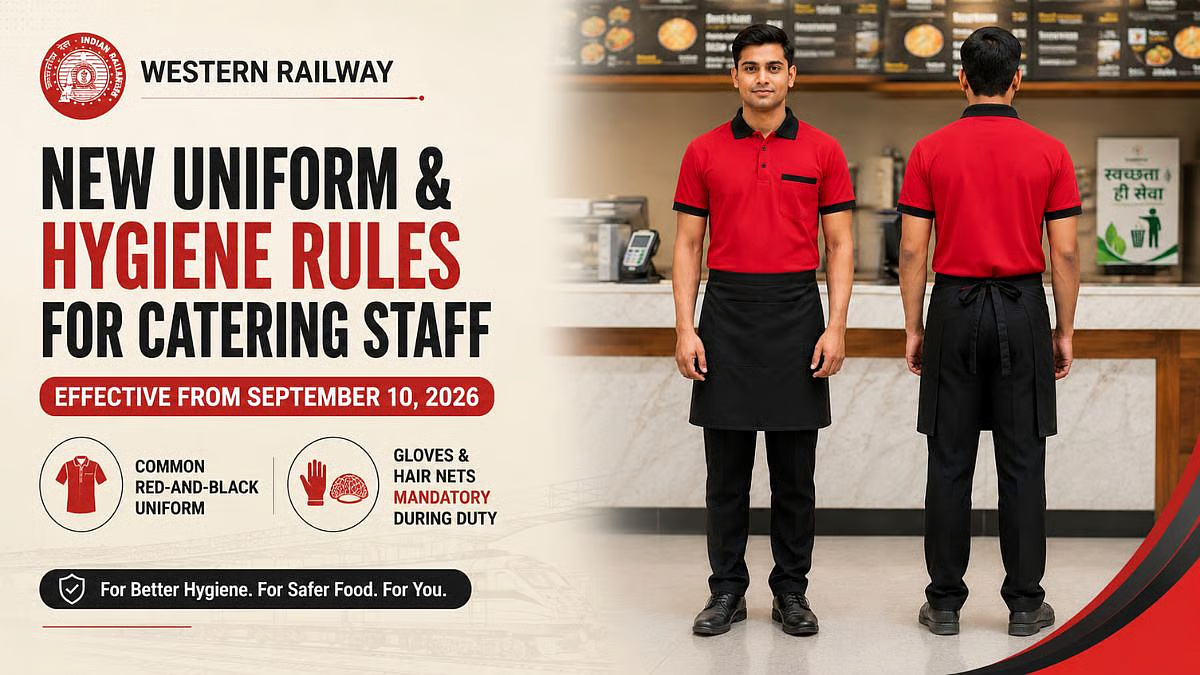
Western Railway is tightening food-handling requirements across catering outlets in its Mumbai division, making standardised workwear and protective hygiene equipment compulsory for licensed staff. The measures, effective from September 10, come as railway authorities intensify inspections of food stalls and aim to make sanitation practices more consistent at stations used by millions of passengers. The new rules require catering workers to wear a prescribed uniform consisting of a red polo shirt with black detailing, black trousers, a half-apron and black footwear. Staff will also be required to use disposable gloves and hair nets while handling food.
The change is significant because railway catering operates in a high-volume public environment where food is prepared, stored and served within crowded transport facilities. For passengers, visible hygiene is only one part of the issue. The more important test will be whether protective equipment is accompanied by proper food storage, cleaning, handwashing and waste-management practices. The decision follows increased scrutiny of catering standards on the railway network. During recent inspections, authorities found violations at multiple outlets, including an incident in which food was reportedly sold using newspaper as wrapping. Such practices can raise concerns about contamination and demonstrate why enforcement needs to extend beyond the appearance of staff. Under the revised arrangement, station-level commercial officials and inspectors will monitor compliance during routine checks and report violations to the divisional authorities. Catering licence holders will be responsible for ensuring that their employees follow the prescribed requirements. Failure to comply could lead to action against both operators and individual workers.
For the wider urban system, the focus on Mumbai railway catering highlights an often-overlooked part of public transport infrastructure. Stations are not simply interchange points; they are also places where passengers buy food and drinking water during daily journeys. Maintaining safe facilities therefore forms part of creating reliable and people-centred transport environments. Urban health experts note that hygiene controls are most effective when they are supported by regular inspections, adequate washing facilities, safe waste disposal and clear accountability. Gloves and hair nets can reduce specific risks, but they cannot compensate for poor sanitation or unsafe food storage. The policy also carries a small environmental dimension. Better-controlled catering operations can support cleaner station premises and more systematic waste handling, particularly where disposable materials are widely used. However, authorities will need to ensure that increased use of single-use gloves does not simply shift the hygiene burden into additional waste.
The immediate priority is enforcement. Mumbai railway catering will see a more standardised operating framework from September, but its success will ultimately depend on whether inspections verify real hygiene conditions rather than compliance based only on uniforms and equipment.