


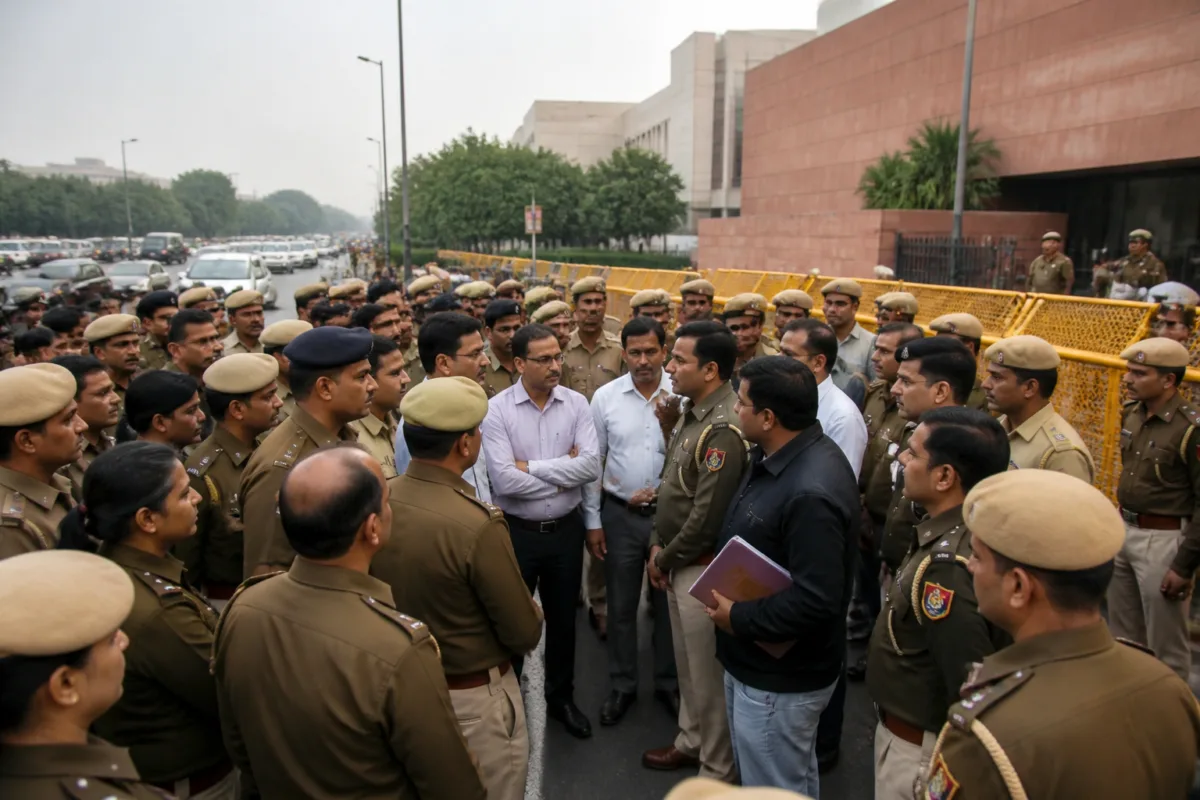
Delhi Police personnel staged a protest outside the police headquarters on Monday, November 2, opposing the transfer of officers following a dispute between police and lawyers at Shahdara police station, according to a report by Jagran. Police personnel were also seen attempting to stop the demonstrators as the gathering grew.
The dispute involves an altercation between police personnel and lawyers linked to the Karkardooma Court in east Delhi. Police filed a first information report against lawyers on October 26, while lawyers began a work boycott against the police on October 27, the report said.
The protest followed the reported transfer of ACP Manasvi Vashisht and the station house officer of Shahdara police station. The transfers allegedly took place after the lawyers’ two-day work boycott, with the protesting personnel opposing the action and demanding protection for their rights and dignity.
According to the report, police personnel from several stations left their duties and reached the area outside police headquarters. The number of demonstrators increased during the protest, while some women police personnel raised slogans and expressed anger over the transfers.
The gathering created an unusual institutional situation: police personnel were demonstrating against decisions taken within their own organisation, while other police personnel were deployed to prevent or contain the protest. The report described the event as an unprecedented protest at Delhi Police headquarters, although it also linked it to an earlier confrontation involving police personnel at Tis Hazari Court.
Senior officers held discussions with the protesting personnel after the demonstration expanded. The report did not provide details of any written assurance, disciplinary action, formal resolution or decision on the transfers following those talks.
The episode comes after a dispute between two institutions that routinely interact in the criminal justice system: the police and the courts’ legal community. The immediate issue is the transfer of officers, but the protest also places attention on how internal police decisions are communicated and received by personnel during contentious cases.
The source report did not establish whether the transfers will be reviewed, whether the first information report against the lawyers will be affected, or whether any independent inquiry has been ordered. The next formal steps remain the outcome of the discussions between senior officers and the protesting personnel.

