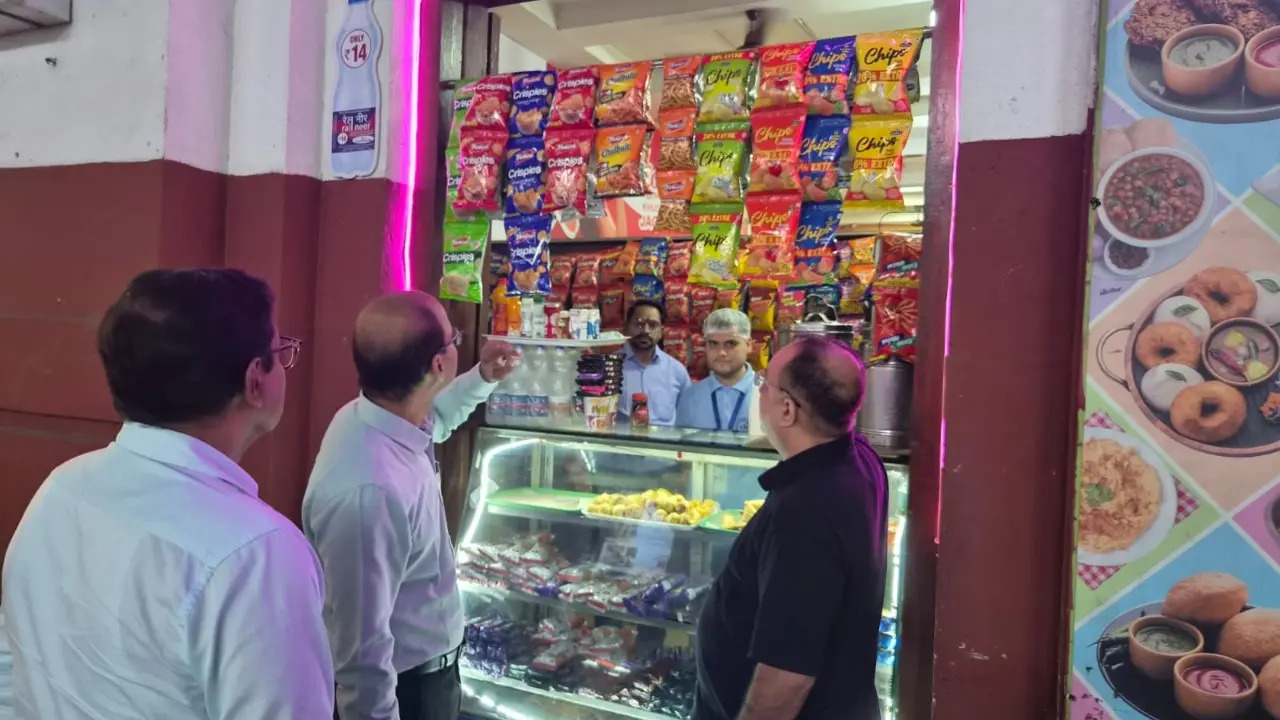
Mumbai’s railway catering network is facing intensified scrutiny after inspections across Western Railway and Central Railway found violations at dozens of food outlets. Between August 15 and 24, authorities inspected 106 catering units and took action against 45. The exercise has also expanded to drinking-water infrastructure, putting passenger health and the everyday quality of station services under sharper focus. Western Railway’s Mumbai Central Division accounted for most of the enforcement. It closed 39 food, tea and juice outlets during the inspection period, with penalties totalling ₹3.80 lakh. Twenty units have subsequently been permitted to reopen after correcting deficiencies, paying fines and completing compliance checks. Nineteen outlets remain closed until corrective work is verified.
The remaining closures include two catering units in Borivali and one tea stall in Dadar, while other suspended outlets are located in Surat, Vapi and Valsad. This is significant because the inspection programme extends beyond individual Mumbai stations and points to a wider effort to tighten standards across the railway catering network. Central Railway’s Mumbai Division inspected another 53 catering stalls during the same period. Six outlets faced action, including three that were ordered to remain closed for 10 days. Authorities recovered ₹12,000 in penalties from the affected operators. The checks focused on food handling, cleanliness, sanitation and compliance with prescribed catering requirements. The enforcement comes alongside a separate examination of drinking-water facilities at stations. Railway teams are checking water coolers, vending machines, public drinking points and UV and reverse-osmosis purification systems. Storage tanks are being examined for leakage and corrosion, while pipelines, taps, filters and other components are being checked for maintenance failures. Water supplied to passengers is also being tested using prescribed equipment.
The focus on water follows recent public allegations concerning the quality of Rail Neer, the railway packaged-water brand. IRCTC has maintained that its product is manufactured according to applicable Indian standards and subjected to chemical and microbiological testing. The allegations themselves should not be treated as proof of a systemic quality failure, but they have added urgency to broader checks on passenger-facing water infrastructure. For Mumbai, the issue is larger than individual stalls. Railway stations function as high-volume public spaces where food, drinking water and sanitation directly affect commuters every day. Stronger inspection systems can improve accountability, but sustained results will depend on regular monitoring rather than short enforcement campaigns.
The immediate priority is therefore clear: suspended outlets should reopen only after genuine deficiencies are resolved, while water and catering facilities need continuous maintenance. For a city dependent on rail travel, Mumbai rail food safety is ultimately a basic public-infrastructure issue, not merely a licensing concern.