Navi Mumbai Expands Eco Measures For Ganesh Festival
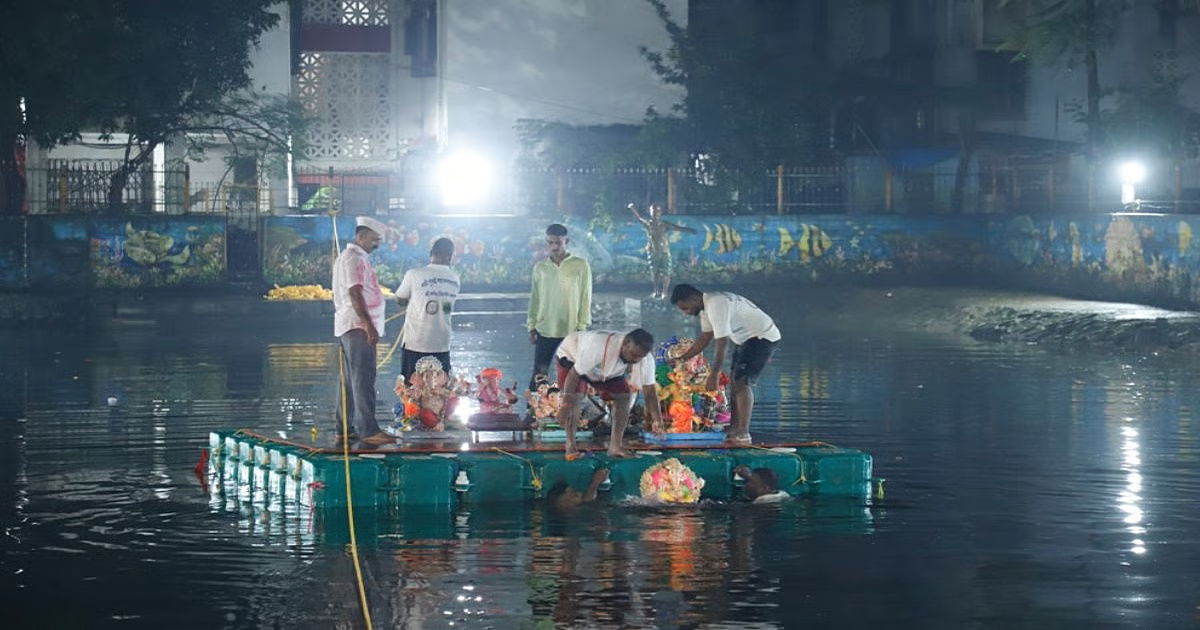
Navi Mumbai is preparing for Ganeshotsav with a stronger emphasis on waste segregation, lower-impact idols and controlled immersion, as the civic administration seeks to reduce pressure on the city’s water bodies during the festival. The Navi Mumbai Municipal Corporation (NMMC) has asked public mandals and residents to limit plastic use, favour Shadu clay idols and use designated immersion facilities, putting festival management firmly within the city’s wider environmental planning. The measures come as the scale of Ganeshotsav creates a significant seasonal waste and water-management challenge. Large public gatherings generate floral offerings, packaging, decorative material and other waste, while idol immersion can add pressure to lakes and other natural water bodies. Creating alternatives close to neighbourhoods can help reduce both environmental damage and congestion around traditional immersion locations.
For 2026, NMMC is expanding the network of artificial immersion ponds. The latest available civic information puts the planned network at 143 artificial ponds, alongside 22 traditional natural immersion sites. This is important because the Bombay High Court has retained restrictions requiring idols up to six feet in height to be immersed in artificial water bodies this year. The city’s approach also places greater emphasis on what happens around the pandal, rather than only during immersion. Mandals have been asked to provide separate arrangements for wet and dry waste. The distinction allows biodegradable offerings to be handled separately from plastics, packaging and other non-organic material, improving the prospects for recovery and scientific processing. The push towards Shadu clay idols has an environmental rationale, but it also carries an economic dimension. Clay idols generally require more labour and time to produce than mass-manufactured alternatives, while recent reporting from Navi Mumbai indicates that Shadu idol prices have risen by around 12–15% this season. That means a sustainable transition will depend not only on public messaging but also on whether artisans and households can absorb the additional cost.
NMMC is also using administrative measures to make public celebrations easier to regulate. A single-window system is intended to simplify permissions for mandals, while the civic body is encouraging smaller idols through its planned public Ganeshotsav competition. Such measures can reduce the administrative burden while giving organisers clearer expectations on environmental compliance. The experience of previous festivals shows why implementation matters. In 2025, Navi Mumbai recorded 143 artificial ponds and 22 natural immersion sites, with substantial use of artificial facilities. Floral waste was separately collected and processed for composting, demonstrating how festival waste can be redirected towards the city’s green infrastructure rather than becoming a burden on water bodies.
For Navi Mumbai Ganeshotsav, the next test is therefore practical: whether convenient immersion points, reliable waste collection and affordable eco-friendly choices can translate civic guidelines into everyday behaviour. The effectiveness of the programme will ultimately be measured by cleaner public spaces and reduced pressure on natural water systems after the celebrations end.