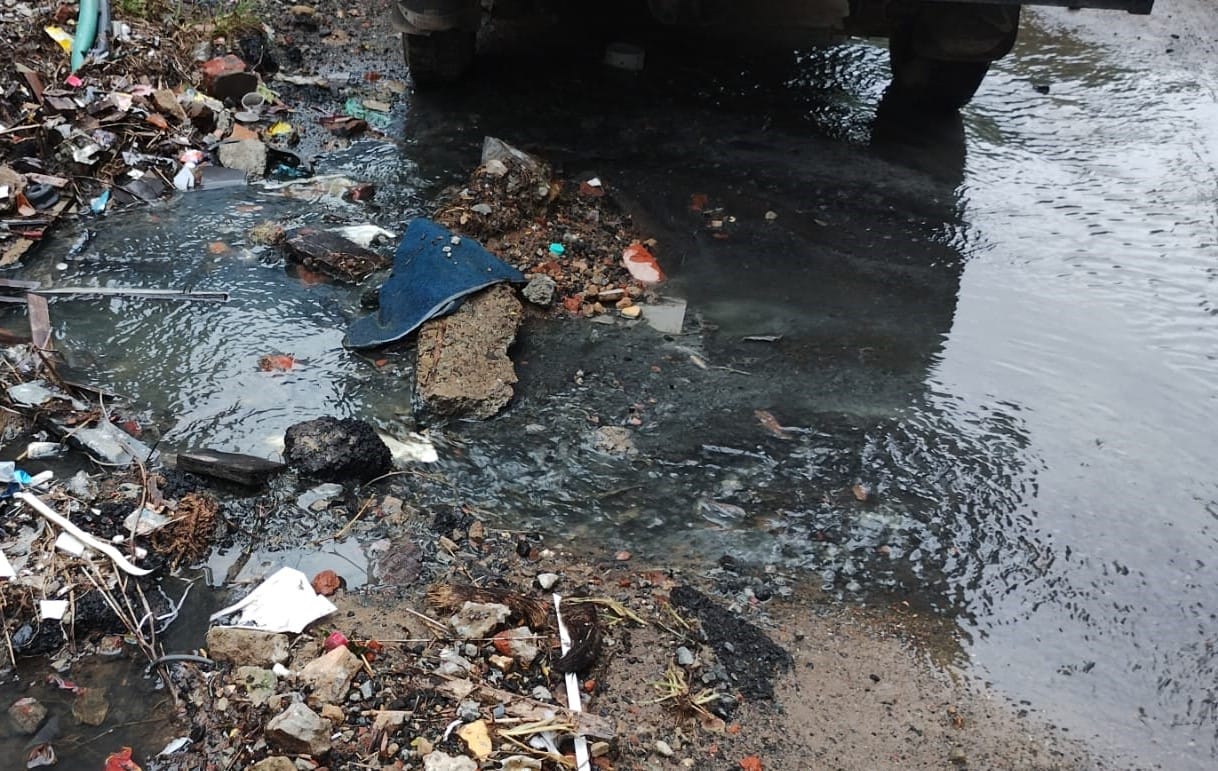
A mounting solid waste crisis inside Perambur Railway Colony in north Chennai has triggered growing public health concerns, with residents alleging that uncollected garbage and recurring waste burning are degrading air quality and undermining liveability in one of the city’s dense residential pockets.
The neighbourhood, located between key transport corridors in Perambur, has seen increasing accumulation of mixed waste along internal streets and vacant stretches over recent months. Residents say the issue has escalated into a persistent civic challenge, with plastic and household refuse frequently burnt in open spaces, releasing smoke that lingers through residential lanes for hours. The situation has once again drawn attention to gaps in urban sanitation systems across older railway and institutional settlements that often fall between multiple administrative jurisdictions. Urban planners note that such areas frequently suffer from fragmented waste governance, delayed contractor appointments and weak enforcement against illegal dumping.
According to local residents’ groups, the Perambur Railway Colony waste crisis has worsened after disruptions in waste collection and disposal services. Community representatives claim garbage from neighbouring localities is also being transported into the colony, placing additional pressure on already strained sanitation infrastructure. For residents, the consequences are increasingly tied to health and quality of life. Families living near dumping points report difficulty keeping windows open due to smoke and odour, while elderly residents and children are said to be particularly vulnerable during repeated episodes of waste burning. Public health experts have long warned that open burning of plastic and mixed municipal waste releases hazardous pollutants, including particulate matter and toxic compounds linked to respiratory illnesses.The issue also exposes broader sustainability concerns for Chennai’s urban management systems. While the city has expanded investments in stormwater infrastructure, mobility corridors and transit-oriented development, civic activists argue that neighbourhood-level sanitation and environmental health require equal policy attention. In dense urban zones, unmanaged waste and open burning can reduce property values, strain healthcare systems and weaken climate resilience goals.
Urban development specialists point out that waste segregation, decentralised composting and tighter monitoring of collection contracts are increasingly critical for large Indian cities facing rapid population growth and shrinking landfill capacity. Railway-adjacent settlements and transport-linked colonies are particularly vulnerable because of high commuter activity and overlapping land ownership patterns.A senior civic official from the local zone administration said field inspections would be conducted and corrective measures initiated. Residents, however, are demanding a more permanent solution, including regular waste clearance, stricter penalties for illegal dumping and scientific waste processing systems. As Chennai continues positioning itself as a modern and investment-ready metropolitan region, urban governance experts say improving neighbourhood sanitation and eliminating open waste burning will remain essential to ensuring healthier, more climate-resilient communities.