


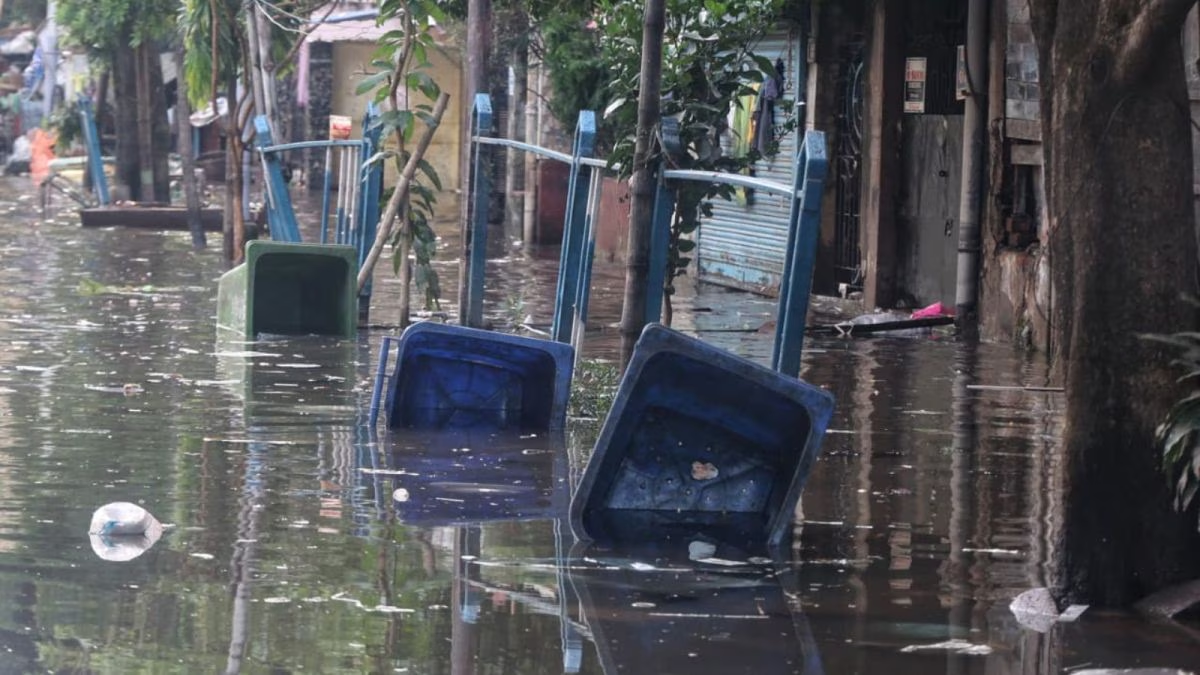
A fresh spell of rain and thunderstorms is expected to sweep across Kolkata on Saturday, prompting civic authorities to monitor drainage systems, traffic movement and public safety measures in one of India’s most densely populated urban regions. The forecast arrives at a time when the city is witnessing increased pressure on ageing infrastructure and heightened public gatherings, making weather-linked disruptions a wider urban governance concern.
According to meteorological assessments, moisture-laden winds and unstable atmospheric conditions over eastern India are likely to trigger thunderstorms accompanied by gusty winds and moderate rainfall across parts of southern Bengal. The Kolkata rain alert has renewed attention on how extreme weather events are increasingly intersecting with transport reliability, public mobility and emergency preparedness in large metropolitan centres.Urban planners and climate researchers have repeatedly pointed to the vulnerability of low-lying neighbourhoods in Kolkata, where even short-duration rainfall can lead to waterlogging, slower traffic movement and stress on underground utilities. Several areas across the metropolitan region continue to depend on legacy drainage infrastructure designed for historical rainfall patterns rather than today’s climate variability.The anticipated weather shift also carries economic implications. Weekend commercial activity, open-air retail markets and informal businesses operating in public spaces may face temporary disruption if heavy showers coincide with peak movement hours. Transport corridors connecting business districts and residential zones often experience congestion during sudden thunderstorms, affecting productivity and commuter safety.
Officials monitoring civic services indicated that pumping stations and emergency response teams remain on alert to address possible localised flooding or tree fall incidents. Transport authorities are also expected to keep a close watch on road conditions and visibility in key traffic intersections. While the rainfall may bring temporary relief from rising humidity and heat stress, experts caution that cities must move beyond reactive weather management toward long-term climate adaptation planning.The Kolkata rain alert has once again highlighted the growing challenge of balancing rapid urban expansion with resilient public infrastructure. Environmental experts argue that shrinking wetlands, concretisation and unplanned construction have reduced the city’s natural capacity to absorb excess rainwater. In many eastern Indian cities, climate-linked rainfall events are becoming more erratic, increasing the need for nature-sensitive planning and decentralised stormwater management systems.
Public health specialists also note that sudden pre-monsoon showers can contribute to short-term increases in water contamination risks, mosquito breeding and stress on sanitation networks if drainage channels remain blocked. Civic agencies have therefore intensified inspections in selected areas ahead of the anticipated storm activity.With the monsoon season approaching, urban administrations across Bengal are likely to face growing scrutiny over preparedness, resilience investment and the ability to protect both economic activity and public life from increasingly unpredictable weather patterns.
Read More : Mumbai Weather Update Signals Rising Urban Heat Stress
Kolkata Weather Shift May Disrupt Weekend Mobility
