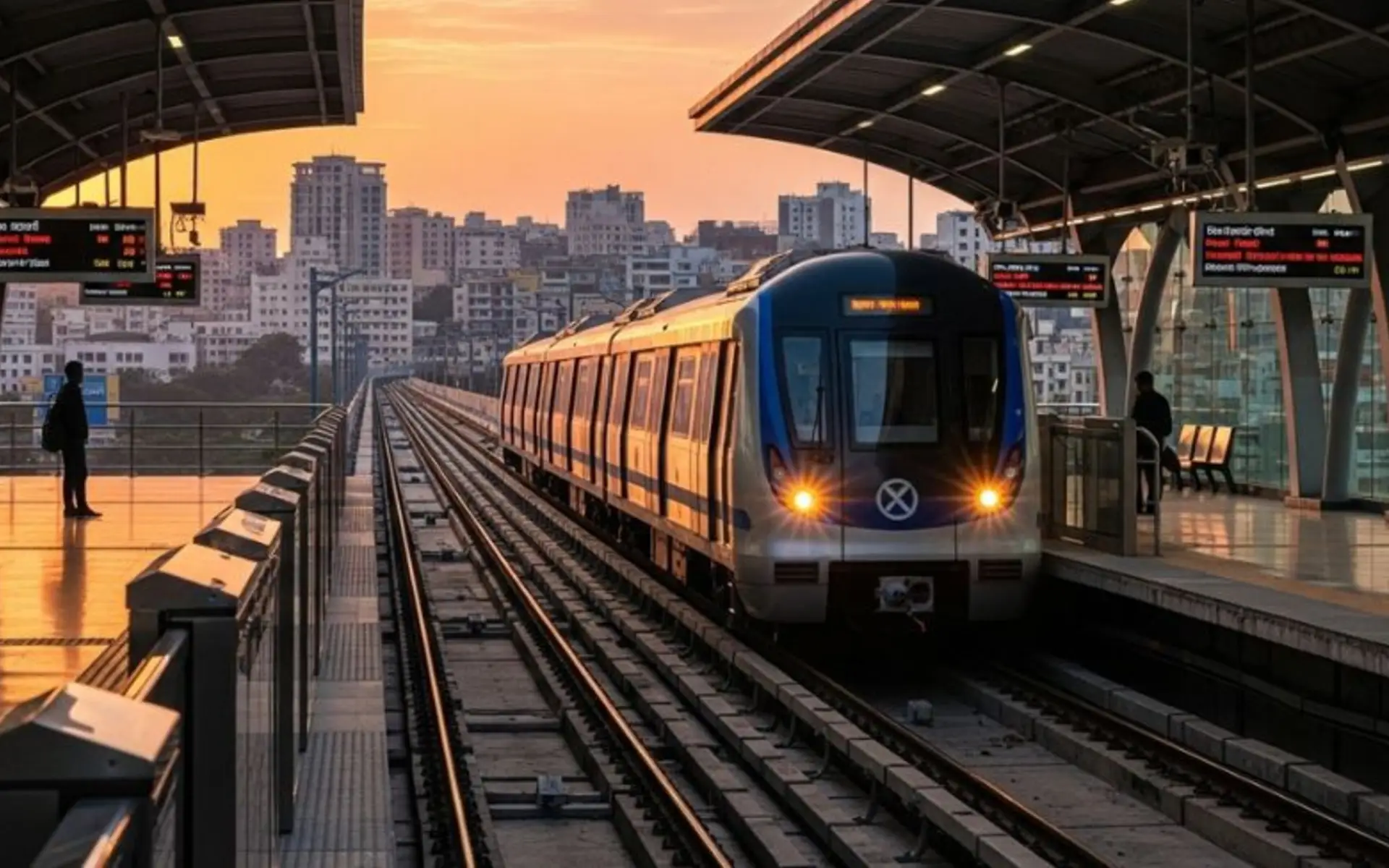
Hyderabad Metro Expansion Push Targets Urban Mobility
Maharashtra has outlined an ambitious roadmap to reshape its urban landscape, signalling a decisive pivot towards large-scale infrastructure expansion and decentralised governance. The latest state budget projects a future where urban areas dominate economic output, with cities expected to house a significant majority of the population and drive most of the state’s growth by 2047. At the centre of this strategy is the Maharashtra urban expansion plan, which envisions a substantial increase in metro rail and expressway networks to support rising mobility needs. The proposed metro system alone is expected to span over a thousand kilometres, indicating a shift towards mass transit solutions aimed at reducing congestion and improving connectivity across major urban corridors.
In Mumbai, a key underground metro corridor connecting eastern and southern precincts has been prioritised, reflecting continued investment in high-capacity transit within dense city zones. Such projects are seen as critical to sustaining economic activity while reducing reliance on private vehicles, a major contributor to urban emissions. Beyond transport, the Maharashtra urban expansion plan introduces new spatial development concepts, including the creation of a large-scale urban zone in the extended Mumbai region. This proposed cluster, linked by major infrastructure such as coastal connectors and ports, is positioned as a future economic hub. Policymakers expect it to generate substantial employment, particularly in logistics, manufacturing, and services. Housing remains another central pillar. The state has proposed a framework to prevent the proliferation of informal settlements by accelerating redevelopment and increasing the supply of affordable housing. With millions of housing units targeted over the coming decades, the approach seeks to address both existing shortages and future demand driven by migration and population growth.
Urban governance reforms form a critical part of the strategy. The plan calls for the establishment of multiple regional development authorities with greater autonomy, moving away from highly centralised decision-making. These entities are expected to manage infrastructure planning, land use, and economic development across emerging urban clusters, potentially improving coordination and execution. Technology integration is also being emphasised as a tool for managing complex urban systems. Digital modelling platforms are proposed to simulate city operations in real time, enabling better planning for traffic, water supply, and disaster response. Automation in building approvals is expected to streamline real estate development, reducing delays and improving compliance. However, urban experts caution that the Maharashtra urban expansion plan must balance growth with sustainability. Expanding transport networks and new townships could place additional pressure on natural resources if not aligned with environmental safeguards. Issues such as water security, waste management, and climate resilience will require parallel investment to ensure that infrastructure growth does not outpace ecological capacity.
As Maharashtra moves towards a more urbanised future, the effectiveness of this strategy will depend on execution at multiple levels. The coming years will test whether large-scale planning, backed by governance reforms and technology, can deliver cities that are not only economically productive but also inclusive and environmentally resilient.