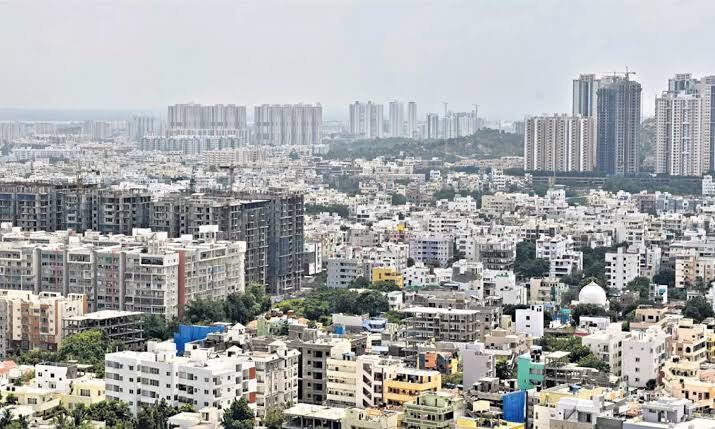
HYDERABAD: Hyderabad’s residential market is entering a more measured phase, with developers sharply reducing new project launches even as buyer demand remains comparatively resilient. The shift points to greater scrutiny of project viability, construction costs and inventory absorption, while raising questions about whether the city is producing enough homes across different price and size segments.
Data for the second quarter of 2026 shows a significant divergence between supply and demand. New residential launches fell 87% to 1,170 units, while demand declined by only 7%. At the same time, average prices increased by 9%. The gap suggests developers are becoming more selective about when and where they introduce fresh inventory. Higher input costs and longer approval timelines are making launch decisions more closely tied to expected sales and project economics. For the market, this could mean fewer speculative launches and greater emphasis on projects with established infrastructure, employment access and a clearly defined buyer base. The western corridor remains the strongest centre of new residential supply. Data from Cushman & Wakefield indicates that West Hyderabad accounted for 72.5% of new supply in Q2 2026. North and South Hyderabad are also developing as alternative residential corridors. However, their growth will depend on improvements in transport links, employment opportunities and supporting infrastructure. This concentration has implications beyond real estate. When housing development remains heavily focused in one part of a city, commuting pressure can increase and opportunities for more balanced urban growth may be limited.
Another concern is the mismatch between buyer preferences and available inventory. One-bedroom and two-bedroom homes account for 43% of demand but only 5% of new supply, indicating a substantial configuration gap. The shortage becomes more significant when viewed alongside housing affordability. Homes priced below ₹50 lakh represented only 3% of sales in the first half of 2026, while properties in the ₹1–2 crore range accounted for 45%. The figures suggest that the market is increasingly weighted towards higher-value housing. However, limited lower-priced inventory may also be preventing some potential buyers from completing purchases. The changing supply pattern could make infrastructure an even more important factor in Hyderabad’s next phase of residential growth. Emerging corridors need housing that matches local incomes, employment patterns and transport connectivity.
For developers, the coming quarters will test whether the current reduction in launches is temporary or becomes a longer-term strategy. For homebuyers, the key issue will be whether future supply becomes more diverse in terms of price, size and location. A healthier residential market will ultimately depend not only on sales volumes, but also on whether Hyderabad can expand housing supply in a way that remains accessible, connected and sustainable.