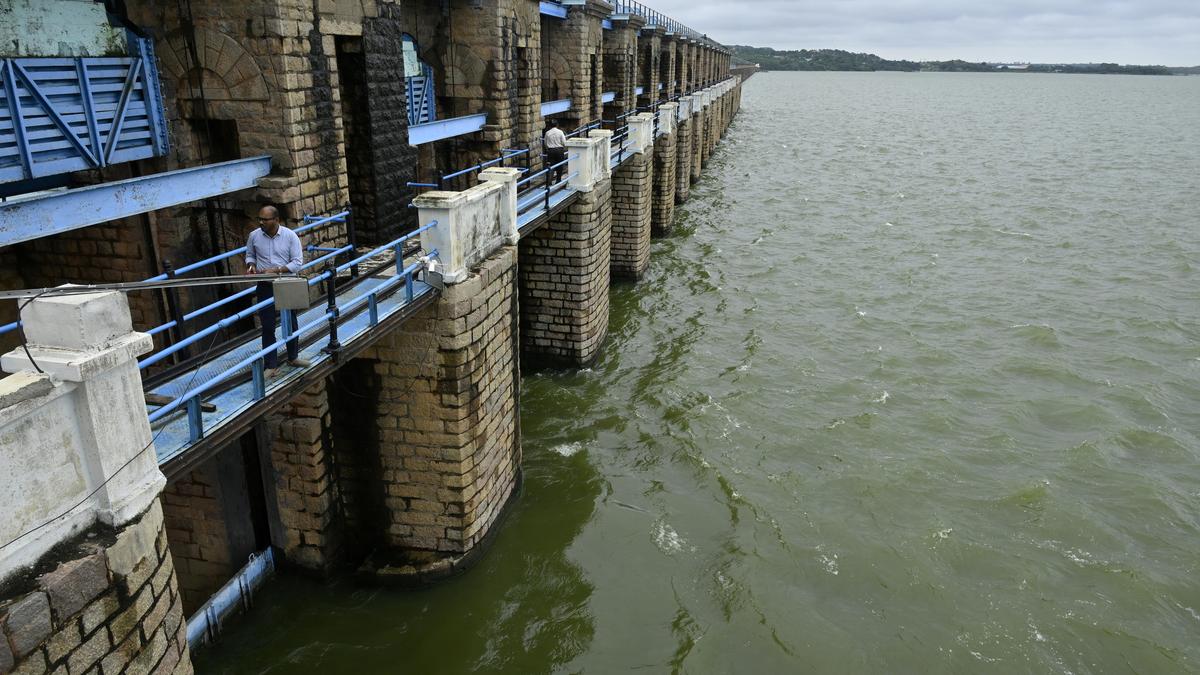
Hyderabad Water Plan Targets Twin Reservoir Refill
HYDERABAD: Telangana has moved ahead with the ₹7,360-crore Godavari Drinking Water Supply Scheme, Phase-II and III, with works aimed at supplying water to Osmansagar and Himayatsagar as part of the broader effort to rejuvenate the Musi river. The project also adds major treatment and pumping infrastructure to strengthen Hyderabad’s long-term water system.
The first package involves laying two 3,000-mm-diameter mild steel pumping mains from Mallannasagar to Ghanpur. Each pipeline is designed to carry 10 tmcft of water. The package also includes a pump house, electro-mechanical equipment, transformers and a substation at Mallannasagar. At Ghanpur, the planned facilities include a 1,170 MLD water treatment plant and a 40-million-litre clear water reservoir-cum-pump house. The infrastructure is being implemented under the Hybrid Annuity Mode (HAM). Under this arrangement, the government will fund 40% of the project cost, while the contracting agency will invest the remaining 60%. A special purpose vehicle, MEIL Mallannasagar Water Infra Private Limited, has been established for Package-I. The concession agreement was concluded in September 2025. With bank financing expected to take time, permission has been granted for the concessionaire to begin the package using internal funds of MEIL until the loan is sanctioned. The arrangement is subject to the conditions of the concession agreement.
The government has notified December 12, 2025, as the Date of Appointment for Package-I with retrospective effect. The Hyderabad Metropolitan Water Supply and Sewerage Board has also been directed to ensure financial closure within the stipulated period. The wider water management programme is accompanied by another infrastructure project under AMRUT 2.0. The government has ratified arrangements for 22 sewage treatment plants with a combined capacity of 471.5 MLD. The ₹1,906.44-crore Package-II project covers urban local bodies located between the GHMC and Outer Ring Road limits. It provides for completion within 24 months and 15 years of operation and maintenance. The sewage treatment infrastructure is particularly relevant to the Musi corridor, where improving wastewater management is an important part of long-term river restoration and urban environmental resilience.
Together, the projects highlight a broader shift towards linking drinking water infrastructure with wastewater treatment and river management. For Hyderabad, increasing water availability cannot be separated from protecting existing reservoirs and improving the quality of urban waterways. The effectiveness of the investment will ultimately depend on timely construction, financial closure and sustained operation of the completed systems. The immediate priority is now execution. If delivered as planned, the projects could strengthen the city’s water infrastructure while supporting longer-term efforts to improve the health and resilience of the Musi river system.