


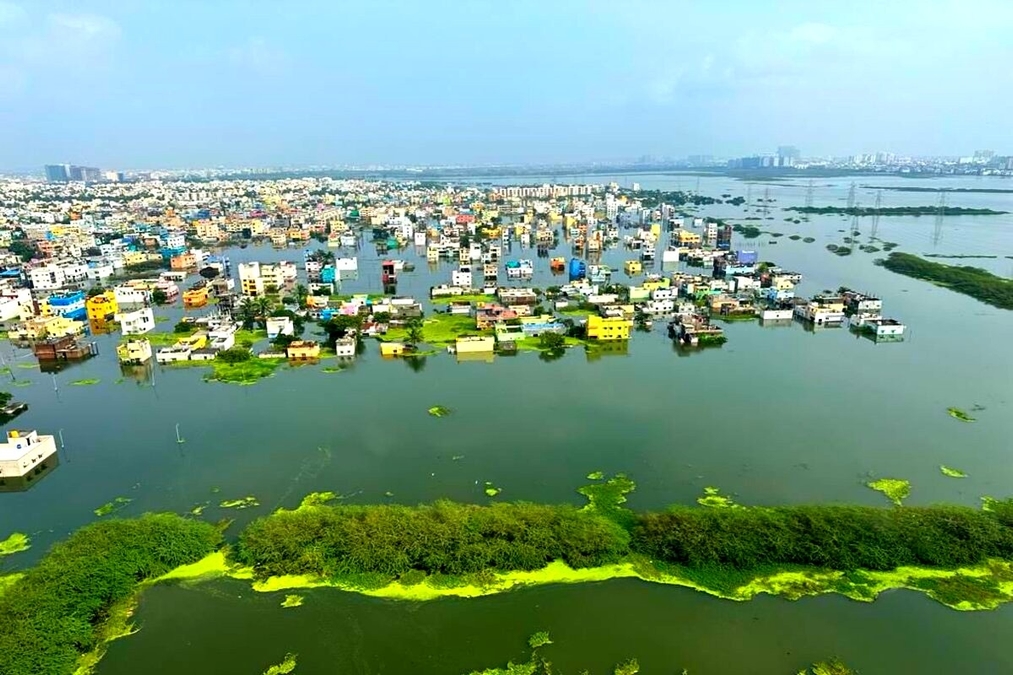
Recurring flooding in Chennai is prompting a critical reassessment of how the city rebuilds after extreme weather events, with planners increasingly questioning whether certain vulnerable zones should be restored differently—or not rebuilt at all. As climate variability intensifies, the debate around Chennai urban resilience is shifting from short-term fixes to long-term adaptation strategies.
Several low-lying neighbourhoods, particularly those near waterways and reclaimed marshlands, have faced repeated inundation during heavy rainfall events. While civic agencies continue to invest in stormwater drains and pumping systems, experts argue that these interventions alone cannot address the structural causes of flooding. The persistence of waterlogging points to deeper issues in land-use planning and ecological disruption.At the heart of the challenge is the city’s altered natural drainage system.Historically, Chennai’s network of wetlands, lakes, and channels acted as buffers, absorbing excess rainwater and regulating flow. Rapid urban expansion has encroached upon many of these spaces, reducing their capacity to manage sudden surges. Strengthening Chennai urban resilience will therefore depend on restoring and integrating these ecological assets into urban planning frameworks.Urban policy specialists suggest that the city may need to adopt stricter zoning regulations, particularly in flood-prone areas. This could involve limiting new construction, enforcing building codes that account for flood risk, or even exploring relocation strategies for the most vulnerable communities. While such measures can be politically and socially complex, they are increasingly being considered necessary in the face of escalating climate threats.
The economic implications are significant. Flood-related disruptions affect transportation, business continuity, and housing markets, creating ripple effects across the urban economy. Repeated damage to infrastructure also places a financial burden on public agencies, underscoring the need for more cost-effective, preventive approaches rather than cyclical repairs.Equity considerations remain central to the discussion. Informal settlements and lower-income groups are often located in high-risk zones, with limited access to resilient housing and recovery support. Ensuring that Chennai urban resilience strategies are inclusive will be critical to avoiding disproportionate impacts on vulnerable populations.Environmental planners emphasise the role of nature-based solutions in addressing these challenges.Restoring wetlands, protecting floodplains, and increasing urban green cover can enhance water absorption while improving overall liveability. Such approaches align with broader climate goals, offering co-benefits such as improved air quality and biodiversity conservation.As Chennai continues to grow, the question is no longer just how to rebuild, but how to build smarter. The city’s future resilience will depend on integrating infrastructure, ecology, and community needs into a cohesive planning vision.
The path forward will require coordinated governance, sustained investment, and a willingness to rethink conventional development models. In an era of increasing climate uncertainty, Chennai’s response could set a precedent for how coastal cities across India navigate the complex balance between growth and resilience.
Also Read:Chennai To Reunion Direct Flights Boost Air Connectivity
