


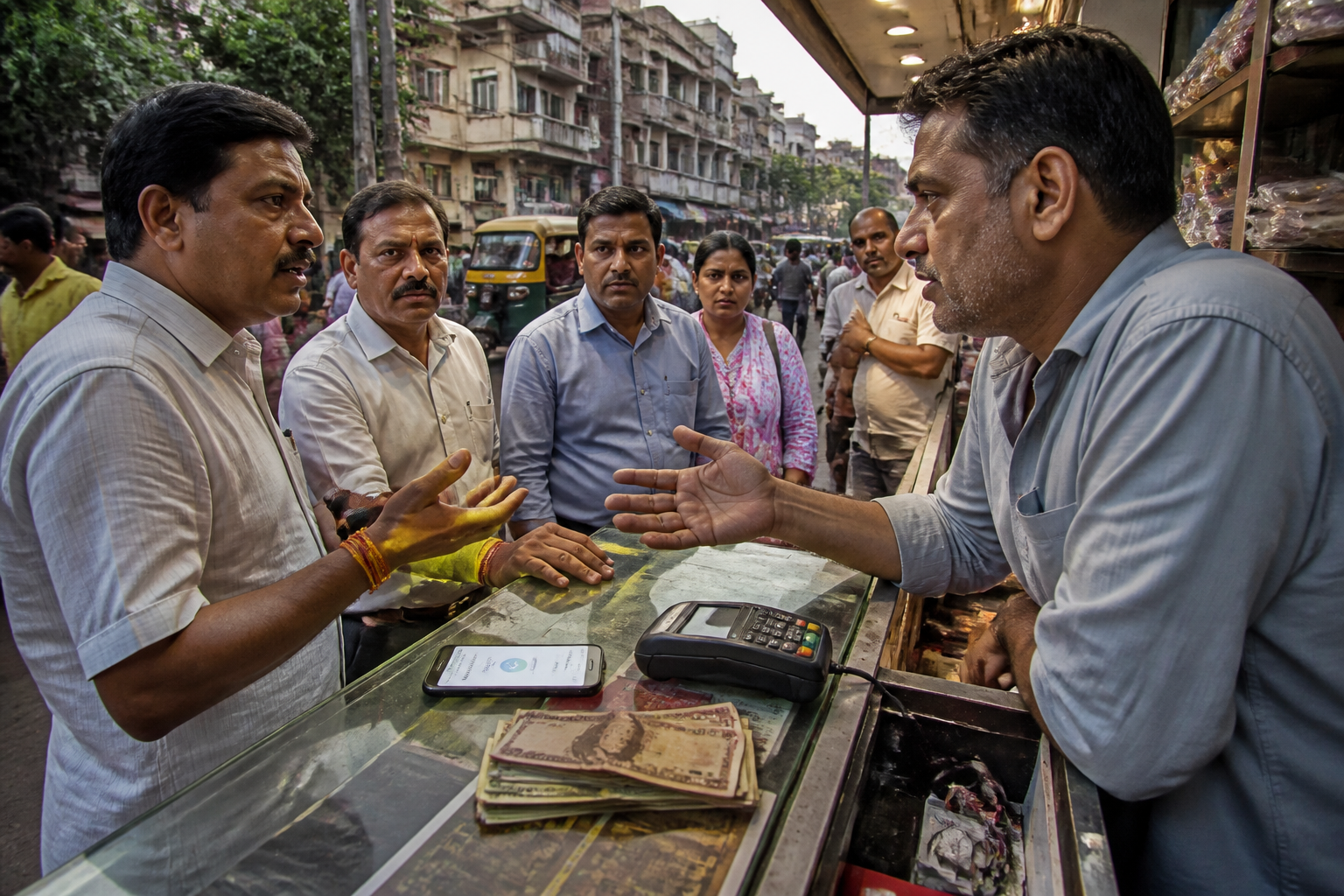
UPI charges proposed on transactions above ₹2,000 triggered a divided response among traders in Mumbai, Navi Mumbai and other parts of Maharashtra on October 2, with some shops accepting only cash while digital payments continued normally in several areas.
Trader groups had called for a nationwide ‘No UPI Day’ to protest the proposed merchant discount rate, or MDR, on UPI transactions. According to the report by Loksatta, some prominent trade organisations supported the protest, while many businesses continued accepting UPI payments through the day.
The Federation of Retail Traders Welfare Association, however, claimed that traders had given complete support to the campaign. Its president, Viren Shah, said the association backed the call against the proposed charges. The response on the ground was therefore not uniform, with participation varying between local markets and trader groups.
The dispute centres on the Centre’s reported decision to introduce a 0.04 per cent MDR on UPI transactions above ₹2,000 from October 15. MDR is a charge associated with processing digital payments and is generally relevant to the merchant side of a transaction. The proposed fee has prompted traders to question the impact on business costs and the future of low-cost digital payments.
The protest also exposed a divide among the organisations representing retailers and traders. Two major bodies, the Federation of All India Vyapar Mandal and the Confederation of All India Traders, withdrew from the agitation after meeting Union Finance Minister Nirmala Sitharaman on Thursday, according to the report. Other associations, including the Federation of Retail Traders Welfare Association, continued to support the campaign.
In Mumbai and Navi Mumbai, as well as in other parts of the state, some retail and wholesale traders accepted UPI payments as usual. Others asked customers to pay in cash. The mixed response meant that the campaign did not produce a uniform shutdown of UPI-based transactions across the region.
The issue has direct implications for the everyday functioning of urban markets. UPI has become part of routine retail transactions, including payments at neighbourhood shops and wholesale businesses. Any change in the cost structure of these payments could affect how merchants choose to accept digital transactions, although the supplied report does not establish whether the proposed MDR will change consumer prices or payment behaviour.
Trader organisations have warned that they could observe a ‘black Diwali’ if the decision is not changed before October 15. That warning places the next phase of the dispute around the government’s response to the proposed charge and the position taken by merchant bodies before the implementation date.
For now, the reported protest has produced a visible but uneven response across Maharashtra. The immediate next milestone is October 15, when the proposed 0.04 per cent MDR on UPI transactions above ₹2,000 is scheduled to take effect unless the decision is changed.
