


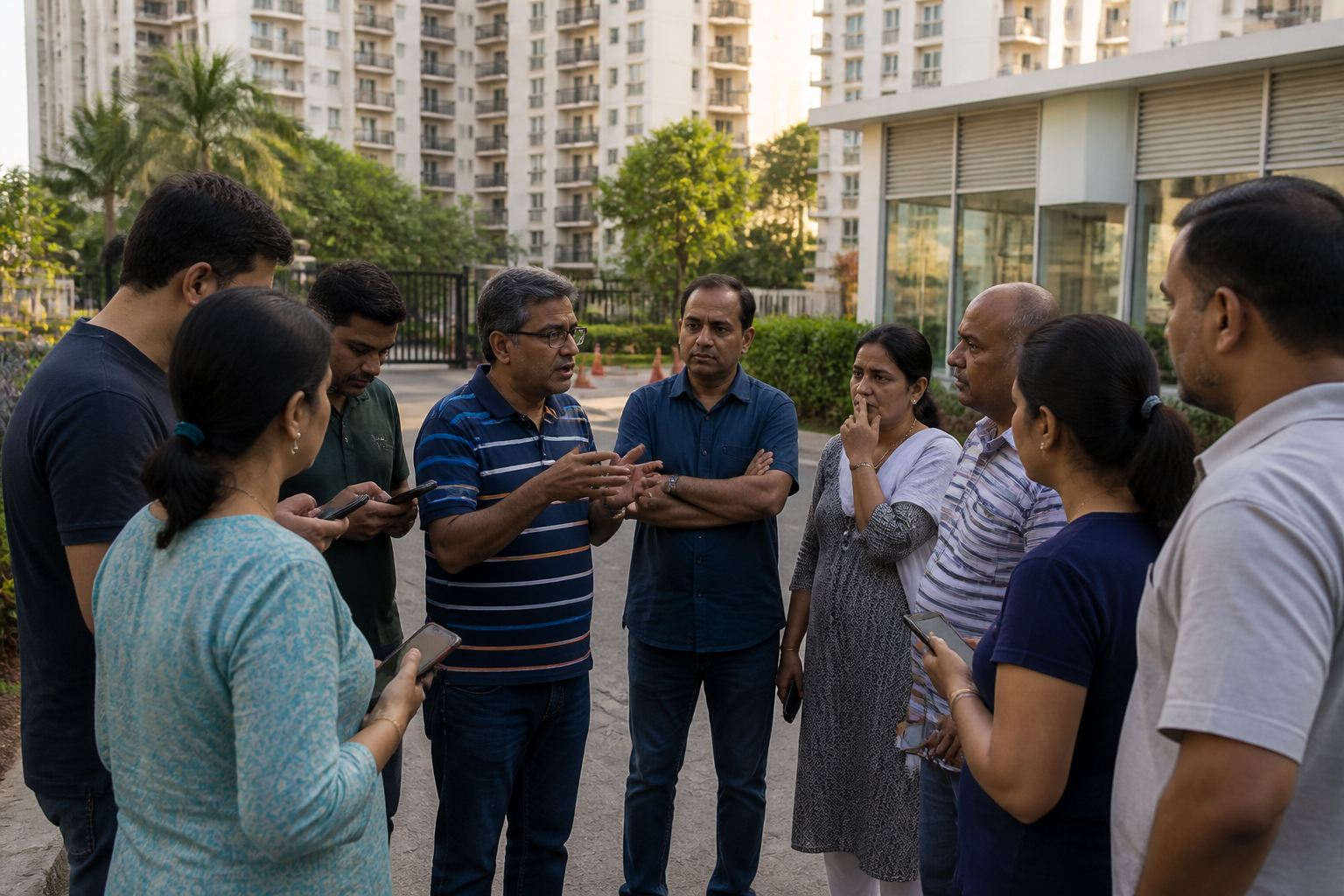
Resident welfare associations representing more than 250 gated communities along Chennai’s Old Mahabalipuram Road have petitioned the National Payments Corporation of India and the Ministry of Finance to extend the flat Rs 5 UPI merchant discount rate to apartment maintenance collections above Rs 2,000.
The Federation of OMR Residents Associations, or FOMRRA, submitted the joint representation with community governance platform ADDA, operated by 3Five8 Technologies. The campaign is also backed by a national coalition of nearly 200,000 resident welfare associations, including MahaSewa, the Bangalore Apartments Federation and the Chandivali Citizens Welfare Association, according to the representation reported by DT Next.
The associations are opposing a proposed commercial MDR of 0.4 per cent on such UPI transactions, which the petition says is scheduled to take effect on October 15. They argue that apartment maintenance collections are not commercial transactions because resident associations collect funds on a non-profit, cost-recovery basis to pay for shared services such as security, water, common-area electricity and lift maintenance.
Under the rate cited in the petition, a maintenance payment of Rs 10,000 would attract a charge of Rs 40. A quarterly payment of Rs 25,000 would attract Rs 100 per transaction. The associations say these costs would ultimately be added to residents’ maintenance bills, despite UPI charges generally not being intended as a direct burden on consumers.
The petition points out that direct payments to electricity and water utilities already qualify for the flat Rs 5 MDR rate, while payments collected through a registered housing association could be treated differently. FOMRRA has asked the authorities to classify apartment maintenance collections as an essential utility category and issue an executive notification before October 15.
“Applying a commercial 0.4% MDR on housing society maintenance is fundamentally irrational. RWAs do not retain trade margins or earn profits,” Harsha Koda, co-founder of FOMRRA, said in the statement cited by DT Next. Koda warned that commercial charges could push voluntary resident committees towards cheques, cash collections and manual bank transfers, reversing the adoption of digital payments and increasing administrative work around audits and reconciliations.
The coalition has also sought a dedicated Merchant Category Code for registered resident welfare associations. Its representation separately raises concerns about the treatment of non-profit housing communities under the 18 per cent goods and services tax applied to maintenance fees above Rs 7,500.
The demand places apartment associations at the intersection of digital payments regulation and municipal-scale service delivery. While RWAs are not utilities themselves, they aggregate payments for services that residents rely on every day, making the classification of their collections significant for the cost and administration of housing in large gated communities. The next immediate milestone is the proposed October 15 start date for the commercial MDR cited in the petition.
