


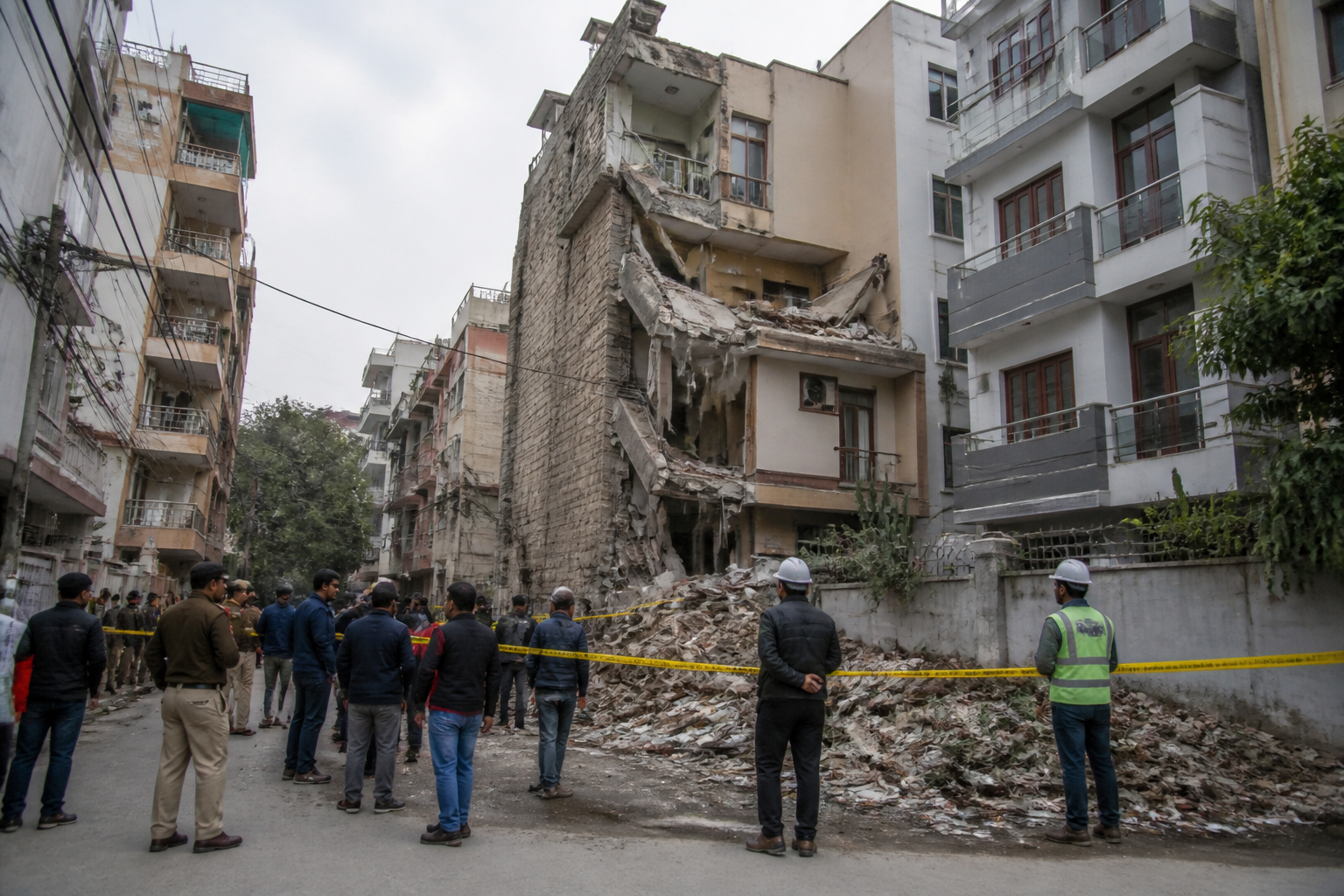
The Delhi High Court’s decision to hear objections to Kiran Bedi’s intervention plea in the Satya Niketan building collapse case has shifted attention from one fatal incident to a wider question: how effectively are Delhi’s paying-guest accommodations and other occupied buildings being monitored for structural and safety compliance? The collapse killed seven people, including five students, and the court has already ordered a high-level inquiry by the Municipal Corporation of Delhi (MCD).
Bedi, a former Puducherry lieutenant governor and retired Indian Police Service officer, approached the court seeking to be made a party to the proceedings. Her stated purpose, according to the report, is to assist the court, drawing on her administrative experience. The Centre, the Delhi government and the MCD, represented by Additional Solicitor General Chetan Sharma, opposed the plea for now and sought time to file objections. The court granted the authorities three days to respond and listed the intervention plea with the main matter on September 25.
The immediate legal question is therefore limited: whether Bedi will be permitted to intervene in the case. The larger administrative question is already embedded in the proceedings. Her application alleges that several paying-guest hostels and buildings in the area are operated by people connected with local political representatives, their families or associates. It further alleges that these relationships enable operators to bypass statutory and safety requirements. These are allegations in a court application, not findings established by the court, but they identify the accountability chain that the proceedings may examine.
That chain matters because a paying-guest building is not only a private property or a residential premises. It is also a form of high-density accommodation, often used by students and young workers who depend on landlords and local authorities to ensure that the space is safe to occupy. In the Satya Niketan case, the collapsed structure housed a boys’ PG accommodation near Delhi University’s South Campus. The location and use of the building made the incident particularly consequential: a failure in building oversight could affect a population living away from home and relying on institutional safeguards that are difficult for individual tenants to assess.
The available account does not establish which specific permissions, inspections or safety certificates applied to the collapsed building, nor does it state whether any particular authority had previously issued a warning or taken enforcement action against it. Those facts will be important to determining responsibility. At this stage, the court record, as described in the report, establishes that the authorities are yet to file status reports and that the MCD has been directed to conduct a high-level inquiry.
This is where the case moves beyond the physical failure of one building. A collapse can be treated as an isolated structural event if the investigation focuses only on the condition of the structure immediately before it fell. It becomes a governance issue when repeated unsafe accommodation incidents raise the possibility that violations were visible, known or administratively traceable but were not acted upon. Bedi’s plea specifically argues that repeated incidents involving unsafe accommodation raise questions about whether local authorities were aware of violations and failed to respond. The court has not decided those allegations, but they provide the central institutional test for the case.
The court’s exchange with the law officer also indicates that the proceedings will involve more than an adversarial dispute over who may appear. When the bench asked what reply would be filed against Bedi, described her as a conscientious citizen with administrative experience and said that the matter was in the larger public interest, it signalled that the intervention request would be considered in the context of the case’s public consequences. The judges also asked the parties not to view the issue adversarially. That does not determine the merits of the allegations, but it places the hearing within a broader inquiry into public accountability.
The authorities’ position is equally significant. The ASG said he held Bedi in great esteem but argued that her application appeared to pre-judge the matter, while the authorities had not yet filed their status reports. That response highlights the difference between identifying a systemic concern and establishing it through evidence. Before any conclusion can be reached, the court will need material showing what happened at the building, which approvals and inspections were required, what records existed, and whether statutory responsibilities were discharged.
The MCD’s high-level inquiry is therefore central to the next stage. Its value will depend on whether it reconstructs only the final structural failure or also examines the administrative life of the building: how it was used, whether its occupancy changed, what permissions governed the PG accommodation, whether complaints were received, and how inspections or enforcement were handled. The supplied report does not say what terms of reference have been fixed for the inquiry. Those details will determine how much the investigation can reveal about the system around the building.
The case also exposes a recurring weakness in the way urban safety is often understood. Regulations may exist on paper, but residents experience safety through inspections, approvals, complaint systems and enforcement at the local level. In dense neighbourhoods with student housing and paying-guest facilities, the distinction between a building’s formal classification and its actual use can become important. A property operating as a high-occupancy accommodation may create risks that are not visible if oversight remains fragmented or limited to paperwork.
However, the evidence currently available cannot establish that such a gap caused the Satya Niketan collapse. Nor does it establish the allegations regarding political connections or deliberate bypassing of statutory requirements. These claims require examination through official records and the parties’ replies. Treating them as proven would collapse the distinction between a litigant’s allegation and a judicial finding—the very distinction the Centre has invoked in opposing Bedi’s plea.
What is established is the sequence of institutional action. The building collapsed on September 6. The High Court ordered a high-level MCD inquiry on September 7. Bedi subsequently sought intervention, and the authorities requested time to oppose that application. The court allowed three days for replies and scheduled the plea to be heard with the main matter on September 25. The next stage will therefore provide the first opportunity to assess the authorities’ documented account of the incident and their response to the allegations of systemic failure.
For Delhi’s urban administration, the significance of the case lies in whether the inquiry connects building safety with the way accommodation is actually operated. For residents, particularly students in PG housing, the relevant question is not simply whether a building appears habitable. It is whether the institutions responsible for approving, inspecting and enforcing safety standards can identify risks before a fatal failure occurs. The proceedings may clarify that question, but the available material does not yet answer it.
The court’s September 25 hearing and the replies due from the Centre, Delhi government and MCD are the immediate milestones. Until those filings and the inquiry findings are placed before the court, the allegations remain unproven and the causes of the collapse remain to be established.
