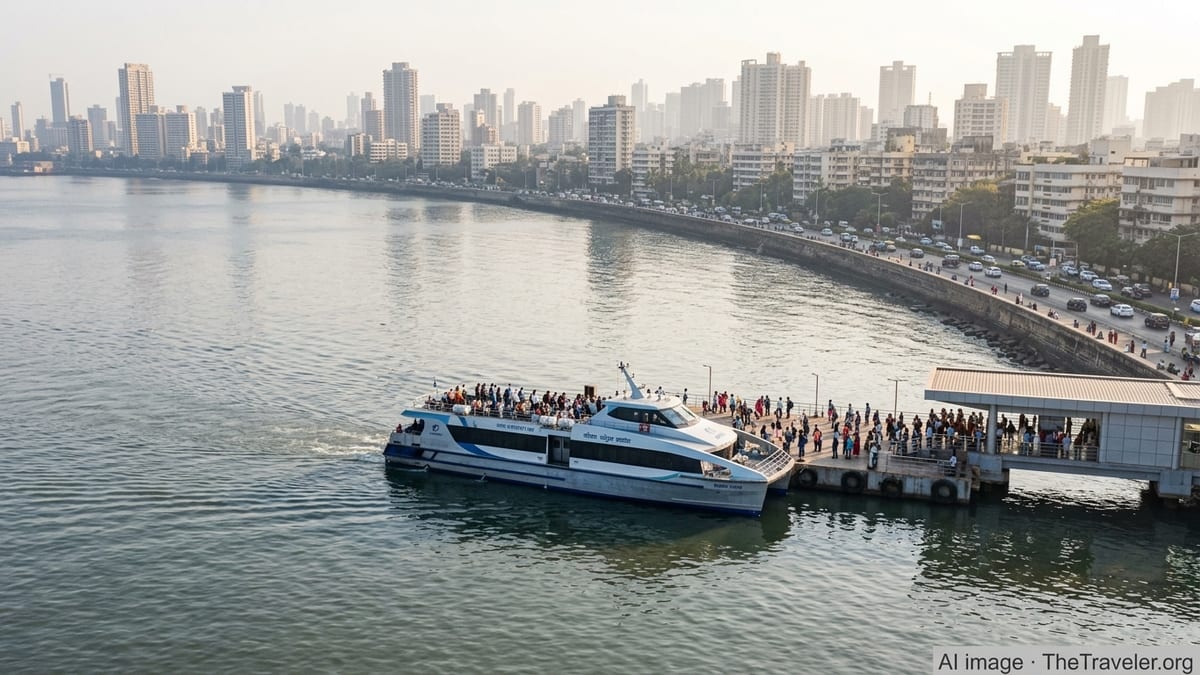
Mumbai Water Metro Plan Targets Coastal Connectivity
Mumbai is advancing plans to introduce a water-based public transport system across its metropolitan region, marking a significant shift in how the city approaches mobility and congestion. With initial tenders now issued, the proposed Mumbai Water Metro aims to utilise the region’s extensive coastline and creek network to create an alternative transit layer connecting key urban and suburban centres. The first phase outlines a network of multiple routes supported by a series of passenger terminals strategically located across Mumbai, Navi Mumbai, Thane, and neighbouring growth corridors. The system is designed to combine new ferry corridors with upgrades to existing services, forming an integrated network that operates on fixed schedules similar to urban rail systems.
Transport planners see the Mumbai Water Metro as a response to mounting pressure on road and rail infrastructure, both of which operate near or beyond capacity during peak hours. By shifting a portion of commuter traffic to waterways, authorities aim to reduce travel time on select routes while easing congestion on parallel land corridors. The model relies on electric or hybrid vessels, positioning the project within a broader push towards low-emission urban mobility. Experts note that water-based transport can offer a relatively energy-efficient alternative, particularly for coastal cities, provided that vessel technology, terminal infrastructure, and operational logistics are aligned with sustainability goals. Equally important is the integration of terminals with existing transport systems. Plans indicate that landing points will function as multimodal hubs, linking ferries with metro rail, bus networks, and last-mile connectivity options. This approach reflects a growing emphasis on seamless travel, where commuters can transition between modes without significant time or cost penalties.
Beyond mobility, the project is expected to influence urban development patterns. Improved connectivity between central business districts and peripheral regions such as Navi Mumbai, Thane, and Vasai-Virar could redistribute demand for housing and commercial space. Real estate analysts suggest that enhanced accessibility may increase the attractiveness of these areas, potentially easing pressure on Mumbai’s core while supporting more balanced regional growth. However, challenges remain. Marine transport systems require careful planning around tidal conditions, weather disruptions, and environmental safeguards. Ensuring affordability, reliability, and frequency will be critical to achieving widespread adoption. Without these, water transit risks being perceived as a niche service rather than a mainstream commuting option. From a climate resilience perspective, diversifying transport infrastructure across land and water can strengthen urban adaptability. Coastal cities facing rising temperatures and extreme rainfall events may benefit from distributed mobility systems that reduce dependency on any single mode.
As the project moves towards implementation, its success will depend on execution, integration, and public acceptance. If delivered effectively, the Mumbai Water Metro could redefine commuting patterns while offering a more sustainable pathway for urban expansion in one of the world’s most densely populated metropolitan regions.