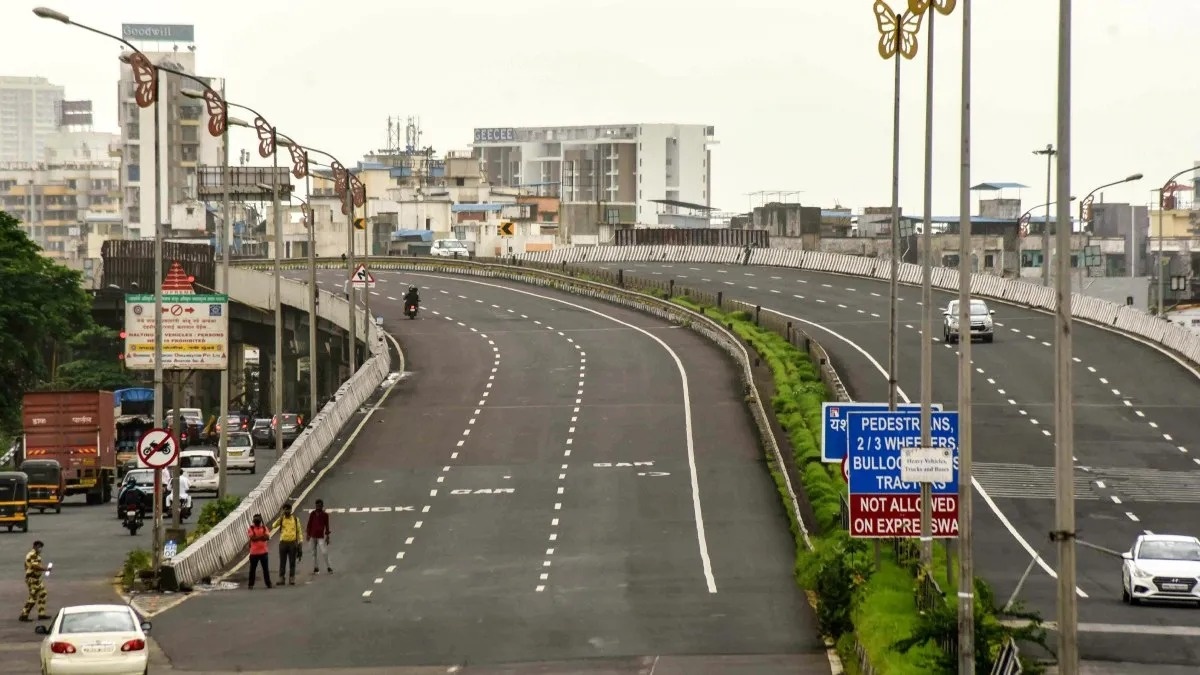
A critical upgrade to one of India’s busiest intercity corridors is approaching completion, with the new alignment on the Mumbai–Pune route expected to open shortly. The project, designed to bypass the accident-prone ghat section, is being positioned as a major intervention to improve travel time, safety, and long-term efficiency on the Mumbai Pune expressway missing link. Stretching over 10 kilometres, the new segment introduces a re-engineered route through challenging terrain, incorporating twin tunnels, a high-elevation viaduct, and a cable-supported bridge structure. Infrastructure officials indicate that construction is nearly complete, with only final finishing works underway before commissioning. The project has been executed under complex environmental and geological conditions, including heavy rainfall zones and steep gradients typical of the Western Ghats.
The Mumbai Pune expressway missing link is expected to reduce travel duration between the two cities by up to half an hour, while also shortening the route distance. More importantly, it aims to divert traffic away from sharp curves and steep descents that have historically contributed to congestion and accidents, particularly during peak travel periods and monsoon months. Urban mobility experts view the development as part of a broader shift towards access-controlled, high-speed corridors that prioritise safety and predictability. By smoothing traffic flow and reducing stop-start conditions, such infrastructure can also contribute to lower fuel consumption and emissions per trip—an important consideration as cities seek to balance connectivity with environmental impact. At the same time, the project raises questions about how large-scale road infrastructure aligns with sustainable transport goals. While improved highways enhance regional connectivity and economic integration, planners note that long-term resilience will depend on parallel investments in public transport and multimodal systems.
Without this, increased road capacity can induce higher vehicle usage, offsetting environmental gains. From an economic standpoint, the corridor is expected to strengthen links between Mumbai’s financial hub and Pune’s industrial and technology clusters. Faster and more reliable travel can support logistics efficiency, tourism flows, and regional development. The improved access to hill forts, cave sites, and other destinations along the route may further stimulate local economies. Notably, authorities have indicated that the new section will be introduced without immediate changes to toll structures, aiming to ensure a smoother transition for users. Initial access is likely to prioritise passenger vehicles, helping to manage traffic volumes during the early phase of operations.
As Maharashtra expands its network of high-speed corridors, the completion of this segment underscores both the opportunities and trade-offs of infrastructure-led growth. The coming months will reveal how effectively the new alignment delivers on its promise of safer, faster travel—while fitting into a broader vision of sustainable and balanced regional mobility.