


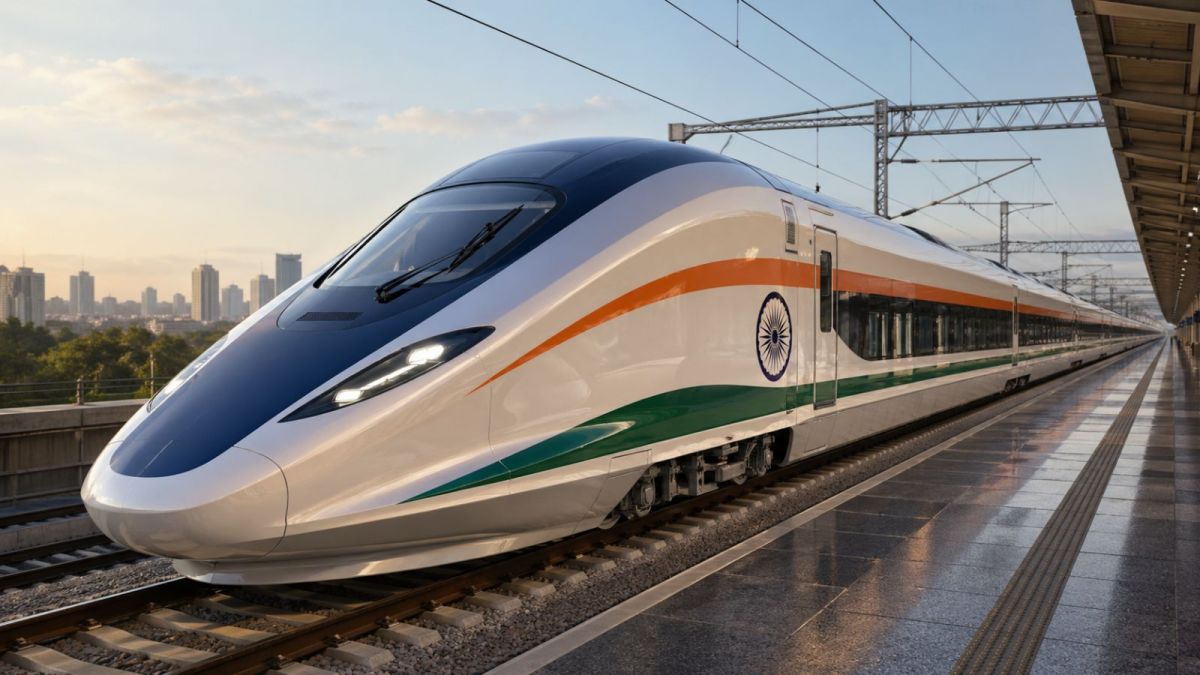
India’s push to develop an indigenous high-speed rail system is gathering pace, with the first domestically built bullet train expected to be ready by 2027. The development could reshape intercity connectivity, particularly for major economic corridors linked to cities like Bengaluru, where demand for faster, efficient transport continues to grow.
The high-speed train project, led by Indian Railways, marks a significant step towards reducing reliance on imported technology in advanced rail systems. By focusing on domestic manufacturing and design capabilities, the initiative aligns with broader efforts to strengthen India’s industrial base while expanding modern transport infrastructure.Although initial high-speed corridors are concentrated in western India, the long-term implications extend to southern urban centres such as Bengaluru. As one of the country’s fastest-growing metropolitan regions, Bengaluru faces increasing pressure on its transport networks, with road congestion and air travel demand highlighting the need for alternative mobility solutions.High-speed rail offers the potential to significantly reduce travel time between major cities, creating new economic linkages and enabling more efficient movement of people and goods. For Bengaluru, future integration into a national high-speed network could enhance connectivity with other economic hubs, supporting business travel, tourism, and regional development.Urban and transport experts note that the introduction of indigenous technology could also lower costs and improve scalability.
By developing local expertise, India may be better positioned to expand its high-speed rail network beyond initial corridors, making it more accessible to a wider range of cities over time.However, the project also raises important considerations around sustainability and land use. High-speed rail infrastructure requires significant investment and careful planning to minimise environmental impact. Aligning such projects with low-carbon transport goals will be essential, particularly as cities work to reduce emissions from traditional modes like road and aviation.From an economic perspective, the rollout of a domestically built bullet train could stimulate job creation and innovation within the rail and manufacturing sectors. It may also encourage the development of supporting industries, including component manufacturing, maintenance services, and technology solutions.The timeline for deployment suggests that the coming years will be critical in determining how effectively India can transition from pilot projects to a broader network. For cities like Bengaluru, the focus will be on how quickly and efficiently they can be integrated into this emerging system.
As the country moves towards high-speed rail adoption, the emphasis will remain on balancing technological advancement with affordability, accessibility, and environmental responsibility. The success of the indigenous bullet train initiative could set the tone for the future of intercity mobility in India, offering a glimpse into a faster and more connected urban landscape.
Also Read:Bengaluru Road Closures During TCS World 10K Run
