


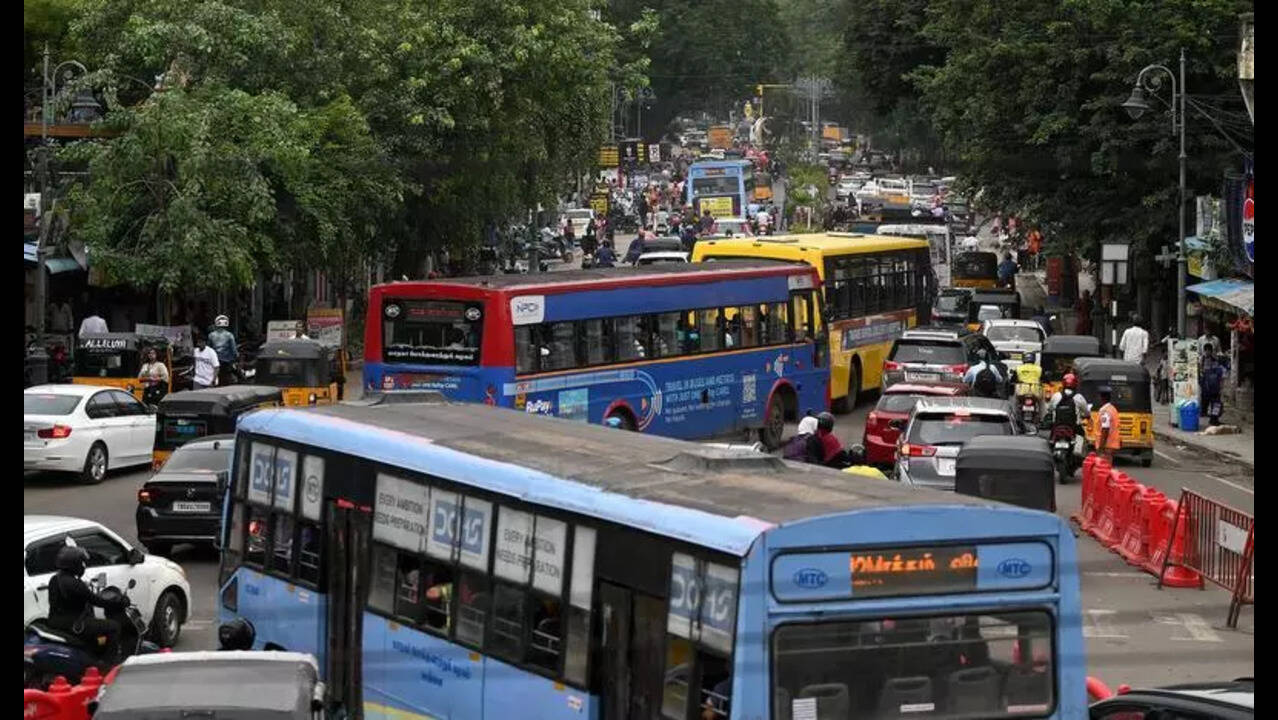
Chennai authorities have introduced temporary traffic diversions for heavy vehicles over a two-day period, aiming to ease congestion and ensure smoother movement across key urban corridors. The move reflects the city’s ongoing struggle to balance freight mobility with rising passenger traffic in an increasingly dense metropolitan environment.
The restrictions, applicable on designated dates, are expected to redirect trucks and other large vehicles away from critical inner-city routes during peak hours. Officials indicate that the decision is part of a broader traffic management strategy designed to reduce bottlenecks, particularly in areas prone to chronic congestion. By limiting heavy vehicle entry, authorities hope to improve travel times and enhance road safety for daily commuters.Urban mobility experts note that such short-term measures often become necessary in cities where infrastructure expansion has not kept pace with the rapid growth in vehicle numbers. Chennai, a major logistics and industrial hub, experiences significant freight movement that frequently overlaps with commuter traffic, creating pressure on arterial roads and junctions.The Chennai traffic diversion plan also underscores the challenges of managing mixed-use transport networks. Heavy vehicles, while essential for economic activity, can slow traffic flow, increase accident risks, and contribute to higher emissions in densely populated areas. Redirecting them to peripheral routes or off-peak hours is a common strategy, but it requires careful coordination to avoid shifting congestion to other parts of the city.
From an economic perspective, temporary rerouting may have implications for logistics efficiency, particularly for businesses reliant on time-sensitive deliveries. However, experts argue that predictable and well-communicated diversion plans can help minimise disruption while improving overall network performance.In the long run, cities may need to invest in dedicated freight corridors or logistics hubs to separate goods movement from passenger traffic.Environmental considerations are also part of the equation.Idling heavy vehicles in congested zones contribute significantly to air pollution and fuel consumption. By enabling smoother flow or diverting traffic away from dense urban areas, such measures can offer short-term environmental benefits, although sustained impact depends on long-term planning.The Chennai traffic diversion initiative highlights the importance of integrated urban mobility strategies that consider both economic and environmental priorities. As cities expand, managing freight movement efficiently without compromising liveability is becoming a central policy challenge.
Looking ahead, Chennai’s approach may evolve towards more permanent solutions, including smart traffic systems, improved public transport, and infrastructure designed to accommodate diverse mobility needs. For now, the temporary diversions serve as a reminder of the complex balancing act required to keep a growing city moving efficiently.
Also Read:Chennai civic powers demand signals urban shift
