


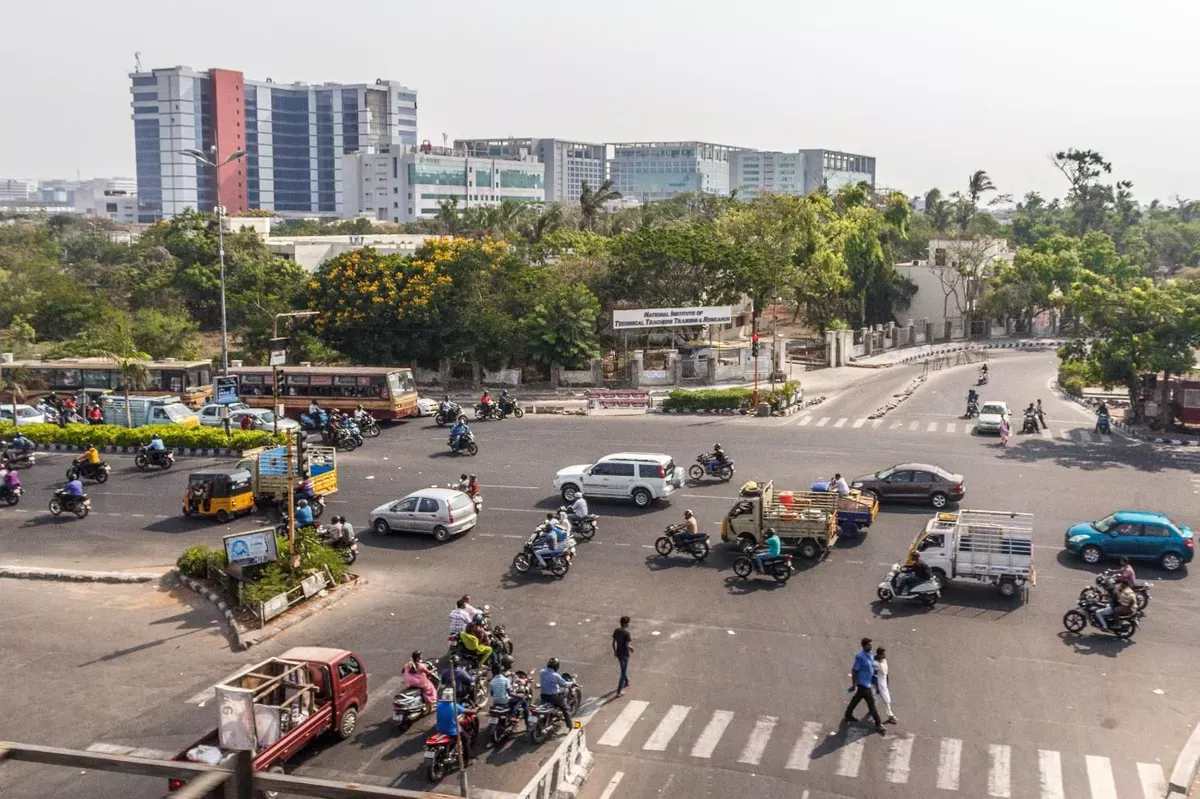
Chennai’s key coastal transport corridor is approaching a major upgrade milestone, with the East Coast Road (ECR) widening project entering its final stages. Authorities indicate that a significant portion of the work has been completed, with the remaining stretch expected to be finished in the coming months.
The development is poised to reshape connectivity along one of the city’s busiest and most strategically important routes.The ECR serves as a critical link between Chennai and several fast-growing suburban and tourism zones along the coast. The ongoing expansion aims to ease congestion, improve travel time reliability, and enhance road safety along a corridor that has witnessed increasing traffic volumes in recent years. The near-completion of the Chennai ECR widening project signals a response to sustained urban expansion and rising commuter demand.Officials involved in the project highlight that the widening exercise includes lane expansion, improved junction design, and upgraded road infrastructure to handle higher vehicular capacity. The corridor has long faced bottlenecks, particularly during weekends and holiday seasons when tourist traffic peaks. With improved road width and traffic flow, authorities expect a reduction in travel delays and accident risks.Urban development experts, however, point out that road expansion alone may not provide a long-term solution to congestion. The Chennai ECR widening initiative reflects a broader pattern in Indian cities, where infrastructure upgrades often prioritise vehicular movement without parallel investments in public transport alternatives.As suburbanisation accelerates along the ECR belt, integrated mobility planning will be crucial to prevent recurring congestion.
The corridor’s proximity to ecologically sensitive coastal zones also raises sustainability considerations. Infrastructure development along coastal stretches must balance economic growth with environmental protection, particularly in areas vulnerable to climate risks such as sea-level rise and extreme weather events. Experts stress the importance of resilient design, proper drainage systems, and regulated development to mitigate long-term environmental impact.From a real estate perspective, improved connectivity along ECR is likely to influence land use patterns and property demand.Enhanced road infrastructure often drives residential and commercial development, potentially accelerating urban sprawl if not managed through planned zoning and infrastructure provisioning. This underscores the need for coordinated urban planning that aligns transport upgrades with housing, utilities, and social infrastructure.For daily commuters, the project offers immediate benefits in terms of reduced travel time and smoother journeys. However, planners caution that without demand management strategies—such as promoting public transport, carpooling, and non-motorised mobility—the gains from road expansion could diminish over time as vehicle numbers continue to grow.
As the project moves towards completion, attention will shift to how effectively the upgraded corridor is integrated into Chennai’s broader mobility network. The long-term success of the initiative will depend not only on physical infrastructure but also on policy measures that support sustainable, inclusive, and climate-resilient urban transport systems.
Also Read:AI Robotics Summer Camps Gain Popularity In Chennai
