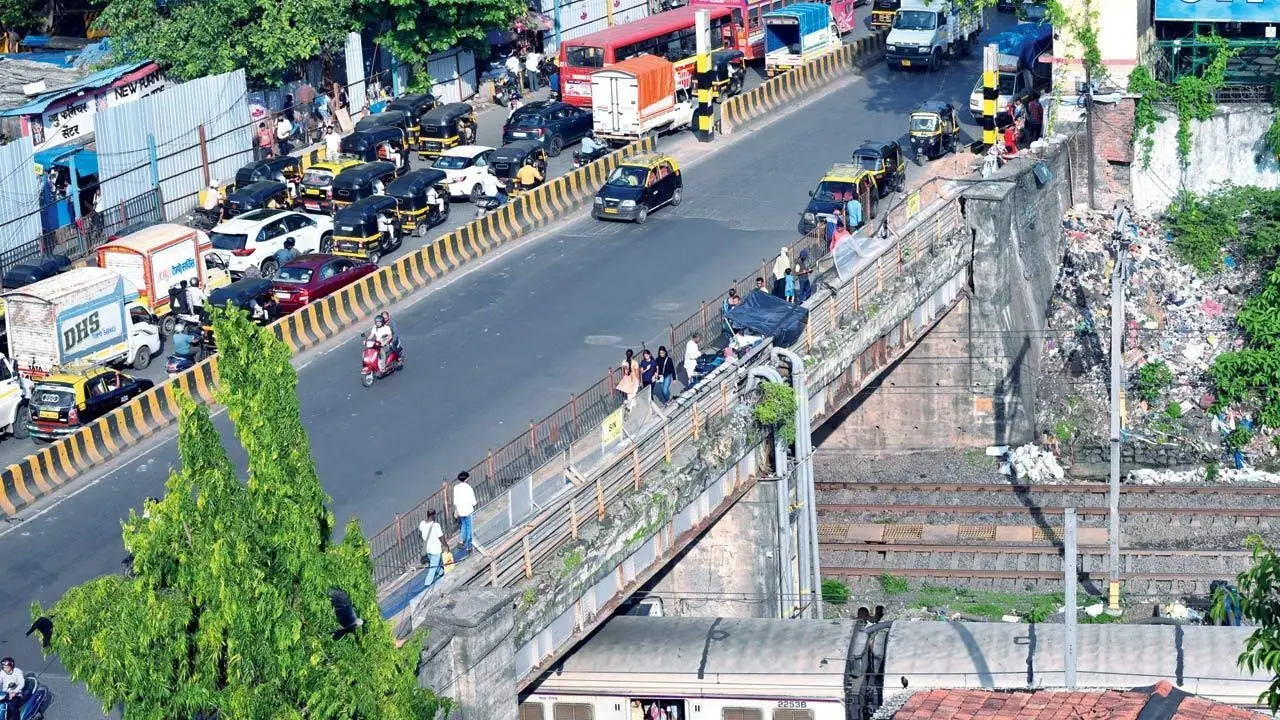
Mumbai’s infrastructure upgrade programme has entered a tighter execution phase, with the municipal administration setting firm deadlines for key transport and road works, including the reconstruction of the Sion East–West railway flyover. The directive reflects growing pressure on urban agencies to balance large-scale mobility upgrades with uninterrupted city movement and seasonal risk preparedness.
The Sion flyover project, a critical connector between eastern and western corridors, has been instructed to meet a completion target of mid-July 2026. Officials have also been directed to ensure that all major excavation activities across the city are halted by the end of April, with road surfaces required to be restored and opened to traffic by the end of May 2026. The phased timeline aims to reduce prolonged congestion and limit disruption during the monsoon transition period, when road stability becomes particularly sensitive. Urban transport planners view the move as part of a broader shift towards stricter project governance in high-density cities, where overlapping infrastructure works often lead to prolonged bottlenecks. The Sion flyover completion deadline Mumbai has become a key marker in this effort, as the corridor carries significant commuter and freight movement between major residential and industrial zones.
Alongside mobility upgrades, the civic administration reviewed progress on a large-scale sewage treatment facility in Dharavi, which has reached over half of its construction phase. The plant, designed using compact multi-storey engineering due to limited land availability, is expected to significantly enhance wastewater treatment capacity once operational in 2027. Experts note that such decentralised, high-density treatment models are increasingly vital for megacities facing land scarcity and rising environmental stress. During site assessments across eastern Mumbai, attention was also given to flood mitigation systems near railway-adjacent low-lying areas. Waterlogging concerns reported in previous monsoon seasons have prompted the introduction of improved drainage channels and pumping infrastructure, designed to redirect stormwater into existing nullah networks. Early interventions have already shown partial success in reducing flood frequency, although officials have been instructed to further strengthen system reliability ahead of peak rainfall months.
Infrastructure monitoring also extended to road concretisation works, where multiple phases covering hundreds of kilometres have already been completed. The current focus remains on ensuring quality control, timely closure of excavation sites, and coordination among utility agencies to avoid repeated digging of newly constructed roads. Urban analysts highlight that the convergence of deadlines across flyovers, roadworks, drainage, and sewage infrastructure signals a more integrated approach to city-making. However, they also caution that execution discipline, contractor coordination, and real-time monitoring will determine whether these timelines translate into tangible improvements for daily commuters.
The administration is expected to maintain a strict compliance framework over the coming months, with emphasis on minimising traffic disruption while ensuring that long-delayed infrastructure upgrades move into operational phases without further slippage.
Mumbai Sion Flyover Completion Deadline Set for July 2026