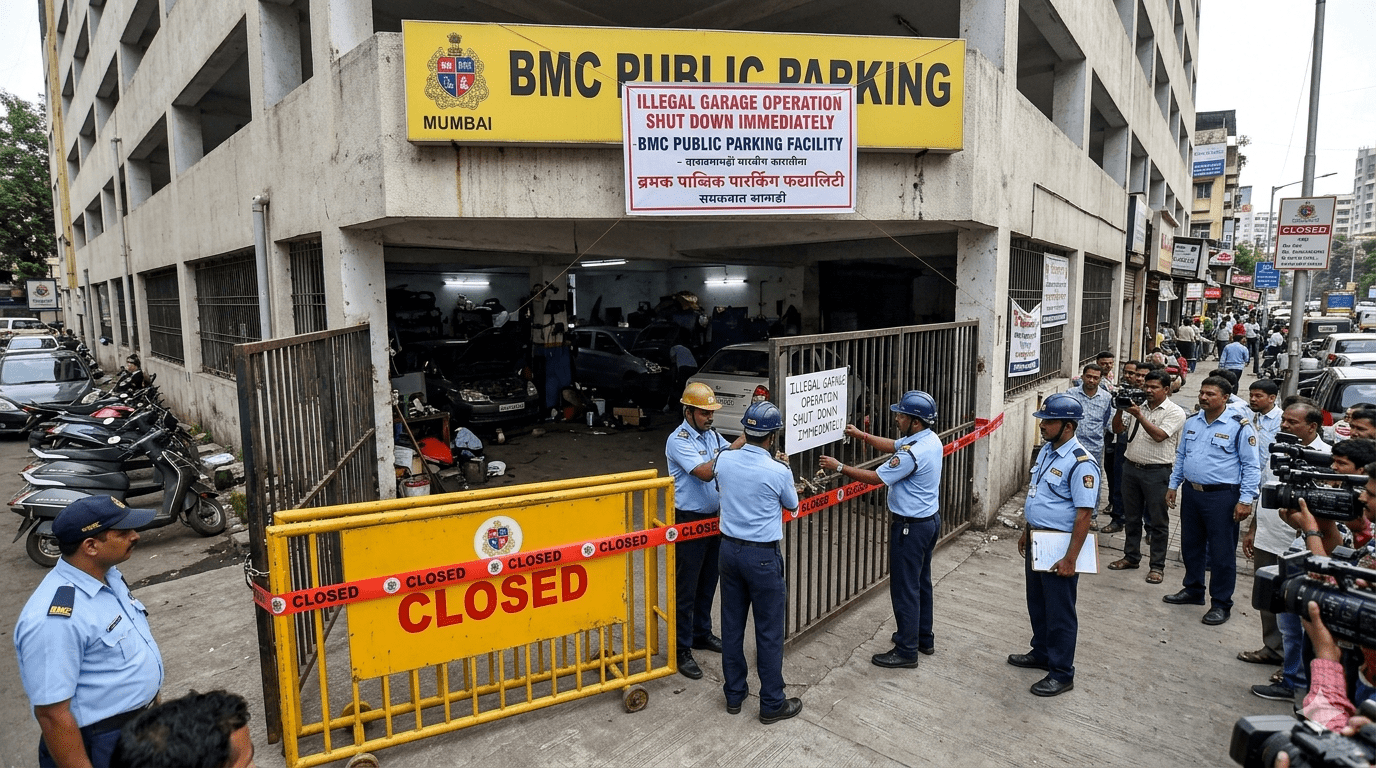
A municipal-owned multi-level parking structure near Byculla railway station in Mumbai has come under scrutiny after unauthorised commercial repair activity was detected within its premises, leading to enforcement action and restricted access. The incident has raised broader concerns about governance oversight in public infrastructure assets and the challenges of safeguarding civic spaces from informal commercial use.
The facility, designed as a high-capacity parking hub for private and commercial vehicles along with two-wheelers, had reportedly seen non-parking activities operating from its ground level. Following complaints and subsequent reporting, civic authorities initiated corrective measures, resulting in the removal of unauthorised equipment and cessation of repair-related operations within the structure. Urban governance experts note that such cases reflect a recurring issue in rapidly growing cities, where underutilised or partially functional infrastructure can become vulnerable to informal economic activity. In this instance, operational disruptions linked to a malfunctioning vehicle lift had already limited full-scale public use of the facility, creating conditions that allowed non-authorised occupation of space.
While enforcement action has now been taken, civic officials have indicated that the parking structure itself is currently not functioning at full capacity due to ongoing technical repair work. The temporary closure of certain sections has also led to controlled, restricted access arrangements aimed at preventing further misuse of the premises until systems are restored. According to civic administration responses, the ground level had been temporarily made available for vehicle storage under local-level arrangements intended to prevent encroachment and maintain basic utilisation of the space. However, the presence of commercial repair activity within a public asset has highlighted gaps in monitoring mechanisms and asset management protocols within urban transport infrastructure.
From a broader urban planning perspective, specialists argue that such incidents underscore the importance of integrating real-time monitoring systems, clearer operational accountability, and stronger enforcement frameworks for public parking assets. As cities like Mumbai continue to expand vertical mobility infrastructure, ensuring that these assets are used strictly for intended public purposes becomes critical to maintaining efficiency and trust in civic systems. The episode also brings attention to the wider challenge of balancing infrastructure utilisation with governance discipline. While parking shortages remain a persistent issue across dense urban zones, experts emphasise that allowing informal or unauthorised commercial activity within civic facilities risks undermining long-term urban mobility planning.
Authorities are expected to restore full operational capacity once repair work on mechanical systems is completed and access protocols are standardised. Urban policy observers suggest that stronger oversight frameworks and periodic audits may be necessary to prevent recurrence of similar incidents across municipal infrastructure. The case ultimately highlights the need for more resilient management of civic assets, ensuring that public infrastructure serves its intended purpose while supporting orderly, equitable, and sustainable urban mobility systems.
BMC Parking Facility Illegal Garage Operation Shut Down Immediately