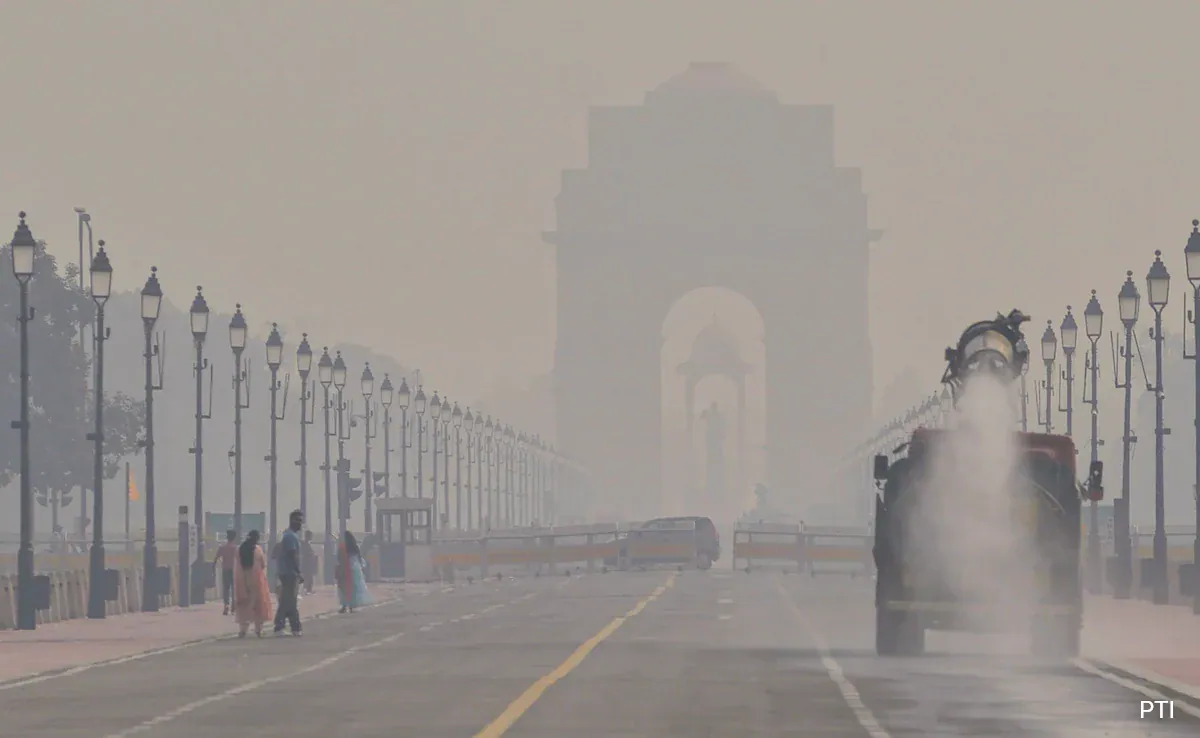
Delhi’s Summer Air Faces New Pollution Challenge Beyond Smog. Delhi and several neighbouring NCR cities are witnessing a worrying rise in ground-level ozone pollution, adding a new layer of risk to urban air quality even as particulate pollution shows signs of moderation. Environmental experts say the emerging trend highlights how climate conditions, traffic emissions and rapid urbanisation are reshaping pollution patterns across northern India’s expanding metropolitan belt.
Unlike winter smog, which is largely driven by particulate matter such as PM2.5 and PM10, ground-level ozone is an invisible pollutant formed through chemical reactions between nitrogen oxides and volatile organic compounds under strong sunlight. The problem tends to intensify during late spring and early summer when temperatures rise and skies remain relatively clear. Data reviewed from national pollution monitoring systems indicates that ozone concentrations in Delhi have steadily increased in recent years, with multiple high-exposure days now being recorded across the warmer months. Environmental analysts warn that this trend could become more severe as heatwaves become longer and more frequent due to climate change. Public health specialists describe ground-level ozone as particularly harmful because it directly affects the respiratory system. Prolonged exposure can aggravate asthma, trigger throat and eye irritation, and reduce lung function. Outdoor workers including traffic personnel, street vendors, delivery riders and construction labourers are considered among the most vulnerable groups because of extended exposure during peak afternoon hours.
The issue is no longer confined to the national capital. Several NCR cities including Noida, Meerut and Muzaffarnagar are also reporting elevated ozone levels, reflecting the wider environmental pressures created by urban growth, vehicle density and industrial emissions. Experts note that pollution behaviour varies sharply between cities depending on local weather conditions, traffic movement and land-use patterns. Urban climate researchers say the challenge is more complex than conventional particulate pollution because ozone is not emitted directly from a single source. Instead, it forms through atmospheric reactions, making mitigation strategies harder to implement. Measures focused only on dust control or temporary traffic restrictions may therefore deliver limited results unless cities also reduce precursor emissions from transport fleets, industrial activity and fuel combustion.
Recent weather fluctuations have added another dimension to the situation. Intermittent rain and cloud cover during early April helped moderate temperatures across Delhi-NCR, delaying the onset of extreme heat. Meteorological records show that maximum temperatures largely remained below seasonal averages during the first week of the month before crossing 40 degrees Celsius in mid-April. However, scientists caution that once intense sunlight returns after rainfall, ozone formation can accelerate rapidly. Urban planners argue that the growing ground-level ozone burden should influence future city planning decisions, especially around transport systems, industrial zoning and heat-resilient infrastructure. With northern Indian cities continuing to expand outward, experts say cleaner mobility, green buffers and lower-emission development models may become essential to protecting public health during increasingly hotter summers.