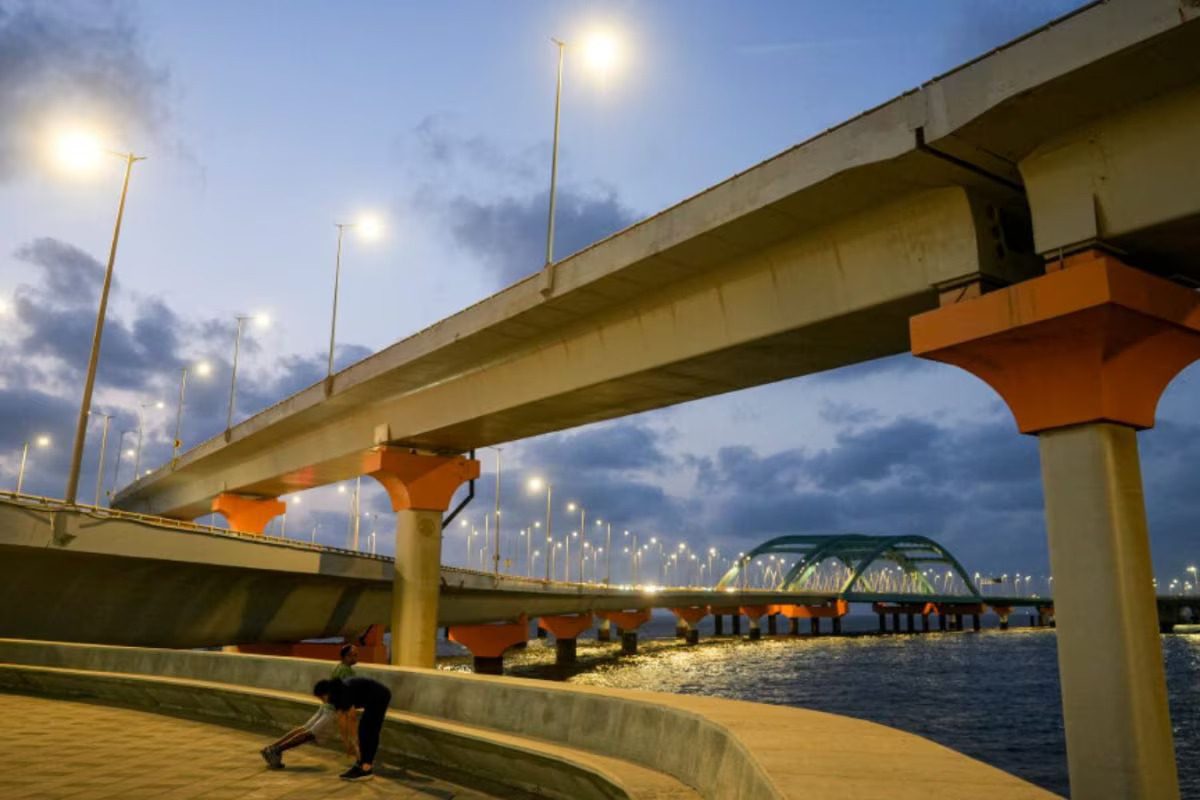
Mumbai’s coastal highway corridor, developed as a high-speed urban mobility link along the western shoreline, has rapidly evolved into one of the city’s most heavily used road networks within two years of partial and full operations. Official traffic assessments indicate a steep rise in daily vehicle movement, signalling both strong demand for fast east–west connectivity and emerging pressure on new-age urban infrastructure.
The corridor, designed to reduce congestion on parallel arterial roads and significantly cut travel time between key business and residential districts, has recorded a multi-fold increase in usage since its initial opening phase. What began as a modest traffic flow in its early operational stage has expanded into sustained high-volume movement, with current usage levels placing it among Mumbai’s busiest commuting routes. Transport data shows that daily vehicle movement has increased from single-digit thousands during the initial phase to more than 60,000 trips per day by early 2026. Over the same period, cumulative usage has crossed several crore vehicle movements, highlighting the corridor’s swift integration into the city’s daily mobility network. Urban mobility specialists note that such rapid scaling is typical of high-capacity infrastructure in dense megacities, where suppressed demand often shifts immediately onto new express corridors once opened.
The Mumbai Coastal Road traffic growth has also been influenced by its strategic integration with key junctions, business districts, and residential clusters along the western coastline. The reduction in travel time between major nodes has encouraged private vehicle adoption of the route, particularly during peak office hours, leading to sustained congestion concentration during specific time windows despite its high-speed design. Urban planners suggest that while the corridor has successfully reduced pressure on older coastal and arterial roads, it has also created new demand patterns that require continuous monitoring. The transformation of the route into a primary mobility spine reflects a broader trend in Indian metropolitan regions, where large-scale infrastructure projects quickly shift from capacity relief to demand generators.
The opening of the adjoining public promenade has further intensified footfall along the corridor, blending mobility infrastructure with public recreational space. While this dual-use model is increasingly seen as a progressive urban design approach, experts caution that balancing leisure access with high-speed traffic corridors requires strong safety, environmental, and crowd management frameworks. The Mumbai Coastal Road traffic growth also raises longer-term questions about sustainable mobility planning. Transportation analysts point out that without complementary investments in public transport expansion and demand management strategies, high-speed road infrastructure risks reinforcing private vehicle dependency in already congested urban systems.
Despite these challenges, civic authorities view the corridor as a critical long-term investment in urban connectivity, with its performance closely watched as a benchmark for future coastal and elevated transport projects in the metropolitan region. Continued data-driven management is expected to play a key role in ensuring that capacity gains are not offset by uncontrolled traffic growth.
Mumbai Coastal Road Traffic Surges Sevenfold Becomes Key Corridor