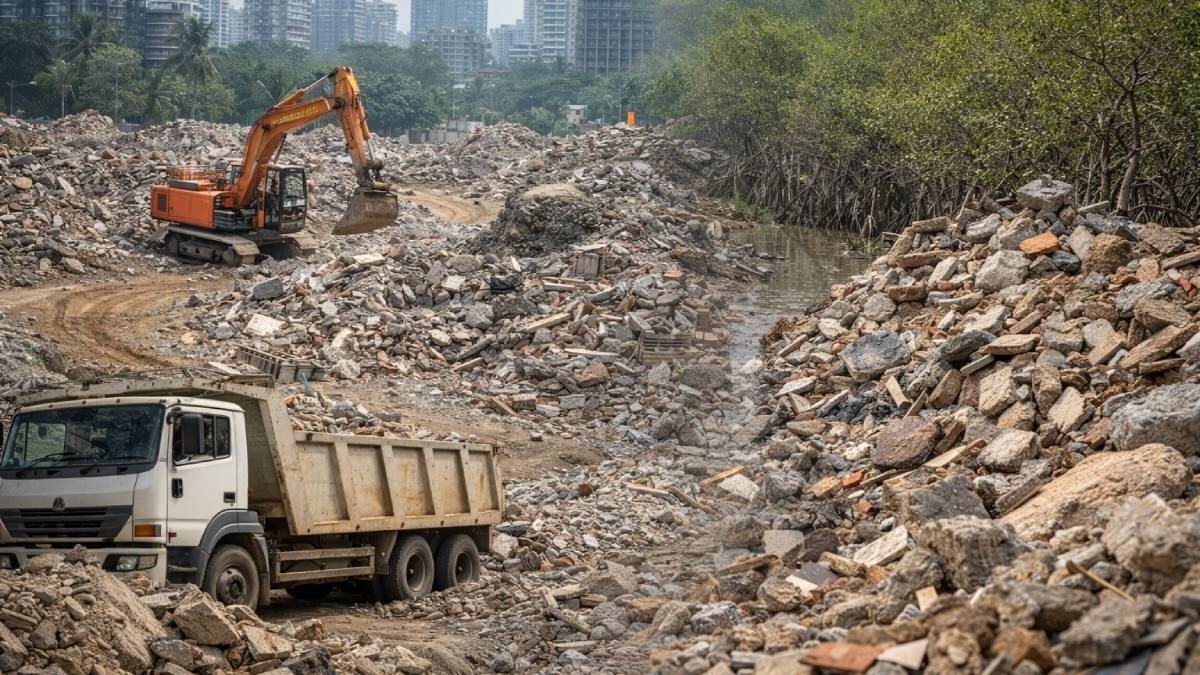
Mumbai’s civic administration has initiated a decentralised approach to address the growing challenge of construction and demolition debris, directing all wards to design localised management strategies alongside routine sanitation work. The move signals a shift towards more structured handling of waste streams that have increasingly strained the city’s cleanliness systems and urban environment. The directive requires each ward to map debris hotspots, assess the volume of waste generated, and establish mechanisms for systematic collection and disposal. Construction and demolition waste—often generated from redevelopment projects, road works, and informal repairs—has emerged as a persistent urban issue, frequently ending up in open spaces, drains, and roadside margins.
Officials involved in the review process indicated that the absence of ward-level planning has led to fragmented responses, with some areas managing waste effectively while others struggle with repeated dumping. By mandating tailored plans, the administration aims to bridge these gaps and improve visible cleanliness across neighbourhoods. The Mumbai CND waste plans are also tied to broader performance benchmarks, including national cleanliness assessments and internal monitoring frameworks. However, urban experts point out that rankings alone cannot drive sustainable outcomes unless supported by systemic reforms in waste logistics, recycling infrastructure, and enforcement. From an environmental perspective, unmanaged debris poses risks beyond aesthetics. Fine particulate matter from construction waste contributes to air pollution, while clogged drainage systems increase the likelihood of urban flooding during heavy rainfall. In a coastal city already vulnerable to climate pressures, inefficient debris management can amplify both ecological and economic risks.
The renewed focus on workforce deployment and mechanised cleaning reflects an attempt to improve operational efficiency. Sanitation teams are being reorganised to prioritise early-day cleaning cycles, while subsequent shifts are expected to maintain road conditions and address residual waste. Supervisory mechanisms are also being tightened, with field inspections intended to ensure accountability across all levels of service delivery. Urban planners note that effective implementation of Mumbai CND waste plans will depend on coordination between multiple stakeholders, including contractors, developers, and local communities. Without clear accountability for waste generators, enforcement remains a challenge, particularly in rapidly redeveloping zones where debris generation is continuous. There is also a growing case for integrating circular economy principles into the city’s approach. Reprocessing construction waste into reusable materials such as aggregates and paving blocks could reduce landfill dependency and create economic opportunities within the recycling sector. Several Indian cities have begun exploring such models, but scaling them requires investment and regulatory clarity.
As Mumbai continues to expand vertically and horizontally, the pressure on its waste management systems is expected to intensify. The current push for ward-level planning marks a step towards decentralised governance, but its effectiveness will ultimately depend on consistent execution, monitoring, and the ability to align infrastructure growth with environmental resilience.