Mumbai CCTV Waste Monitoring Push For Cleaner Streets
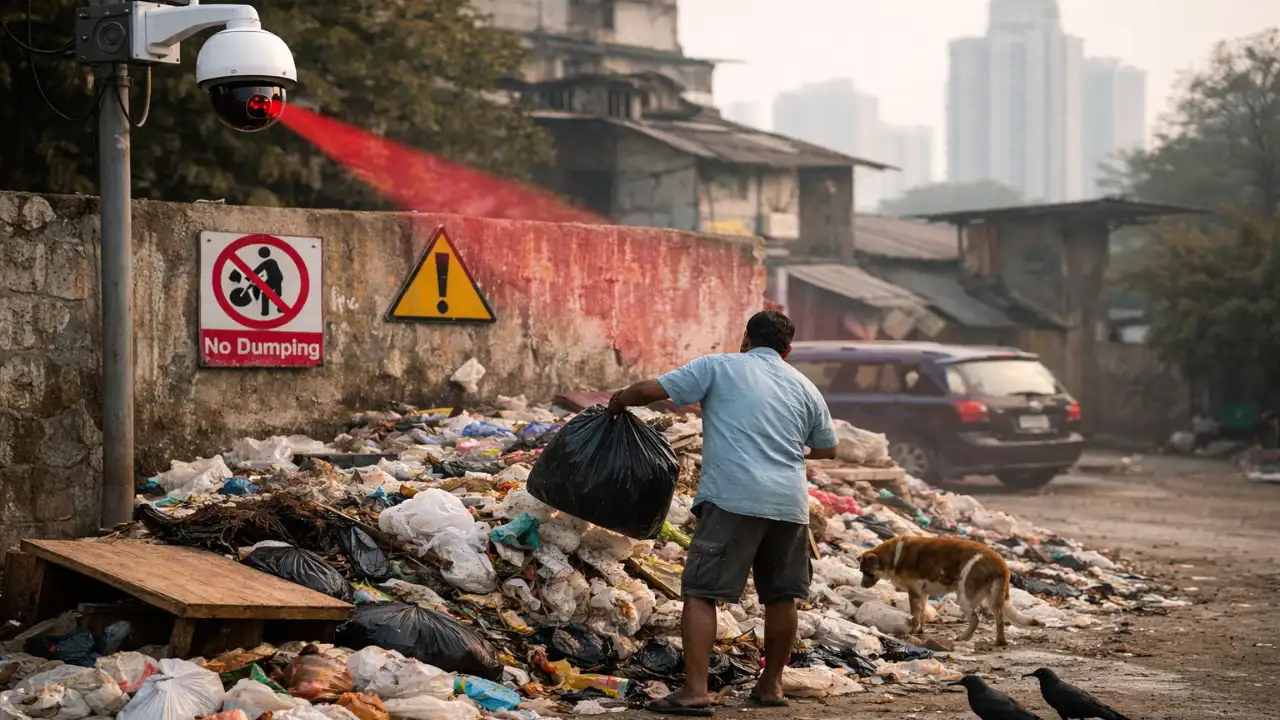
Mumbai’s civic administration is turning to surveillance technology to address persistent illegal dumping, introducing camera-based monitoring at identified garbage hotspots across the city. The initiative, to be rolled out initially on a pilot basis in select neighbourhoods, reflects a growing reliance on data-driven enforcement to improve urban sanitation outcomes. The move comes as illegal waste disposal continues to undermine routine cleaning operations, particularly in dense and mixed-use areas where monitoring remains difficult. By deploying cameras in locations with repeated violations, authorities aim to identify offenders, deter dumping behaviour, and strengthen compliance with waste management regulations.
Field inspections in eastern suburbs such as Wadala, Chembur, and Chunabhatti have highlighted gaps in oversight, with recurring waste accumulation despite regular clearance efforts. Civic officials involved in the review process indicated that traditional enforcement methods—relying heavily on manual supervision—have struggled to keep pace with the scale and frequency of violations. The Mumbai CCTV waste monitoring approach is expected to complement existing sanitation systems rather than replace them. Urban experts note that while surveillance can improve accountability, it must be integrated with broader waste management reforms, including efficient collection systems, decentralised processing, and citizen engagement. A key challenge lies in ensuring that enforcement does not disproportionately impact vulnerable communities. Informal settlements and high-density housing clusters often lack adequate waste infrastructure, leading residents to resort to informal disposal practices. Without parallel investments in accessible waste services, monitoring alone may not deliver equitable outcomes.
The civic body has also emphasised the importance of waste segregation at source, a critical step in reducing landfill pressure and improving recycling rates. Industry observers suggest that combining CCTV surveillance with behavioural interventions—such as awareness campaigns and community partnerships—could yield more sustainable results. The Mumbai CCTV waste monitoring plan is being positioned within a wider push to enhance visible cleanliness across public spaces. Ward-level teams have been tasked with maintaining stricter oversight, while collaboration with housing societies, non-profits, and educational institutions is expected to expand the reach of waste management initiatives. From an environmental standpoint, curbing illegal dumping is essential for reducing pollution in urban ecosystems. Unregulated waste often finds its way into drainage channels and water bodies, exacerbating flooding risks during monsoon periods and contributing to long-term ecological degradation. Improved monitoring could therefore have implications beyond sanitation, supporting broader climate resilience goals.
As the pilot phase progresses, its effectiveness will likely be measured not only by reduced dumping incidents but also by improvements in overall waste system efficiency. For Mumbai, a city grappling with rapid urbanisation and rising waste generation, the integration of technology with governance practices may prove critical in building a cleaner and more resilient urban future.