


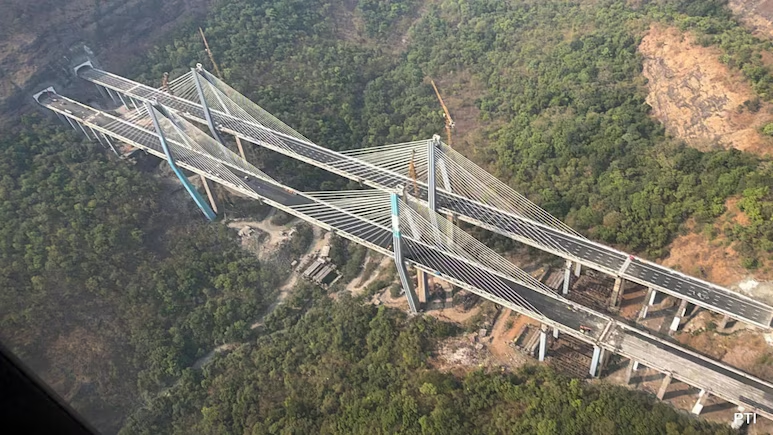
The inauguration of a new Mumbai Pune bridge on Maharashtra Day marks a significant addition to one of India’s busiest economic corridors, aiming to ease congestion and improve travel efficiency between two major urban centres. The infrastructure, located along a key intercity route, is expected to streamline vehicular movement while strengthening regional connectivity across the Mumbai Metropolitan Region and Pune’s expanding urban footprint. The Mumbai Pune bridge is set to revolutionize transport in this vital area.
Transport authorities indicate that the bridge is designed to de congest high-traffic stretches that have long experienced bottlenecks, particularly during peak travel periods. For daily commuters, logistics operators, and intercity travelers, the development promises reduced travel time and improved reliability. However, urban mobility experts caution that such interventions must be part of a broader, integrated transport strategy to deliver sustained benefits. The Mumbai Pune bridge comes at a time when both cities are witnessing rapid urbanization and rising vehicle ownership. While road infrastructure upgrades remain essential, planners argue that they should be complemented by investments in public transport and multi modal connectivity. Without such integration, there is a risk that new road capacity may eventually be absorbed by increased traffic demand, limiting long-term impact. From an economic perspective, improved connectivity between Mumbai and Pune is likely to enhance labour mobility, facilitate trade flows, and support the growth of satellite townships along the corridor. Real estate markets in peripheral areas could also see renewed interest as accessibility improves. Industry observers note that infrastructure-led development often triggers new investment cycles, particularly in logistics, warehousing, and residential segments.
At the same time, sustainability considerations remain central to infrastructure planning. Increased road capacity can lead to higher emissions if not balanced with greener mobility solutions. Experts highlight the need for parallel measures such as electric vehicle infrastructure, carpooling incentives, and strengthened rail connectivity to ensure that the benefits of the Mumbai Pune bridge align with climate goals. Urban planners also point to the importance of resilient design, especially in regions prone to heavy rainfall and changing weather patterns. Infrastructure that incorporates climate-adaptive features such as improved drainage systems and durable materials can reduce long-term maintenance costs and enhance safety for users. For citizens, the immediate impact will likely be felt in shorter commute times and smoother travel experiences. Yet, the broader challenge lies in ensuring that such projects contribute to inclusive growth rather than car-dependent urban expansion. Integrating pedestrian access, safety features, and last-mile connectivity will be key to making infrastructure more people centric. Overall, the Mumbai Pune bridge is a transformative development for the region.
As Maharashtra continues to invest in large-scale transport projects, the focus is gradually shifting towards balancing growth with sustainability. The new bridge offers a tangible improvement in connectivity, but its long-term success will depend on how effectively it is embedded within a wider framework of low carbon, efficient, and equitable urban mobility systems.
Also Read : Mumbai Metro Line 6 Bridge Milestone Boosts Connectivity
