


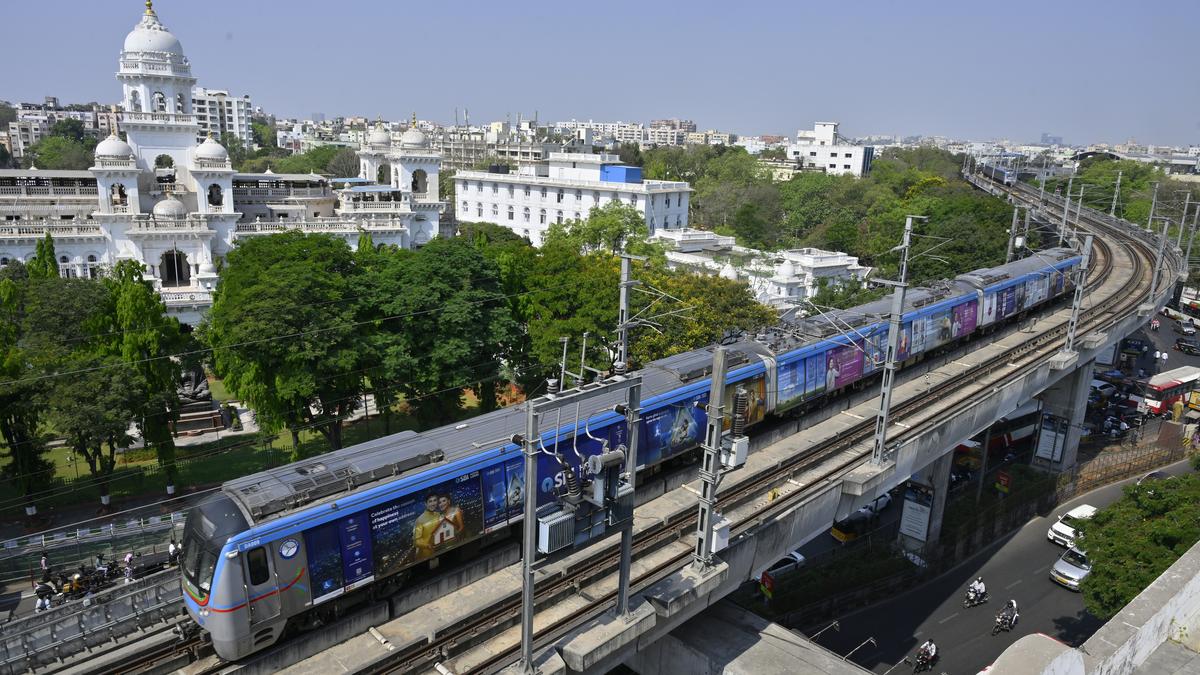
The Telangana government’s decision to assume control of Phase I of the Hyderabad Metro takeover marks a significant shift in how one of India’s largest urban transit systems will be managed. The move, centered in Hyderabad, reflects broader questions around public-private partnerships in infrastructure and their long-term sustainability in rapidly expanding cities.
Officials indicate that the transition follows financial stress within the existing concession framework, which had earlier relied on private investment and operational management. While such models were designed to accelerate infrastructure delivery, industry experts note that revenue risks particularly in fare dependent systems have often been underestimated. As a result, governments are increasingly stepping in to ensure continuity of essential public services. For Hyderabad, the metro network is more than a transport system. It is a backbone for daily commuting, reducing traffic congestion, lowering vehicular emissions, and improving access to economic hubs. The Hyderabad Metro takeover therefore has direct implications for urban mobility, especially as the city continues to witness rapid population growth and spatial expansion.
Urban economists suggest that state intervention could bring greater operational stability, but it also shifts financial responsibility to public coffers. This raises important questions about funding models for mass transit in India, where affordability for users must be balanced against long-term financial viability. Without careful planning, such takeovers risk placing additional strain on state budgets already managing competing urban priorities. The development also highlights the need for more resilient infrastructure frameworks. Experts point out that metro systems must be integrated with broader urban planning strategies including last-mile connectivity, mixed-use development, and transit-oriented housing to maximize ridership and revenue potential. In the absence of such integration, even well-built systems can struggle to meet financial projections. From a sustainability perspective, maintaining and expanding metro networks remains critical. Public transport systems like Hyderabad’s metro play a key role in reducing carbon emissions and improving air quality in cities facing increasing environmental stress. Ensuring their efficient operation is therefore central to achieving climate-resilient urban growth. The Hyderabad Metro takeover is essential to these efforts.
Real estate markets are also closely linked to metro corridors. The Hyderabad Metro takeover could influence investor sentiment in transit-linked developments, where predictability in operations and expansion plans is crucial. Analysts note that clarity on future phases and governance structures will be key to sustaining confidence in these micro-markets.Looking ahead, the focus is likely to shift towards operational efficiency, financial restructuring, and potential expansion of the network. For policymakers, the challenge will be to create a model that combines public accountability with economic sustainability. As Indian cities continue to scale, Hyderabad’s experience may offer important lessons on how to balance infrastructure ambition with fiscal and environmental realities.
Also Read : Delhi Madhuban Chowk Faces Temporary Access Changes
Hyderabad metro takeover reshapes urban transit future
