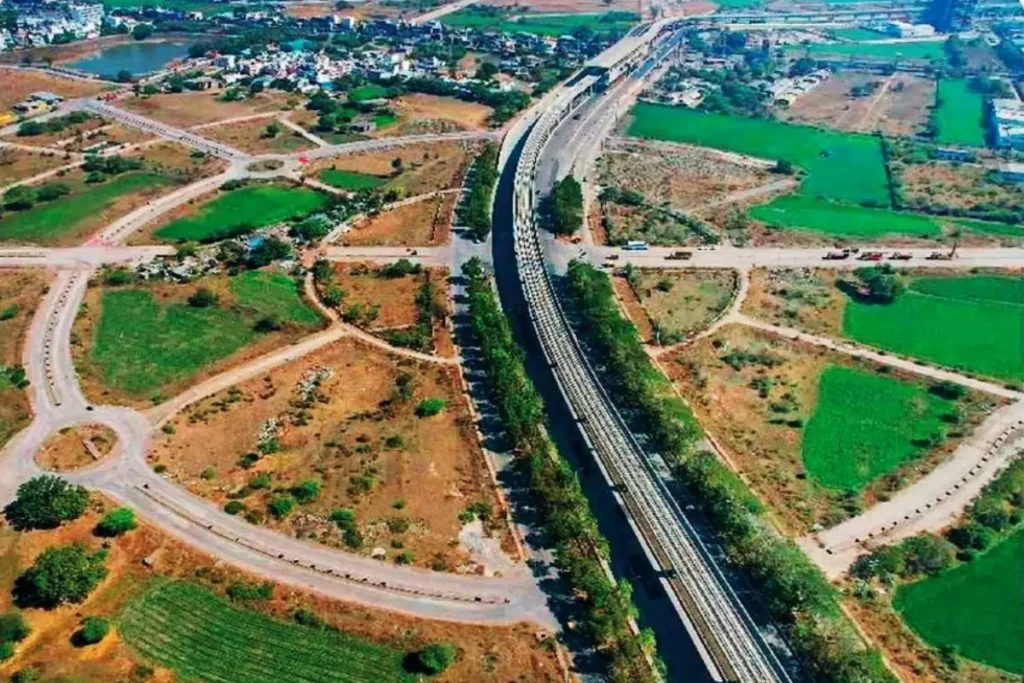
Indore corridor plan reshapes mixed use urban growth
A proposed 20-kilometre economic corridor between Indore and Pithampur is being positioned as a new urban-industrial spine, combining logistics, housing, and commercial activity within a single integrated zone. Planned across more than 1,300 hectares, the project reflects a shift in how Indian cities are expanding—moving from fragmented growth to large-scale, mixed-use development aligned with industrial corridors and transport infrastructure.
The Indore Pithampur economic corridor is designed to connect the city’s airport-linked Super Corridor with the Pithampur industrial region, one of central India’s key manufacturing hubs. Officials indicate that the project will function not only as a mobility link but also as a self-contained economic zone, easing pressure on existing city roads while improving freight and commuter movement ahead of major events such as Simhastha 2028. What distinguishes the corridor is its land-use strategy. Plans allocate large portions of land to commercial and mixed-use development, alongside residential clusters and designated green industry zones. This blend is expected to accommodate a projected population of over 100,000 people, including provisions for affordable and rental housing—an increasingly critical component in industrial regions where workforce housing shortages often drive informal settlements. However, the scale of the project also raises infrastructure questions, particularly around resource use. The corridor is expected to require nearly 40 million litres of water per day, sourced through a mix of fresh supply and treated wastewater. This highlights a growing challenge in new urban developments: balancing industrial growth with sustainable water management, especially in regions already facing rising demand from manufacturing clusters and urban expansion.
Urban planners note that while integrated corridors can reduce travel time and improve logistics efficiency, their long-term viability depends on how effectively they manage resources such as water, energy, and land. In the Indore Pithampur economic corridor, the reliance on recycled water signals an attempt to address sustainability concerns, but implementation will be key in determining whether the model reduces environmental strain or adds to existing pressures.The project also reflects a broader policy trend linking industrial growth with planned urbanisation. By embedding residential and commercial spaces within the corridor, authorities aim to reduce daily commuting distances and create more self-sufficient urban nodes. This approach, if executed well, could support more inclusive economic development by bringing jobs and housing closer together.Yet, experts caution that such large-scale developments often risk prioritising industrial efficiency over ecological balance. The inclusion of green industry zones suggests an effort to mitigate this, but questions remain around land use transitions, environmental safeguards, and long-term livability.
As central India positions itself as a manufacturing and logistics hub, the Indore Pithampur economic corridor represents both opportunity and test case. Its success will depend not only on connectivity and investment flows, but on whether it can evolve into a climate-responsive, resource-efficient urban system rather than a conventional growth corridor under a new label.