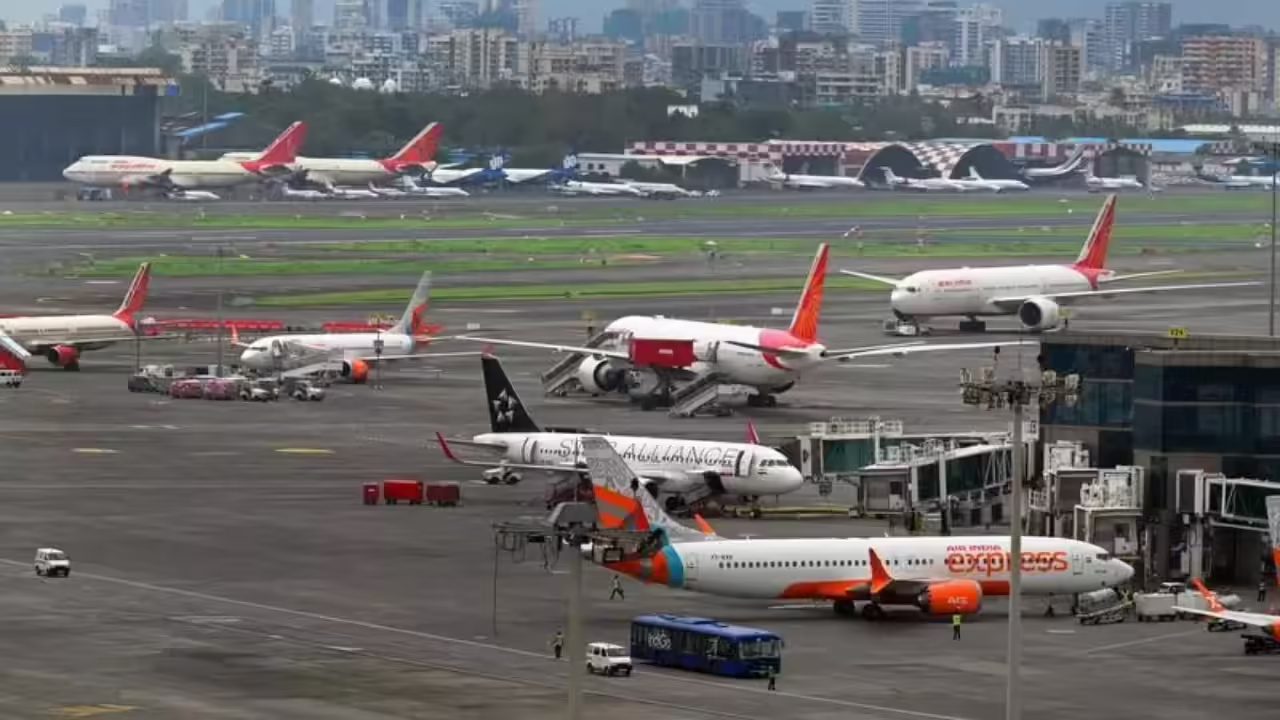
Surat airport growth outpaces flight connectivity constraints
Passenger traffic at Surat’s airport has reached a record high even as the number of flights operating from the city continues to decline, highlighting a widening gap between demand and infrastructure capacity. The airport handled over 1.81 million passengers in 2025–26, surpassing the previous year’s figures despite fewer daily flight movements and multiple route disruptions.
This growth comes against a backdrop of reduced connectivity. Daily aircraft movements have dropped from around 52 before the pandemic to roughly 28, with several domestic routes either scaled down or discontinued altogether. The reduction has not dampened demand; instead, it has led to higher passenger loads per flight, pointing to an under-served market in one of India’s fastest-growing urban economies.The Surat airport growth trend is particularly significant for a city whose economy is closely tied to global trade. As a major hub for textiles and diamond processing, Surat depends heavily on efficient air connectivity for both business travel and cargo-linked passenger movement. Industry stakeholders argue that the steady rise in flyer numbers—adding nearly 200,000 to 300,000 passengers annually—signals unmet demand rather than organic saturation. Urban mobility experts see this as a structural issue. Airports in emerging cities often struggle to align airline capacity with economic expansion. In Surat’s case, external disruptions—including operational challenges faced by airlines and geopolitical events affecting international routes—have further constrained flight availability. Yet passenger traffic has continued to grow, suggesting that demand is being compressed into fewer flights rather than evenly distributed. This imbalance has direct implications for urban infrastructure. Higher passenger density per flight can strain terminal facilities, increase wait times, and reduce service quality, especially during peak hours.
Earlier monthly data has already shown that passenger volumes can rise even when aircraft movements fall, leading to congestion within existing airport infrastructure. From a planning perspective, the Surat airport growth story underscores a broader challenge facing Tier-2 cities: infrastructure lagging behind economic momentum. While long-term projections envision significant expansion in passenger capacity, current constraints in route availability, scheduling, and airline participation continue to limit the airport’s ability to function as a fully integrated urban gateway.There are also sustainability implications. Efficient air connectivity can reduce indirect travel—such as road journeys to larger metro airports—thereby lowering overall travel time and emissions. Conversely, inadequate connectivity can push passengers towards less efficient alternatives, increasing pressure on regional transport networks.The situation has prompted calls from industry bodies and aviation observers for policy interventions, including better route allocation and inclusion of the city in international aviation agreements. The argument is that improving connectivity is not merely about convenience, but about aligning transport infrastructure with economic geography.
As Indian cities expand beyond traditional metropolitan centres, Surat’s experience illustrates a key inflection point. Demand for mobility is rising faster than the systems designed to support it. Whether authorities and airlines can respond with timely capacity expansion will determine if the city evolves into a competitive aviation hub or continues to operate below its potential.