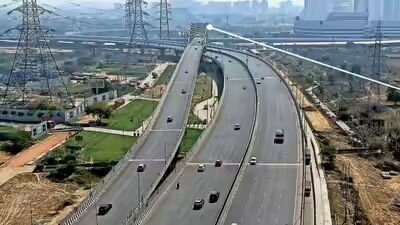
A key flyover project along Gurugram’s expressway corridor has been put on hold after urban authorities flagged concerns over land use compliance, exposing deeper coordination gaps in how large-scale infrastructure is planned across agencies in fast-growing cities. The Gurugram Metropolitan Development Authority (GMDA) has asked the National Highways Authority of India (NHAI) to pause construction until regulatory clarity is established.
At the centre of the issue is a mismatch between the project’s execution and the city’s notified land use framework. Officials indicated that the ongoing work appears to be taking place on land designated for mixed-use development, without the necessary approvals for a change in land use. This has prompted GMDA to intervene, citing the need to align infrastructure expansion with statutory master plans. The dispute underscores a recurring challenge in urban India—where multiple agencies operate with overlapping mandates but limited coordination. In Gurugram, where rapid real estate growth and infrastructure expansion often run parallel, such misalignments can lead to delays, legal risks, and inefficient use of public resources. The Gurugram flyover halt is particularly significant given the strategic importance of the Delhi-Gurgaon expressway corridor, one of the busiest urban highways in the country. Infrastructure upgrades along this stretch are critical for easing congestion and supporting regional mobility.
However, planners argue that speed of execution cannot come at the cost of regulatory compliance, especially in areas where land use patterns directly affect surrounding development. From an urban planning perspective, the episode highlights the importance of integrating transport infrastructure with land use planning. Flyovers and elevated corridors influence not just traffic flow but also property development, commercial activity, and environmental impact. Constructing such infrastructure on land not designated for the purpose can disrupt planned urban growth and strain civic services. The Gurugram flyover halt also raises questions about long-term sustainability. Infrastructure projects that bypass planning frameworks risk creating fragmented urban landscapes, where mobility solutions fail to align with residential, commercial, and ecological considerations. In a city already grappling with congestion, air pollution, and uneven infrastructure distribution, such disconnects can compound existing challenges. Experts suggest that the situation calls for stronger institutional coordination mechanisms, where agencies jointly review and approve projects at the planning stage rather than intervening during execution. Transparent land use mapping, digital approvals, and integrated transport planning could help prevent similar conflicts in the future.
There are also implications for investor confidence and project timelines. Frequent halts or revisions can increase costs and delay benefits for commuters, while also affecting the broader perception of governance efficiency in urban infrastructure delivery. As Gurugram continues to expand as a major economic and residential hub within the NCR, the incident serves as a reminder that infrastructure growth must be anchored in clear planning frameworks. Resolving the current impasse will be crucial, but the larger challenge lies in ensuring that future projects are designed with alignment, accountability, and long-term urban resilience at their core.