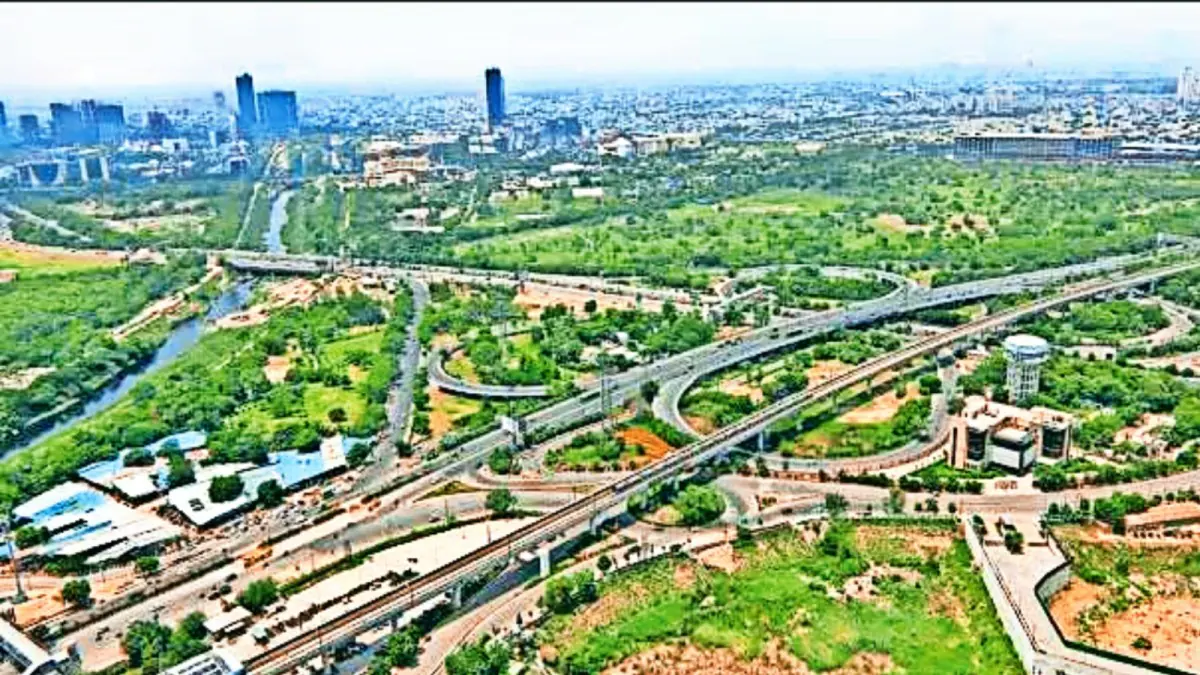
A major infrastructure expansion drive in Greater Noida is set to reshape mobility and civic services across multiple urban and peri-urban zones, as authorities move ahead with nearly ₹43 crore worth of public works projects focused on easing congestion, upgrading neighbourhood infrastructure and improving village amenities.
Among the most closely watched interventions is a proposed U-turn corridor near Tilpata junction on the Greater Noida–Greater Noida West connectivity stretch. The route has emerged as one of the region’s persistent traffic bottlenecks amid rapid residential growth and rising commuter movement between western Noida extensions and industrial sectors. Officials familiar with the plan indicated that the redesign aims to streamline vehicle circulation and reduce waiting time at the busy intersection, where peak-hour congestion has intensified over the last few years. The Greater Noida infrastructure projects come at a time when the National Capital Region is witnessing accelerated urban expansion beyond core city boundaries. Urban planners say that transport bottlenecks in emerging residential corridors often expose gaps between housing growth and supporting public infrastructure. The latest round of works appears intended to bridge part of that gap by combining traffic engineering with neighbourhood-level civic upgrades.
Beyond mobility improvements, the authority has proposed a broad package of repair and renewal works across roads, drainage systems and public utilities. Several residential pockets, including older settlement zones and urban villages, are expected to receive upgrades to internal roads, covered drains and street infrastructure. Development activity has also been planned in peripheral settlements such as Surajpur and Dankaur, where population density and mixed land use have increased steadily due to industrial and warehousing activity. In another significant move, the civic body plans to modernise cremation facilities in selected villages, including improved approach roads, waiting areas and boundary infrastructure. Urban policy experts note that such projects, though less visible than highways or commercial districts, play an essential role in creating equitable and inclusive urban systems, particularly in rapidly transforming regions where civic infrastructure often struggles to keep pace with population growth.
The Greater Noida infrastructure projects also include science laboratories in government schools across several villages, signalling a parallel push toward social infrastructure alongside physical construction. Analysts say investment in educational facilities can strengthen long-term workforce readiness in industrial corridors increasingly linked to electronics manufacturing, logistics and data-driven sectors. Meanwhile, electrification works and LED street lighting installations have been proposed across industrial and residential sectors, including Ecotech zones and key connector roads. Such measures could improve public safety while reducing long-term municipal energy consumption if maintained efficiently. Green landscaping and park maintenance have additionally been included in select residential sectors, reflecting a gradual shift toward liveability-oriented planning in newer urban clusters. With tendering now underway, the execution timeline and construction quality will remain critical. Urban development observers caution that sustained maintenance, pedestrian accessibility and climate-resilient planning will determine whether the projects deliver lasting relief or temporary fixes for a fast-growing city region.