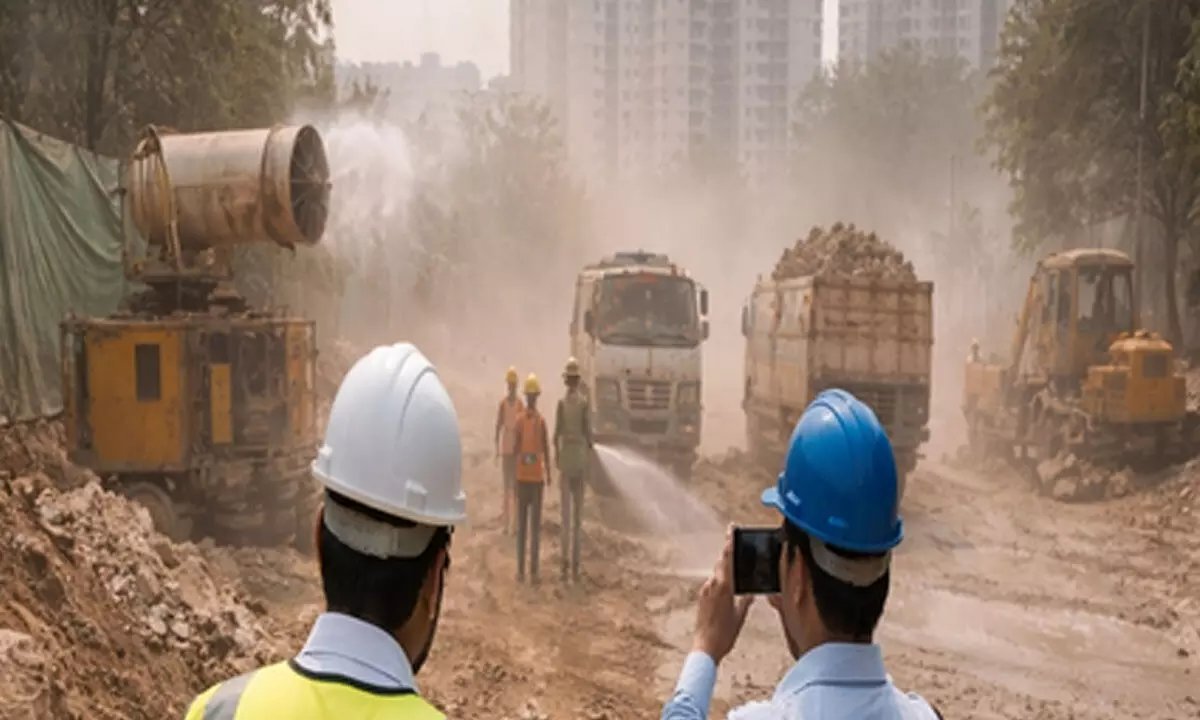
A large-scale inspection across Noida has exposed persistent failures in road dust management and construction waste handling, renewing concerns over urban air quality in one of the National Capital Region’s fastest-growing infrastructure corridors. The findings emerged during a coordinated anti-pollution field exercise that surveyed multiple sectors and key road stretches across the city.
The inspection, led by the region’s air quality regulator, identified widespread accumulation of road dust and unmanaged construction and demolition debris in several residential, industrial and commercial clusters. Urban planners say the findings underline a deeper governance challenge in rapidly urbanising cities where infrastructure expansion often outpaces environmental enforcement. Officials involved in the exercise assessed nearly four dozen road corridors under the local development authority’s jurisdiction. Areas witnessing active construction activity, freight movement and dense traffic were found particularly vulnerable to dust generation. In several stretches, sweeping operations and dust suppression systems were either inconsistent or poorly maintained, according to officials familiar with the review. The issue holds wider implications for public health and climate resilience in NCR cities. Road dust remains one of the most significant contributors to particulate pollution, especially during dry weather conditions and periods of heavy vehicular movement.
Environmental researchers note that suspended dust particles can worsen respiratory illnesses, reduce visibility and intensify heat stress in already congested urban environments. The latest findings come at a time when Noida is witnessing accelerated real estate and infrastructure growth, including new residential districts, logistics hubs and mobility corridors. Experts argue that without stronger environmental compliance mechanisms, construction-led urban expansion could continue placing pressure on air quality targets and liveability standards. Authorities have now been asked to intensify mechanised sweeping, water sprinkling and scientific disposal of construction debris. Monitoring systems are also expected to be strengthened to curb illegal dumping along roadsides and vacant land parcels. Civic officials indicated that accountability mechanisms may be tightened for agencies or personnel failing to implement pollution control protocols effectively.
Urban policy observers say the challenge is not limited to enforcement alone. They point to the need for integrated planning that links construction permits, waste transport systems and real-time pollution monitoring. In high-growth urban centres like Noida, fragmented management of construction and demolition waste often results in debris being dumped near transport corridors, worsening localised pollution. The inspection coincides with a period of fluctuating weather across Delhi-NCR. Recent rain and hailstorms temporarily lowered temperatures and improved atmospheric conditions, preventing an early spike in seasonal heat levels. Meteorological data also showed multiple rainy days during early April helped delay the onset of extreme summer temperatures. However, experts caution that temporary weather relief cannot substitute for sustained urban pollution control measures. With clean air increasingly tied to economic productivity, public health and investor confidence, the latest enforcement drive signals growing pressure on NCR cities to align urban growth with environmental accountability and long-term sustainability goals.