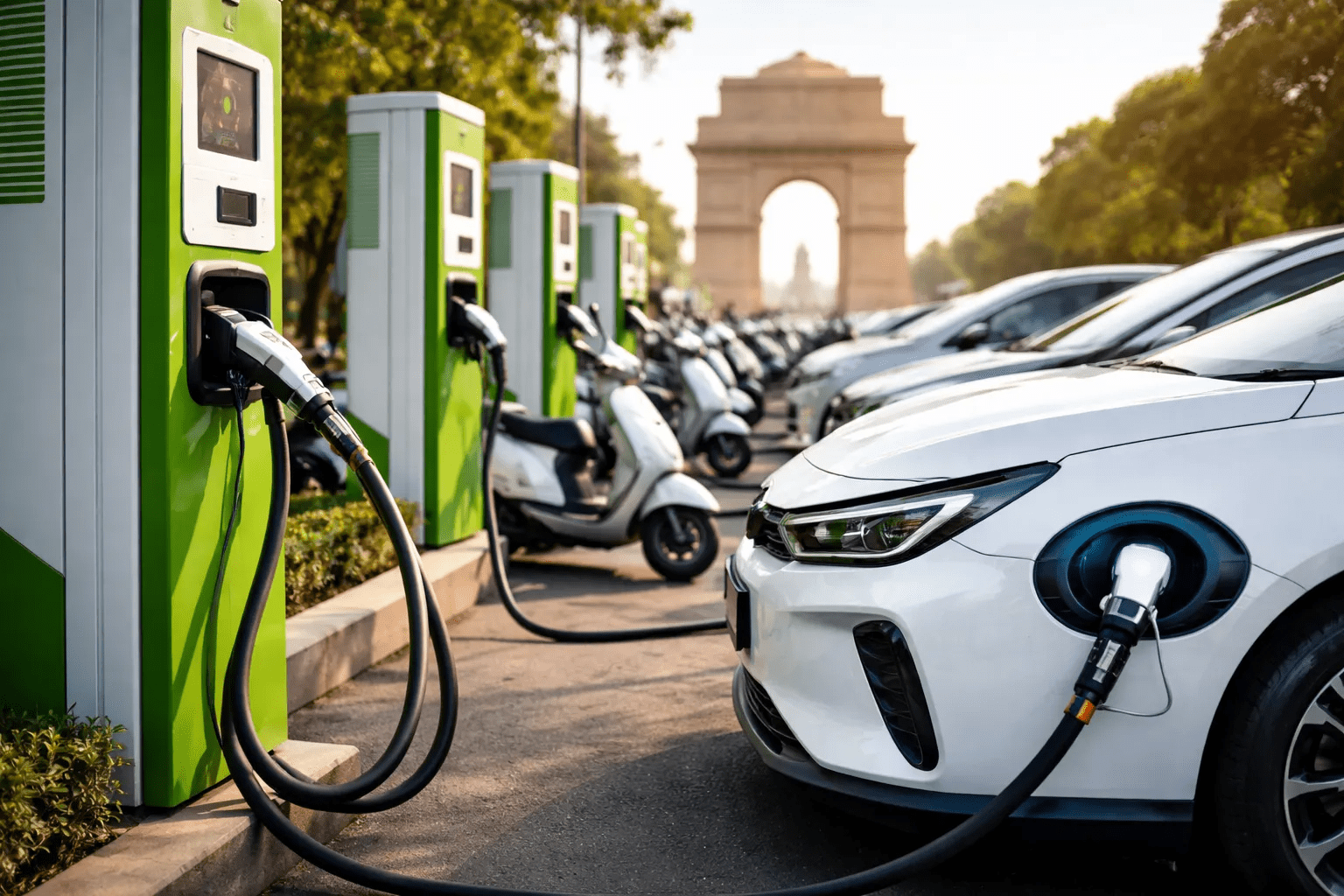
Delhi’s plan to transition fully to electric two-wheelers within the next few years is bringing renewed attention to the city’s charging infrastructure, with early assessments indicating a gap between policy ambition and on-ground readiness. As the capital intensifies its push to reduce vehicular emissions, the success of this transition will depend as much on infrastructure as on vehicle adoption. The proposed Delhi EV mandate aims to phase out new petrol-powered two-wheelers by the end of the decade, marking a significant shift in urban mobility strategy. Given the scale of two-wheeler usage in Delhi, the policy could reshape commuting patterns and influence national market trends. However, experts caution that the transition requires synchronised planning across energy systems, infrastructure, and consumer access.
While manufacturers appear prepared to meet rising demand, the availability of charging facilities remains uneven. Current public charging points and battery-swapping stations are limited relative to projected needs, raising concerns about accessibility for users without private charging options. This imbalance could slow adoption, particularly among lower-income groups and those living in high-density housing without dedicated parking. Energy analysts highlight that the Delhi EV mandate will also place new demands on the city’s electricity distribution network. Even though electric two-wheelers consume relatively low power individually, widespread adoption could increase cumulative load, especially during peak charging hours. Strengthening grid capacity and ensuring reliable supply will be essential to avoid disruptions. Product diversity is another factor shaping the transition. While electric scooters dominate the market, options in higher-performance segments remain limited. This could affect users who rely on vehicles for longer distances or commercial use, potentially influencing the pace and pattern of adoption. Industry stakeholders suggest that policy frameworks should enable flexibility while supporting innovation and affordability.
Beyond vehicle deployment, battery lifecycle management is emerging as a parallel priority. As volumes increase, so will the need for structured recycling systems and safe disposal mechanisms. Without robust processes, environmental gains from electrification risk being offset by downstream waste challenges, particularly in densely populated urban areas. The implications extend into the built environment as well. Real estate developers and urban planners are increasingly expected to incorporate EV charging infrastructure into building design, from residential complexes to commercial hubs. Integrating such systems early can reduce retrofitting costs and support long-term sustainability goals, aligning transport planning with urban development. At an economic level, the transition opens opportunities for new service sectors, including charging networks, battery swapping, and energy management solutions. At the same time, it poses adjustment challenges for businesses linked to conventional automotive supply chains, requiring a shift in skills and investment priorities.
As Delhi moves forward, the effectiveness of the Delhi EV mandate will hinge on coordinated execution across multiple sectors. Bridging infrastructure gaps, maintaining affordability, and ensuring equitable access will be critical to delivering a transition that is both environmentally impactful and socially inclusive. The coming years will determine whether the city can translate policy intent into a functional and resilient clean mobility system.