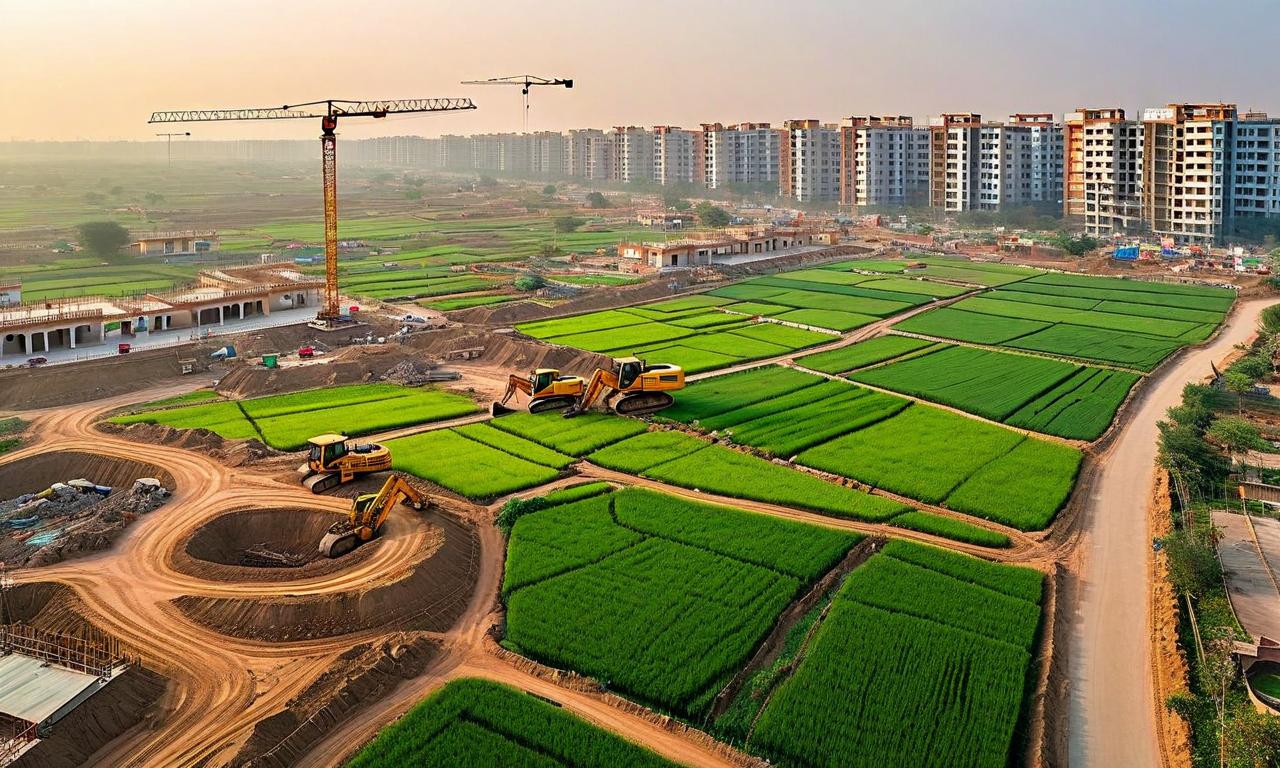
Panipat Emerges as NCRs Next Urban Growth Frontier. Panipat is witnessing a rapid shift from an industrial centre to an emerging urban real estate destination, as infrastructure expansion, regional connectivity and changing housing preferences reshape growth patterns across northern India. Urban planners and market observers say the city’s evolving role within the National Capital Region (NCR) could influence future patterns of housing demand, mobility and peri-urban development.
Located along the Delhi–Chandigarh corridor, Panipat has historically been recognised for its textile manufacturing and refinery-linked economy. However, rising land prices and saturation in established NCR markets such as Gurugram and Noida are increasingly directing investor and residential interest towards secondary urban centres with stronger affordability and expansion potential. Urban development experts note that improved transport infrastructure is central to the city’s transformation. Connectivity through NH-44 and the Kundli-Manesar-Palwal Expressway has significantly reduced travel time to Delhi and surrounding NCR districts. Proposed rapid rail and expressway projects are expected to deepen this integration further, making Panipat more viable for daily commuters and regional businesses. The growing attention on Panipat real estate also reflects changing aspirations among middle-income households and local business communities.
Demand is gradually moving beyond standalone homes towards gated developments, plotted communities and mixed-use townships offering green areas, pedestrian-friendly layouts and shared civic amenities. Developers active in the region are increasingly positioning projects around liveability, security and integrated infrastructure rather than only land ownership. Urban analysts caution, however, that rapid expansion without adequate planning could replicate the environmental and civic pressures already visible in larger NCR cities. Experts tracking regional growth patterns say Panipat’s next phase of development will require stronger focus on sustainable mobility, water management, public transport and climate-resilient urban design to avoid unmanaged sprawl. The city’s inclusion under the Smart Cities Mission has accelerated investment in roads, drainage, civic infrastructure and public services. Yet planners argue that long-term success will depend on whether future development balances economic growth with environmental sustainability and public accessibility.
Industrial cities transitioning into residential hubs often face challenges related to pollution, traffic congestion and uneven service delivery if expansion outpaces governance systems. At the same time, Panipat’s industrial base continues to generate steady housing demand from workers, students and professionals, supporting both rental activity and residential absorption. This dual economy — combining manufacturing employment with expanding urban infrastructure — is increasingly attracting investors seeking lower entry costs compared to core NCR markets. As NCR’s urban footprint stretches beyond its traditional centres, Panipat is emerging as a test case for how tier-two cities can manage growth responsibly. The coming decade may determine whether the city evolves into a balanced regional urban hub or faces the same infrastructure strains that have challenged India’s larger metropolitan regions.