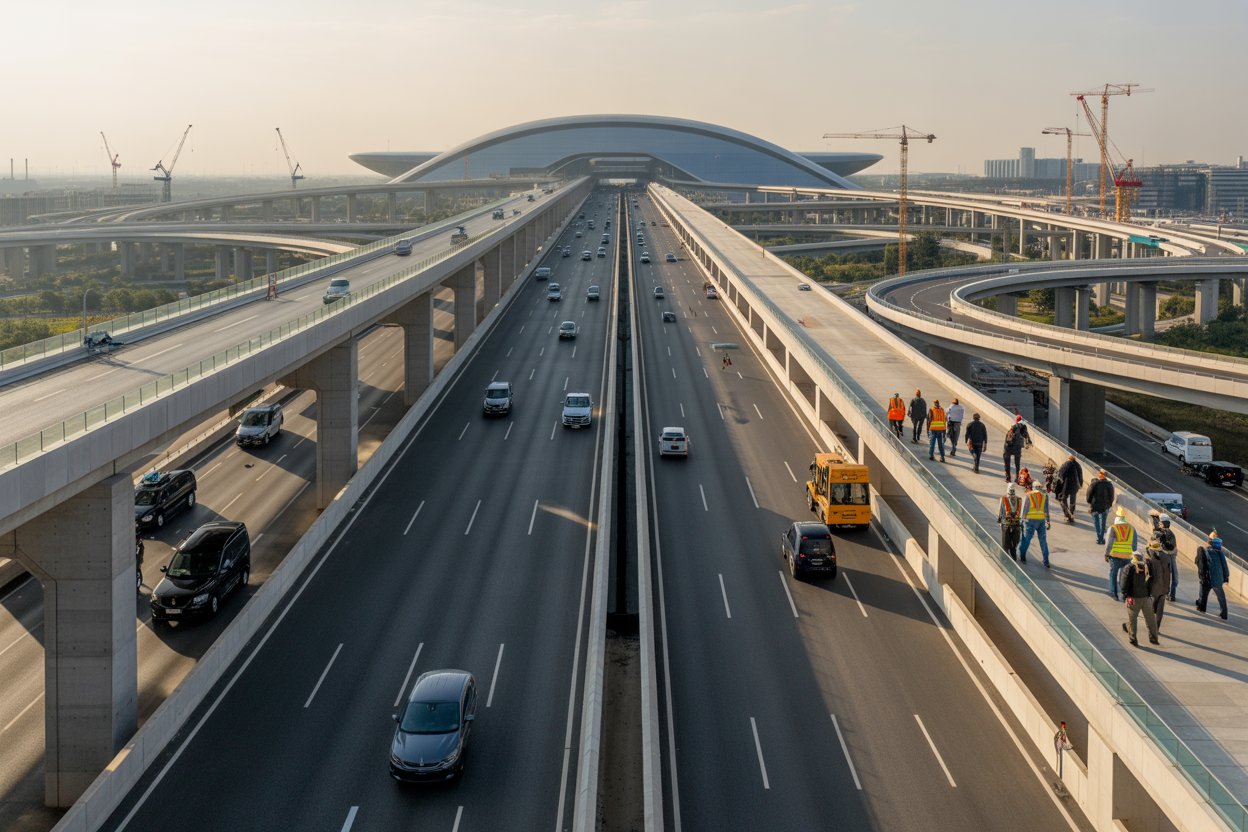
A major road infrastructure upgrade planned in western Uttar Pradesh is set to redraw mobility patterns across the National Capital Region, with authorities approving a 37-kilometre corridor linking Greater Noida to the Ganga Expressway network. The project is expected to strengthen freight movement, reduce travel time and accelerate urban expansion around emerging industrial and residential clusters.
The proposed high-capacity route will widen and modernise an existing stretch into an eight-lane corridor connecting Greater Noida with the Hapur bypass, creating a direct interface with the state’s expanding expressway grid. Urban planners believe the project could significantly ease pressure on saturated NCR routes while improving regional access to eastern Uttar Pradesh. Transport and planning officials indicate that the upgraded corridor could reduce travel time between Greater Noida and the Ganga Expressway zone to under 45 minutes, depending on traffic conditions. The shorter travel duration is expected to improve logistics efficiency for manufacturing units, warehousing hubs and data centre operations concentrated around Greater Noida and the Yamuna Expressway region. The decision comes at a time when NCR cities are grappling with rapid urbanisation, rising vehicle ownership and uneven infrastructure distribution. Experts say improved eastward connectivity may gradually reduce dependence on Delhi-centric freight routes, lowering congestion on inner-city roads and cutting fuel consumption from heavy commercial traffic.
The Greater Noida corridor project is also likely to influence land use patterns across peripheral districts. Real estate analysts expect fresh interest in industrial parks, group housing projects and commercial developments along the planned alignment. However, urban policy experts caution that future growth must be aligned with sustainable planning norms, including drainage systems, public transport integration and protection of agricultural land. Infrastructure-led expansion in the NCR has often triggered concerns over fragmented urban growth and environmental stress. With several mega projects underway including the upcoming international airport in Jewar and multiple expressway corridors mobility integration is increasingly becoming central to regional planning discussions. Analysts say future infrastructure investments must balance economic ambition with ecological resilience and citizen accessibility.
The project is also expected to improve last-mile industrial connectivity for businesses operating across western Uttar Pradesh. Better road access could support regional supply chains, reduce turnaround time for cargo movement and improve investment prospects in secondary urban centres beyond Delhi and Noida. While administrative approval has been granted, implementation timelines, land acquisition details and environmental clearances will remain key factors determining how quickly the corridor translates into measurable urban and economic impact. For residents and daily commuters, the project represents another shift towards a more interconnected NCR, where transport infrastructure increasingly shapes housing demand, employment access and patterns of urban growth.