


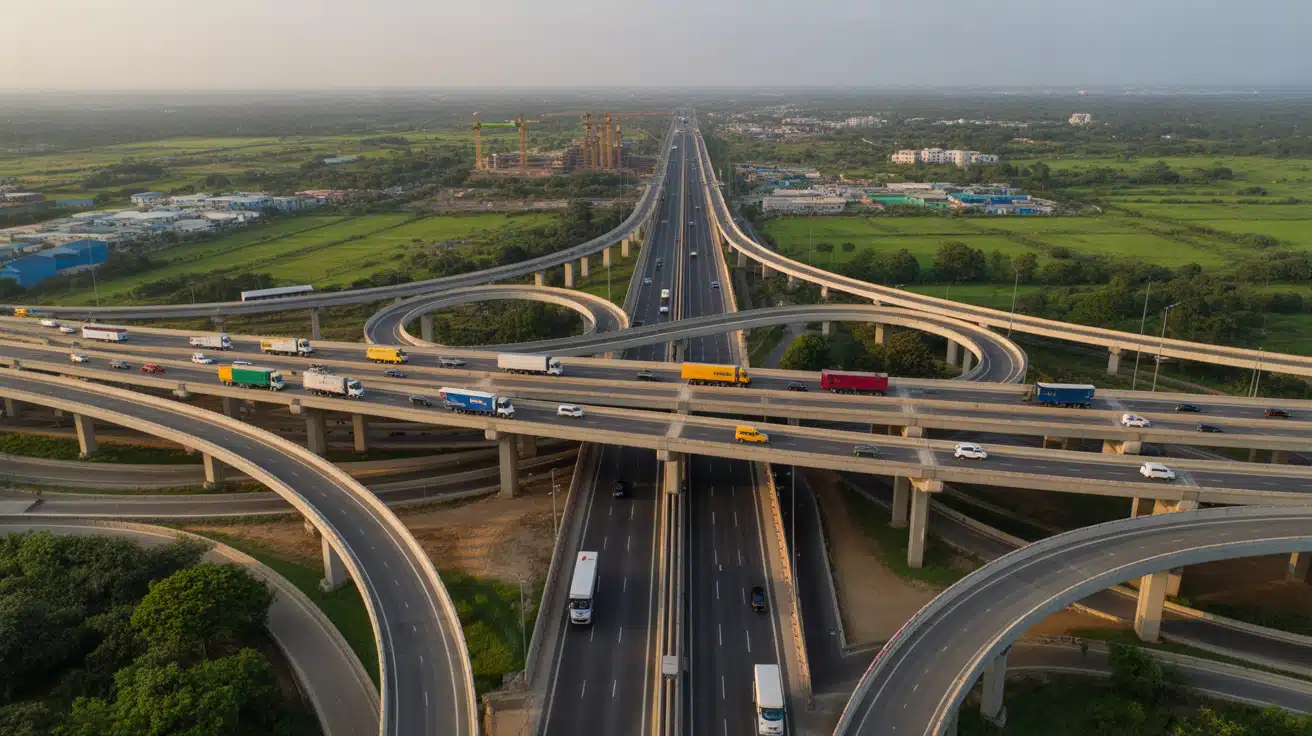
Karnataka has revived plans for a long-pending intermediate ring road project around Bengaluru, aiming to connect a network of satellite towns and ease mounting pressure on the city’s overstretched road infrastructure. The proposed corridor, spanning over 200 kilometres, is expected to serve as a strategic mobility link between emerging urban nodes and existing economic clusters.
The project is being positioned as a critical intervention to redistribute traffic and support decentralised urban growth. By linking multiple peripheral towns, the Bengaluru intermediate ring road is intended to reduce dependence on core city routes, which currently handle a mix of local, intercity, and freight traffic. Officials suggest that the corridor could significantly improve travel efficiency for both commuters and logistics operators.Urban planners view the revival as part of a broader shift towards polycentric development, where growth is distributed across multiple urban centres rather than concentrated in a single core. The Bengaluru intermediate ring road could play a pivotal role in enabling this transition by enhancing connectivity between industrial zones, residential hubs, and commercial districts located outside the city’s traditional boundaries.The corridor is also expected to influence land use patterns across the region. Improved accessibility typically drives real estate activity, with increased demand for housing, warehousing, and commercial spaces along the route. While this presents economic opportunities, experts caution that unplanned expansion could strain local infrastructure and environmental resources if not guided by comprehensive planning frameworks.
From a mobility perspective, the project aims to decongest existing arterial roads and reduce travel times across the metropolitan region.However, transport experts note that road expansion alone may not be sufficient to address long-term congestion challenges.Integrating the corridor with public transport systems, including bus and rail networks, will be essential to ensure sustainable mobility outcomes.Environmental considerations are particularly relevant given the scale of the project. Large infrastructure corridors can impact ecosystems, water bodies, and agricultural land. Incorporating green buffers, sustainable construction practices, and climate-resilient design will be crucial to minimise ecological disruption and align the project with broader sustainability goals.The Bengaluru intermediate ring road also has implications for regional economic development. By improving connectivity to satellite towns, the project could attract industries and businesses to peripheral areas, creating new employment opportunities and reducing migration pressure on the city core.This aligns with efforts to promote balanced growth across the metropolitan region.However, the success of the initiative will depend on coordinated governance, timely execution, and stakeholder engagement. Land acquisition, funding mechanisms, and inter-agency coordination remain key challenges that could influence the project’s trajectory.
As Bengaluru continues to expand, the revival of this ring road project signals an attempt to reimagine urban mobility and growth patterns. The focus ahead will be on ensuring that infrastructure development is aligned with sustainable, inclusive, and well-planned urbanisation strategies that can support the region’s long-term resilience.
Also Read:Bengaluru IIT Summit To Drive Innovation And Collaboration
