


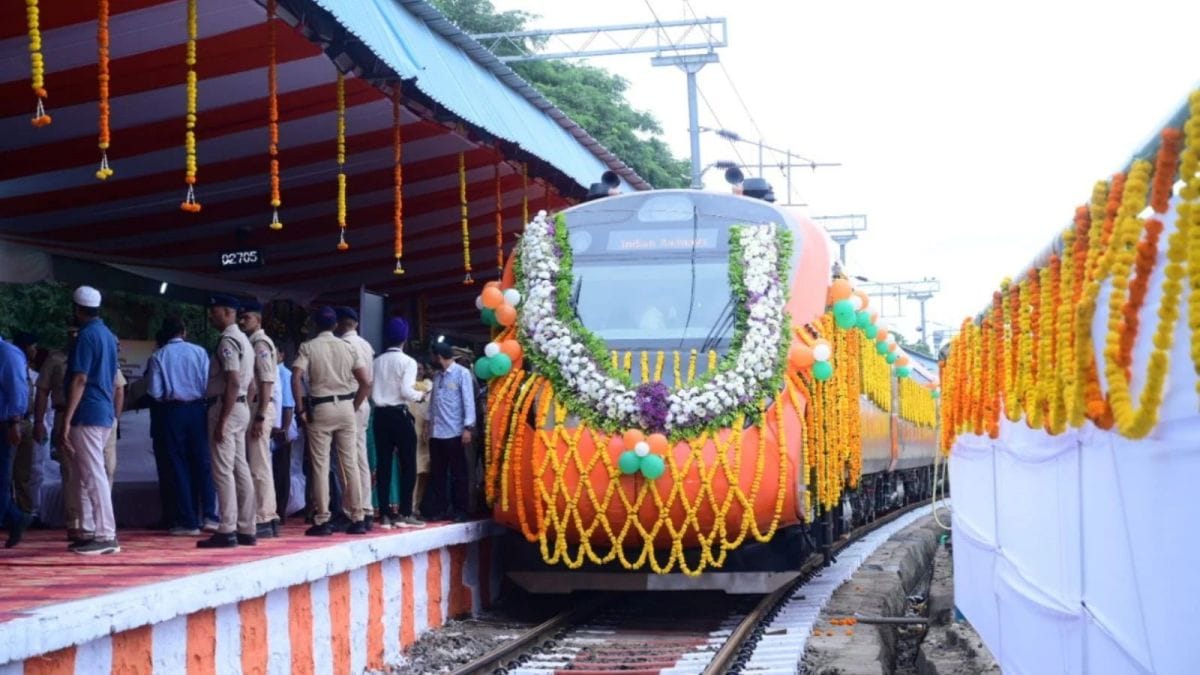
The expansion of a Vande Bharat train to a 20-coach configuration—making it one of the longest semi-high-speed services in the country—is expected to improve passenger capacity on routes serving western India, including Surat. The upgrade reflects rising demand for faster intercity travel and highlights the need to scale rail infrastructure in line with growing urban mobility needs. Railway officials have increased the number of coaches to accommodate higher passenger volumes on busy corridors.
For cities like Surat, which see significant daily movement of business travellers, workers, and students, the added capacity could ease overcrowding and improve travel comfort on key routes. The Surat Vande Bharat upgrade comes amid a broader push to modernise rail services and enhance connectivity between major economic centres. Improved train capacity can reduce waitlists, increase seat availability, and make rail travel a more reliable alternative to road and air transport. Urban mobility experts note that expanding train capacity is a practical response to rising demand in rapidly growing cities. Surat’s economic profile—driven by textiles, diamonds, and trade—generates consistent intercity travel, making efficient rail services essential for sustaining business activity and regional integration. The Surat Vande Bharat upgrade also has implications for sustainability. Higher-capacity trains can move more passengers per trip, reducing reliance on private vehicles and lowering emissions per capita. However, experts emphasise that these benefits depend on consistent ridership and integration with local transport systems. From a planning perspective, increased rail capacity must be matched with improvements in station infrastructure and last-mile connectivity. Efficient access to railway stations, including public transport links and pedestrian-friendly design, is crucial to ensuring that passengers can fully utilise enhanced services. There are also economic benefits to consider. Better connectivity can strengthen trade links, support tourism, and improve labour mobility across regions. For Surat, enhanced rail services can further integrate the city into national economic networks.
However, experts caution that capacity upgrades alone may not address all mobility challenges. Long-term solutions will require continuous investment in rail infrastructure, scheduling efficiency, and multimodal integration. As India’s rail network evolves, developments like this highlight the importance of aligning infrastructure upgrades with urban growth patterns. For Surat, the focus will be on leveraging improved connectivity to support sustainable, inclusive, and efficient mobility across the city and beyond.
ALSO READ – Surat Labour Movement Highlights Seasonal Migration Impact
Surat Vande Bharat Upgrade Boosts Rail Capacity

