


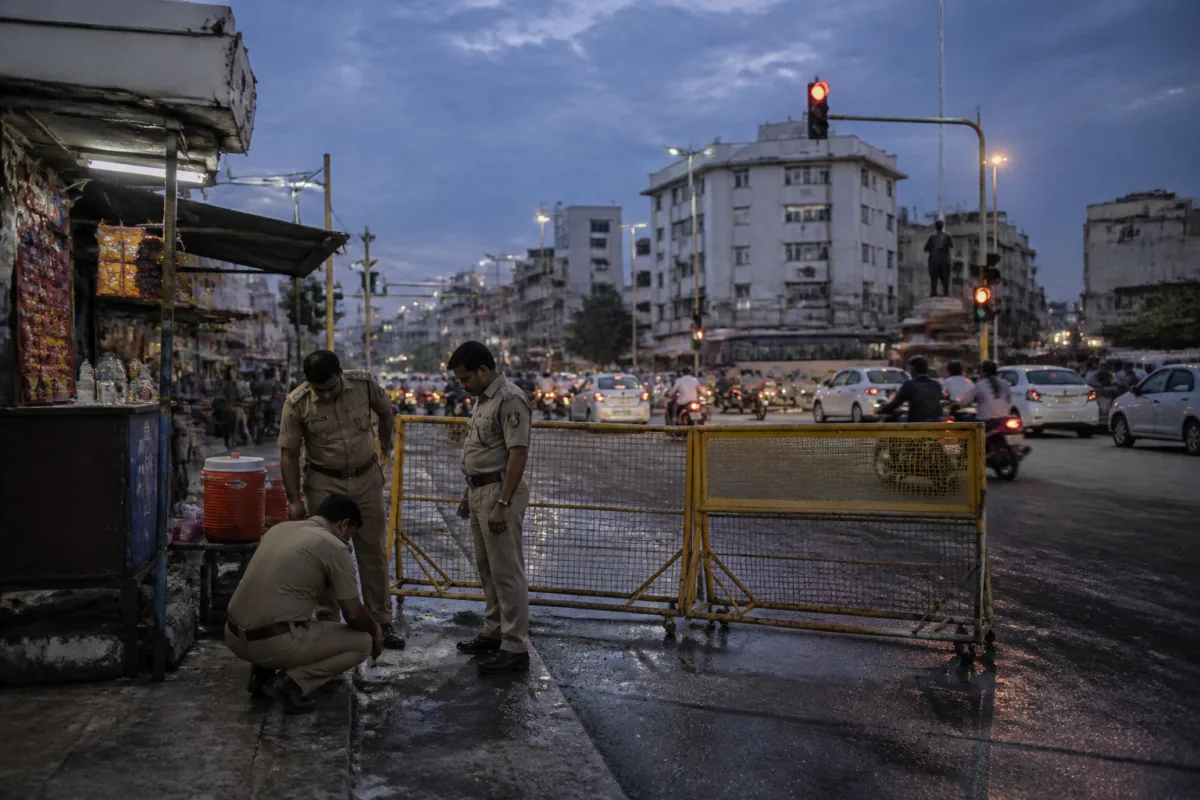
The suspension of a Nagpur beat constable after a distress call made shortly before the public murder of history-sheeter Palash alias Gani Wasnik has brought a routine but consequential policing question into focus: how does the city’s response system decide when a complaint is an immediate threat rather than an ordinary domestic dispute?
According to a report by the Times of India, beat constable Rahul Kahikar was suspended after allegedly failing to take prompt action on two control-room calls made by Wasnik’s ex-wife on November 12. She reportedly told police that armed men were moving near her residence. Wasnik was murdered later that night at Medical Square in front of members of the public.
The reported sequence has placed the police response before the murder under scrutiny. Kahikar is said to have conducted a verification visit and reported that nobody was found carrying arms. The report also says Nagpur police commissioner Vishwas Nangre Patil had earlier observed that Imambada police treated a November 10 complaint as a normal husband-wife dispute and carried out only a routine check. Police officials reportedly considered that response inadequate in light of Wasnik’s history and rivalry with the alleged assailants.
The issue is not only whether an individual constable acted quickly enough. It concerns how information moves through a city’s policing system: from a caller to a control room, from the control room to the beat officer, and from the beat officer to senior officers who can order preventive action. A system can receive a warning yet still fail if the warning is not classified correctly, linked to existing criminal records or escalated to the appropriate level.
The case also illustrates the difficulty of separating domestic complaints from wider public-safety risks. The report says Wasnik had been involved in 22 cases and that police knew of rivalry involving the eventual assailants. That background did not automatically establish that a murder would occur, but it meant that a complaint involving armed men, a residence and threats could not be assessed only through the narrow lens of a marital dispute.
This distinction is central to the reported police commissioner’s criticism. A routine verification may establish that armed men are not present when officers arrive. It does not necessarily establish that the threat was false, that the callers were safe or that the risk had ended. The reported response appears to have focused on what officers found at the location during the visit. The larger question is whether the system also examined the history, timing and possible connections behind the call.
The chronology described by the report is significant. A complaint was made on November 10. Two more distress calls were reportedly placed on November 12, when the ex-wife said armed men were near her residence. Wasnik was subsequently killed during the night of November 12-13 at Medical Square. The report does not establish that a different police response would certainly have prevented the murder. It does, however, show why the handling of the earlier calls has become part of the official scrutiny surrounding the case.
The murder itself was not described as a private incident confined to a home. Wasnik was allegedly tracked for three days before being attacked near a paan kiosk at Medical Square. His brother-in-law Ayush alias Chintu Dhupe, Atharva Bhagat and Sumedh Meshram were arrested for allegedly stabbing and bludgeoning him to death. The reported presence of scores of onlookers adds another dimension: the incident occurred in a public urban space where ordinary movement, commercial activity and policing intersected.
The case therefore links three different policing tasks. The first is preventive response to a distress call. The second is surveillance or intervention when a person with a substantial criminal record is involved in a known rivalry. The third is maintaining safety in crowded public places where violence can unfold quickly and witnesses may be present. The report connects all three, although the available material does not establish the precise operational responsibilities assigned to each police unit.
The police response after the murder has also widened the dispute. A fresh offence was registered against members of Wasnik’s family for allegedly abusing and harassing his ex-wife. The report says Wasnik’s relatives had allegedly ransacked her house and threatened tenants with eviction. These allegations have produced claims and counter-claims around the murder, making the ex-wife’s earlier distress calls relevant not only as a possible warning but also as part of a continuing pattern of intimidation described in the police action.
That development matters for urban administration because the safety of a residence depends on more than the response to a single call. A threatened household may also involve neighbours, tenants, landlords, nearby businesses and public spaces around the property. If the reported threats included damage to a house and pressure on tenants to leave, the consequences extended beyond a family dispute into the functioning of a neighbourhood and the security of people who occupied or used the premises.
The case also raises questions about the role of criminal-history information in frontline decision-making. The report says Wasnik had a history of 22 cases and that the police commissioner considered this background relevant to the earlier complaint. The available material does not explain how the records were accessed by the responding officers, whether the control room flagged them automatically or whether there was a formal escalation protocol for complaints involving known rivalries. Those details will determine whether the problem was individual negligence, a procedural failure or both.
The reference to the MPDA provision adds another institutional layer. Wasnik had been released on bail after the court dropped the provision against him, according to the report. That fact demonstrates the separate roles of courts and police. Bail and the removal of a preventive-detention provision are judicial or legal outcomes; they do not by themselves remove the need for police to respond to new complaints, threats or intelligence. At the same time, the report does not provide the court order or explain the legal reasoning behind that decision, so no broader conclusion can be drawn from it.
The reported suspension is an administrative response to the alleged failure of a beat constable to act promptly. A suspension can signal that senior officers view the handling of the call as serious, but it does not by itself answer whether the wider system functioned properly. That would require establishing what information was recorded, what instructions were issued, what verification was conducted, whether the complainant received protection or follow-up, and how the calls were connected to the later attack.
Those questions are particularly important because control-room calls are often the first formal record of an emerging threat. Their value depends on accurate recording, rapid dispatch, context from earlier complaints and feedback after the patrol visit. If a call is closed merely because officers do not find the reported suspects at that moment, the system may lose the opportunity to identify a continuing risk. The material supplied in the report does not state whether such a closure occurred in this case, but the reported sequence makes that possibility an issue for investigation.
The numbers in the case sharpen its significance without proving causation. There were reportedly two calls on November 12, a complaint on November 10, 22 cases in Wasnik’s history and three people arrested in connection with the murder. The alleged assailants were also said to have tracked him for three days. Together, these details describe repeated signals, an established criminal background and a planned attack. They do not establish that the murder was preventable, but they explain why the police response has become a matter of public concern.
For Nagpur, the larger urban question is whether policing systems are designed to recognise patterns rather than isolated incidents. A distress call, a domestic complaint, a history-sheeter record and a public-space threat may sit in different administrative channels. Public safety depends on those channels being connected quickly enough for officers to see the wider pattern. The reported inquiry into the constable’s conduct is therefore also a test of the city’s institutional capacity to combine local knowledge, control-room information and preventive policing.
What the available evidence confirms is that a constable was suspended, that police leadership criticised an earlier routine response, that a fresh case was registered over alleged harassment of Wasnik’s ex-wife, and that arrests followed the public murder at Medical Square. What remains unclear is the full chain of responsibility between the distress calls and the later attack. The next significant developments will be the outcome of the police inquiry, the investigation into the murder and the cases involving the alleged harassment and intimidation of the ex-wife and tenants.

