


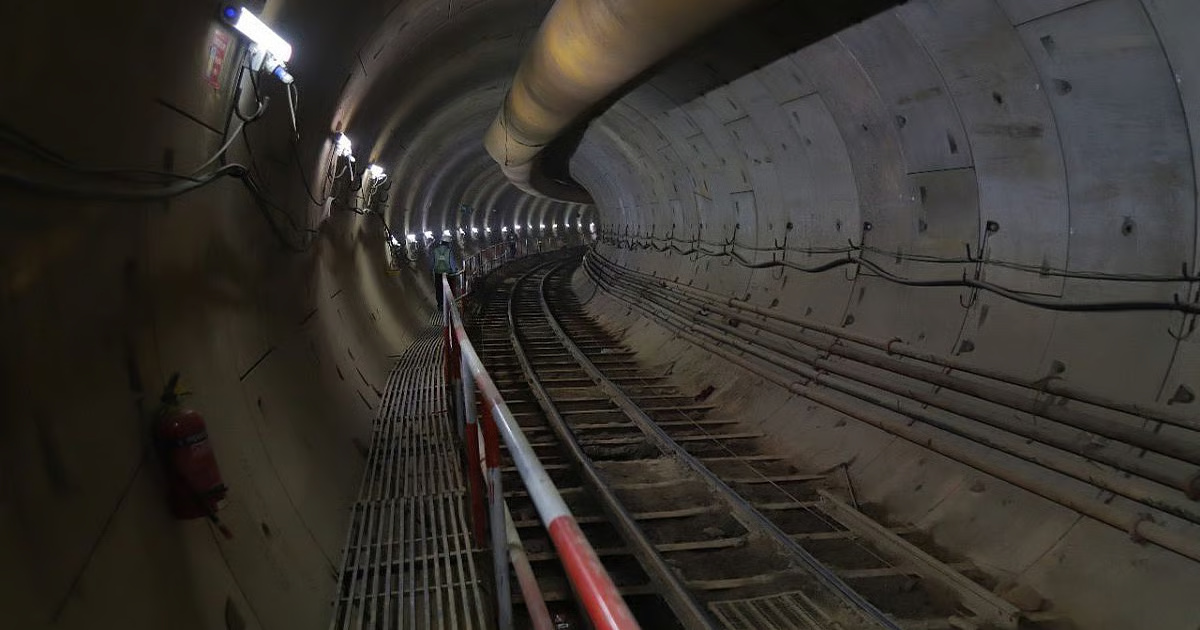
Surat has entered a critical phase in its public transport transformation, with trial runs of the metro system now underway, marking a step toward operational readiness. The development is expected to reshape daily commuting patterns in one of India’s fastest-growing cities, where rising population and economic activity have intensified pressure on existing transport networks. The metro trial is being conducted to assess system performance, safety standards, and operational efficiency before passenger services begin.
Officials indicate that the exercise will help fine-tune schedules, signalling systems, and station readiness, ensuring that the network can handle expected ridership levels once fully launched. The Surat metro trial run reflects a broader shift toward mass transit solutions aimed at reducing congestion and improving urban mobility. As the city continues to expand, reliance on private vehicles has led to increasing traffic congestion and environmental concerns. A functional metro system could provide a reliable alternative, encouraging a modal shift toward public transport. Urban mobility experts note that metro systems are most effective when integrated with other forms of transport. For Surat, this means strengthening feeder services, last-mile connectivity, and pedestrian infrastructure to ensure seamless access to metro stations. Without such integration, the full benefits of the system may not be realised. The Surat metro trial run also has implications for urban development. Transit-oriented growth is likely to emerge around metro corridors, with increased demand for residential and commercial spaces near stations. While this can drive economic activity, it requires careful planning to prevent unregulated expansion and ensure affordability. From a sustainability perspective, metro systems offer a lower-emission alternative to road-based transport, contributing to reduced air pollution and energy consumption. However, long-term environmental benefits will depend on factors such as energy sourcing and ridership levels. There are also economic considerations. Improved mobility can enhance productivity by reducing travel time and connecting key commercial zones more efficiently. For a city like Surat, known for its textile and diamond industries, better connectivity can strengthen business operations and labour mobility.
As the trial phase progresses, attention will shift to timelines for public operations and the system’s ability to meet commuter expectations. The success of the metro will depend not only on infrastructure readiness but also on how well it integrates into the broader urban ecosystem. For Surat, the metro represents more than just a transport project—it is a test of how infrastructure investments can support sustainable, inclusive, and efficient urban growth in the years ahead.
ALSO READ – Surat Conference Targets Growth In Textile Economy
Surat Metro Trial Run Signals Urban Mobility Shift

