


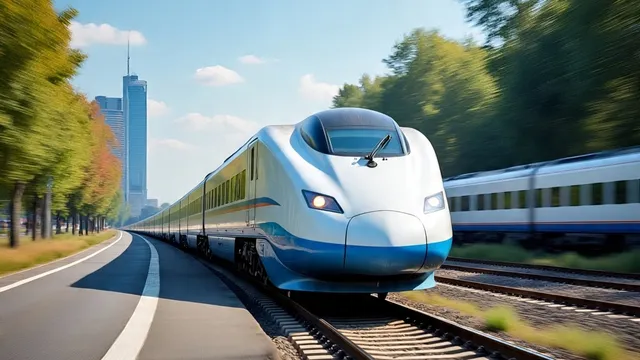
A proposed high-speed rail corridor linking Bengaluru and Hyderabad is moving into a faster planning phase, with Karnataka accelerating discussions around land, feasibility, and infrastructure coordination for what could become one of southern India’s most transformative mobility projects.Officials associated with the project say the corridor aims to significantly cut travel time between the two technology-driven metropolitan economies, potentially reducing the journey to nearly two hours.
The proposal is being examined as part of broader efforts to strengthen economic integration across southern India’s expanding innovation and industrial regions.Urban transport analysts believe the Bengaluru Hyderabad high speed rail corridor could reshape intercity mobility patterns in a region experiencing rapid demographic and economic growth. Both cities have emerged as major centres for information technology, pharmaceuticals, aerospace, electronics manufacturing, and startup ecosystems, creating sustained demand for faster business travel and logistics connectivity.The project is also being viewed through the lens of long-term regional planning. Experts argue that high-speed rail infrastructure has the potential to decentralise economic activity by encouraging the growth of secondary urban clusters along transit routes. Improved rail connectivity may support satellite town development, industrial investment, and labour mobility while reducing dependence on short-haul aviation and highway traffic.
However, planners caution that the success of the Bengaluru Hyderabad high speed rail project will depend heavily on integrated land-use planning and environmental safeguards.Large transport corridors often generate intense real estate speculation and fragmented expansion if urban growth controls are weak. Infrastructure researchers stress the importance of preserving ecological zones, ensuring equitable land acquisition practices, and preventing displacement pressures around future station areas.The proposal arrives at a time when Indian cities are increasingly confronting congestion, rising emissions, and overloaded road networks. Mobility experts note that high-speed rail systems, when powered through cleaner energy transitions and connected to strong public transport networks, can offer lower-carbon alternatives to air and private vehicle travel on dense economic corridors.For Bengaluru in particular, the project may carry broader implications for regional competitiveness. As the city faces mounting traffic congestion and infrastructure stress, stronger intercity rail systems could improve business efficiency while expanding access to wider labour and investment markets across southern India.Industry observers say the corridor could also influence future patterns of commercial development, especially near transit-linked economic zones and logistics hubs.
Yet they warn that infrastructure-led growth must be accompanied by affordable housing, public transit integration, and climate-sensitive planning to avoid repeating the urban sprawl challenges already visible across several Indian metros.While timelines and implementation frameworks remain under discussion, the renewed push signals growing policy interest in positioning high-speed rail as a central pillar of India’s next-generation urban mobility network.
Also Read:Bengaluru Tree Damage Raises Urban Ecology Concerns

