


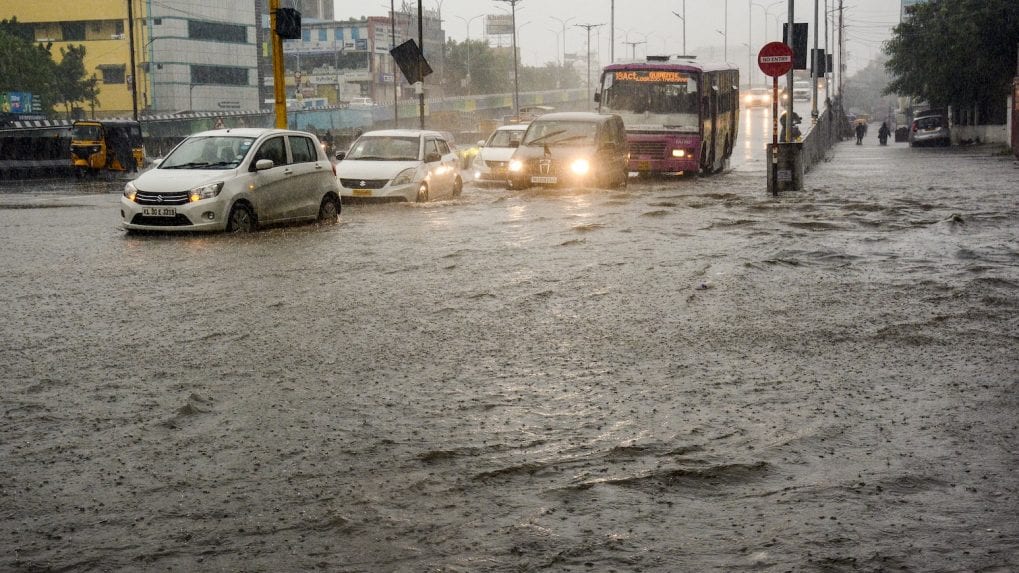
Severe traffic congestion across Bengaluru during heavy rainfall has once again exposed the city’s growing mobility and infrastructure vulnerabilities, after a widely circulated commuter video highlighted a journey of nearly three hours to cover roughly 15 kilometres.The incident, which gained attention on social media this week, has reignited debate over Bengaluru’s worsening transport bottlenecks and the inability of urban infrastructure to cope with rapid population growth, rising vehicle ownership, and increasingly erratic weather conditions.
Commuters across several technology and residential corridors reported prolonged delays as waterlogging, narrowed carriageways, and traffic spillovers disrupted peak-hour movement. Urban mobility experts say Bengaluru’s transport stress is no longer limited to isolated junctions but reflects deeper structural challenges tied to land-use planning and infrastructure capacity.The Bengaluru traffic crisis has become a defining urban governance issue for one of India’s largest economic centres. The city’s expanding technology sector continues to attract investment and migration, yet road infrastructure, public transport integration, and drainage systems have struggled to keep pace with the scale of urban expansion.Transport researchers note that extreme rainfall events are intensifying the impact of congestion in low-lying and overbuilt neighbourhoods.Encroached stormwater networks, shrinking wetlands, and extensive surface concretisation reduce the city’s natural water absorption capacity, leading to flooding that quickly paralyses traffic movement.
For daily commuters, the consequences extend beyond inconvenience. Long travel times are increasingly affecting worker productivity, public health, fuel consumption, and quality of life. Businesses operating in Bengaluru’s technology and commercial districts have also raised concerns about logistical inefficiencies and rising operational uncertainty caused by unpredictable commute patterns.Urban planners argue that the Bengaluru traffic crisis cannot be solved solely through flyovers or road widening projects. Instead, they stress the need for integrated mobility systems centred on mass transit, pedestrian infrastructure, last-mile connectivity, and transit-oriented development. Expanding metro coverage, improving bus reliability, and protecting blue-green infrastructure are seen as critical components of long-term resilience.Climate specialists further warn that cities like Bengaluru must adapt quickly to changing rainfall patterns linked to broader climate shifts. Without resilient drainage systems and ecological restoration measures, intense rain events are likely to trigger more frequent urban disruptions.
The latest viral episode has also intensified public scrutiny of infrastructure governance in India’s technology capital. Citizens’ groups and transport advocates are increasingly demanding coordinated planning between civic agencies, mobility authorities, and urban development bodies to address recurring breakdowns in the city’s transport ecosystem.As Bengaluru continues to expand outward, the challenge facing policymakers is no longer simply reducing congestion, but ensuring that future urban growth remains accessible, climate-responsive, and liveable for millions of residents navigating the city each day.
Also Read:Bengaluru Hyderabad High Speed Rail Gains Pace
