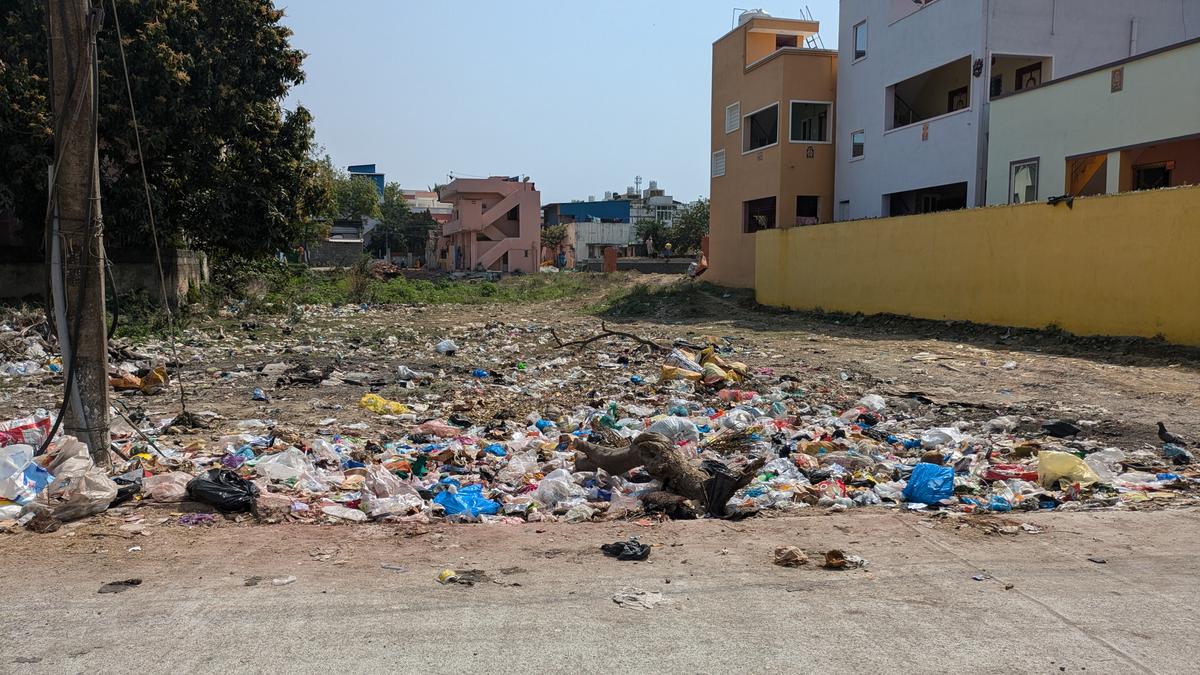
Chennai Garbage Overflow Strains Greams Road Commute
Mounting waste accumulation along a busy stretch of Greams Road in central Chennai is drawing attention to the growing pressure on civic sanitation systems in high-density commercial corridors. Residents and daily commuters say overflowing bins, leaking garbage bags and poorly managed food waste are increasingly affecting pedestrian movement, hygiene conditions and the overall liveability of one of the city’s busiest mixed-use zones.
The affected stretch near the Shafee Muhammad Road junction sees continuous foot traffic due to nearby offices, eateries, hospitals and transport connections. While civic authorities have installed roadside collection bins, waste is frequently seen piled beside containers instead of being properly segregated or cleared on time. Local observers say food leftovers, plastic packaging and liquid discharge from torn garbage sacks often spread onto pavements and carriageways, especially during non-collection hours. Urban planners tracking sanitation trends in Indian metros say such conditions point to a wider governance challenge facing rapidly commercialising neighbourhoods. Central business districts generate significantly higher volumes of mixed waste through restaurants, retail activity and informal vending, yet collection infrastructure often remains designed around conventional residential patterns. As a result, overflow points emerge quickly in areas with round-the-clock activity.
Residents and transport workers operating in the area report that the sanitation problem has become more visible in recent months, particularly during evening hours when commercial establishments dispose of bulk waste. Many pedestrians are forced to navigate narrowed walkways due to dumped garbage, creating both accessibility and public health concerns in an already congested urban corridor.Experts in urban waste management note that poorly regulated commercial disposal practices can also undermine broader climate resilience goals. Organic waste left exposed on streets contributes to methane emissions and attracts stray animals and pests, while unsegregated plastic waste increases pressure on already burdened landfill systems. In dense urban centres like Chennai, inconsistent waste handling can additionally impact stormwater drainage efficiency during heavy rainfall periods. The issue also highlights the growing importance of decentralised waste management strategies in Indian cities. Several municipal administrations across the country are now exploring ward-level composting systems, stricter monitoring of commercial waste generators and technology-enabled collection schedules to reduce roadside dumping. Civic experts argue that enforcement, rather than infrastructure alone, remains critical to improving urban sanitation outcomes.
Officials familiar with municipal operations say increasing collection frequency in commercial pockets could provide temporary relief, but long-term improvements will require better coordination between local businesses, sanitation contractors and enforcement teams. Waste segregation at source and accountability mechanisms for bulk generators are also being viewed as necessary measures in high-footfall zones. For Chennai, where commercial growth and pedestrian density continue to intensify across older urban districts, the conditions on Greams Road underline a broader challenge: maintaining clean, people-first public spaces while balancing the demands of economic activity and sustainable urban management.