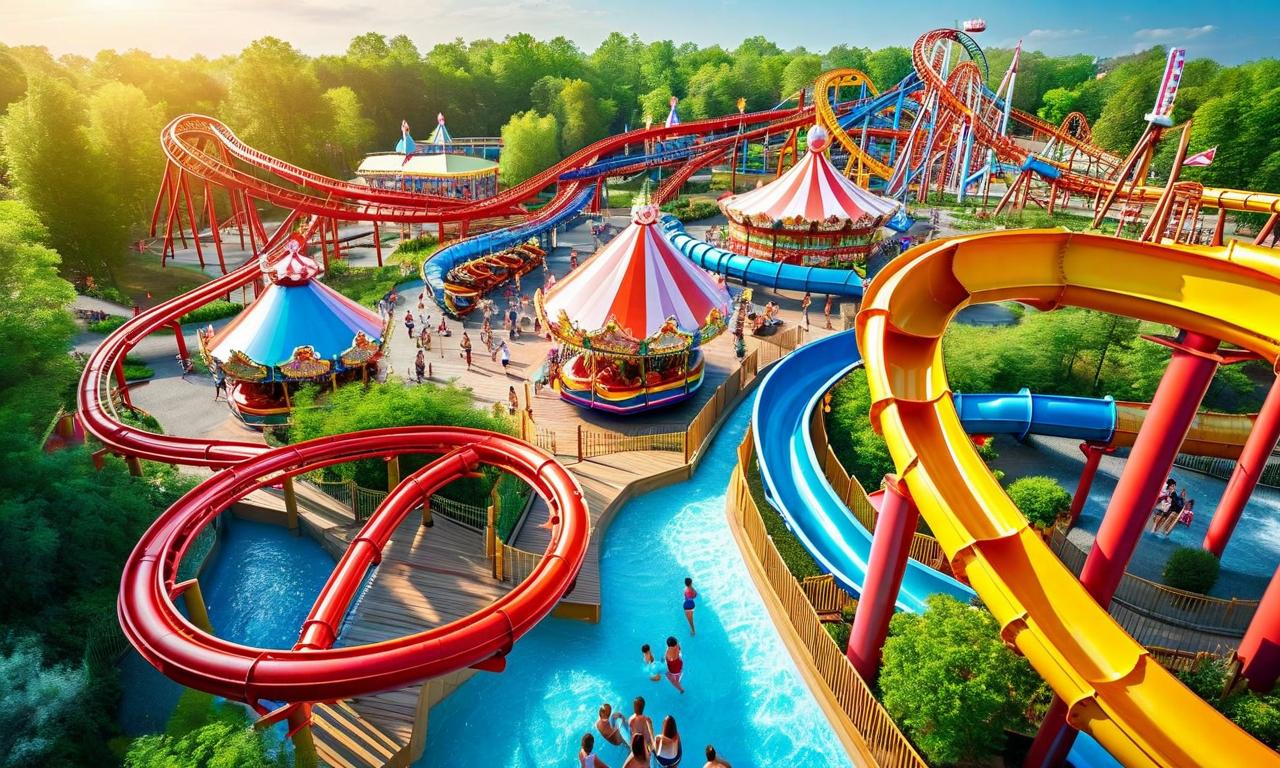
A sharp rise in visitor traffic at Wonderla Holidays’ newly launched Chennai amusement park has helped the leisure operator post its strongest quarterly revenue performance to date, signalling how large-scale entertainment infrastructure is increasingly shaping regional tourism economies and peri-urban development corridors in southern India.
The company’s financial disclosures for the quarter ending March 2026 show consolidated income rising by nearly one-third year-on-year, supported largely by the Chennai facility that opened commercially in December last year. The growth comes at a time when Indian cities are witnessing renewed investment in experience-led destinations aimed at extending tourism spending beyond traditional hospitality and retail zones.Industry analysts tracking the Chennai amusement park say the project reflects a broader urban consumption trend in which integrated leisure hubs are being positioned as anchors for suburban economic growth. Such developments often stimulate surrounding real estate activity, transport demand, and service-sector employment, particularly in emerging metropolitan edges where land availability remains comparatively higher.
The Chennai amusement park contributed close to two million visitors within a few months of operations, a notable figure for a greenfield attraction entering a market already crowded with malls, cinemas, and destination retail formats. However, urban planners caution that long-term success for large entertainment assets will increasingly depend on mobility integration, water efficiency, waste management systems, and heat-resilient infrastructure as climate pressures intensify across southern Indian cities.Wonderla’s latest disclosures also indicate a strong rise in hospitality-linked earnings through its Bengaluru resort operations. The performance has revived industry discussions around whether integrated stay-and-play tourism formats could become central to future amusement park developments in India. Experts in urban tourism note that bundled hospitality models tend to increase visitor duration and local spending, creating more stable regional economic ecosystems than standalone attractions.Despite strong operating growth, the company’s annual profit after tax declined compared to the previous financial year due to a one-time deferred tax adjustment recorded earlier. Excluding that accounting impact, analysts believe operational profitability appears to be stabilising as newer assets scale up and occupancy rates improve.
The Chennai amusement park is now expected to enter a critical consolidation phase over the next two financial years. Market observers suggest that matching visitor volumes seen at the company’s older Bengaluru and Kochi parks will require sustained regional connectivity, repeat visitation strategies, and year-round programming capable of reducing seasonal dependence.The rapid growth of urban leisure infrastructure is also drawing attention from sustainability experts who argue that future entertainment districts must align with low-carbon mobility planning and resource-sensitive operations. Large-format recreational destinations often place pressure on local water systems and transport networks unless integrated with wider metropolitan planning frameworks.As Indian cities compete to strengthen tourism-led economic activity, the performance of the Chennai amusement park may increasingly be viewed not merely as a corporate growth story, but as a case study in how leisure infrastructure is influencing suburban expansion, employment generation, and evolving patterns of urban consumption.