


Karnataka Chief Minister D.K. Shivakumar’s assurance that forest officials should not intimidate farmers with notices in Sakleshpur has brought a long-running conflict into sharper focus: how can the state protect ecologically sensitive landscapes without making residents who have lived and farmed there feel legally insecure? The dispute over the Kasturirangan report is not only an environmental question. It is also about land records, forest rights, administrative discretion, rural incomes and the distribution of authority between Karnataka and the Union government.
At a public interaction in Sakleshpur, Shivakumar said forest officials should not issue notices in a manner that harasses farmers and that people should not live in an atmosphere of fear. He said a solution would be pursued within the legal framework. The Chief Minister also said the government would consider a proposal to send to the Centre on changing the period specified under the Forest Rights Act, describing the existing limits as 25 years for tribal communities and 75 years for others. The precise legal implications of the proposed change were not detailed in the report, but the announcement shows how land documentation and forest regulation have become central to the political debate in the Malnad region.
The immediate anxiety is concentrated in the areas identified for ecological regulation. According to local representatives quoted in the report, 31 villages across eight gram panchayat areas in Alur and Sakleshpur have been included in the sensitive-area list. Local leaders argued that implementation of the Kasturirangan recommendations in their present form could restrict farming, house construction and residence. These claims were made at the public meeting and represent the concerns raised by residents and elected representatives; the report does not provide the final legal notification or a detailed map of the affected areas.
## What the Kasturirangan report means for Malnad residents
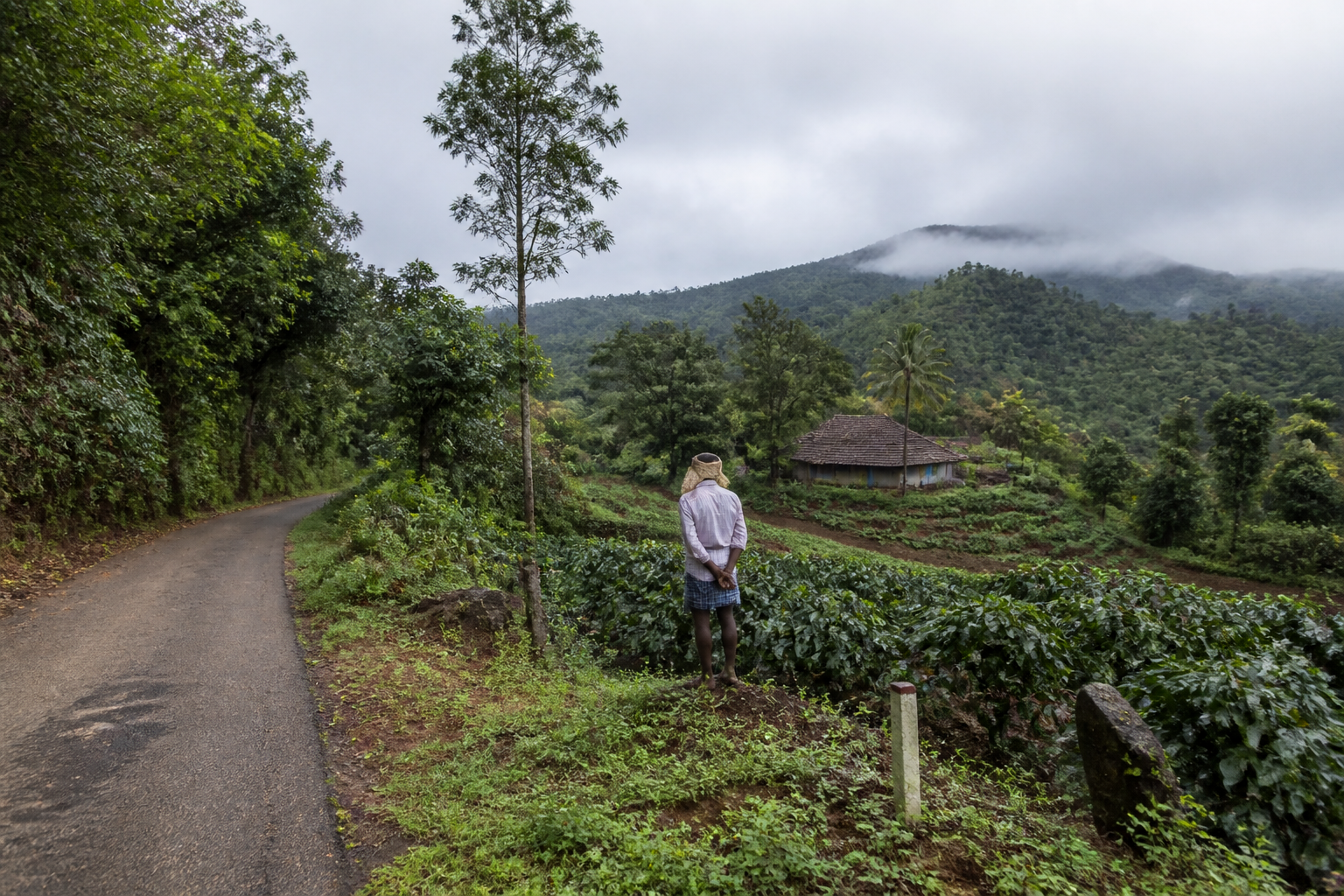
The conflict exists because the same landscape is being viewed through two different administrative lenses. From an ecological perspective, the Western Ghats require protection from activities that can damage forests, water systems and fragile slopes. From the perspective of a farmer or coffee grower, the landscape is also a lived settlement, a source of income and a property inherited or cultivated across generations. A satellite image or land-use map may show continuous green cover, but that green cover can include coffee plantations, farm houses and settled agricultural communities.
Local representatives at the Sakleshpur meeting specifically argued that coffee plantations could appear as green areas in Google surveys and therefore be treated as sensitive ecological zones. This concern points to a basic planning problem: landscape-level identification is not the same as parcel-level verification. A broad ecological classification may be useful for identifying risk, but its effect on individual holdings depends on the ground survey, land records, settlement history, permitted land use and the exact restrictions imposed by the final regulatory framework.
That distinction is important because a notification can affect citizens in several different ways. It can influence whether a house may be built or expanded, whether agricultural activity can continue, whether roads and bridges can be constructed, and whether banks or public authorities accept land documents for transactions and services. The source report does not establish that all such activities would automatically be prohibited. It records the fear expressed by local residents and the demand for a reconsideration of the report. The difference between perceived restriction and legally notified restriction will need to be clarified through official documents and village-level communication.
The Chief Minister’s response also connects the ecological dispute to the routine administration of land. He referred to the disposal of applications under forest rights legislation, the regularisation of unauthorised cultivation under relevant state processes, and the Bagair Hukum system. He said the government would prioritise resolving these problems and issue appropriate records, including land accounts, without requiring citizens to pay bribes. These are not separate issues for residents. A farmer without clear documentation may be more vulnerable when a forest notice is issued, even if the family has occupied or cultivated the land for generations.
## The institutional problem behind forest notices
Forest notices are powerful because they convert an abstract regulatory dispute into an immediate household-level threat. A notice can raise questions about the legal status of land, the authority of the department issuing it, the documents a resident must produce and the consequences of non-compliance. When residents do not understand the process or cannot easily access records, an administrative action can be experienced as eviction pressure even before a final decision is taken.
Shivakumar’s instruction that farmers should not be harassed does not by itself settle the legal status of any property. It does, however, indicate that the state government recognises a communication and enforcement problem. The report does not specify how many notices have been issued, how many cases are pending, which department issued them, or whether the notices concern encroachment, protected forests, ecological zoning or another legal category. Those details matter because different laws and authorities may apply to different parcels.
The Chief Minister said the government would seek a legal solution and consider sending a proposal to the Centre. He also said land matters should be treated as a state concern and that the Union government should give Karnataka greater authority. This reflects the federal dimension of the dispute. Environmental regulation, forest administration, land records and local planning do not sit within a single institution. The state government may be politically accountable to affected residents, while the Union government may control or influence the framework under which ecological or forest protections are implemented.
The proposed role for gram sabhas and zone management plans is therefore significant. Local consultations can help identify actual settlements, agricultural uses, wildlife conflict areas, infrastructure gaps and community priorities. But consultation has practical value only when the views recorded in village meetings affect the final plan, and when residents can see how their submissions were considered. The source report says residents sought physical surveys and discussions on gram sabhas, ecologically sensitive zones and zone management plans. It does not establish that a completed participatory mapping process is already in place.
## Livelihoods are the missing layer in the ecological debate
Sakleshpur’s environmental conflict cannot be understood through land regulation alone. The local legislator cited in the report described the pressures facing coffee growers and farmers, including excessive and deficient rainfall, crop damage, deaths and losses caused by wild elephants, and inadequate roads, bridges and public buildings. He said many farmers had stopped growing paddy because of repeated elephant attacks and had to buy rice from shops instead.
These details show how ecological protection interacts with livelihood insecurity. Farmers in the region are not dealing with one isolated restriction. They are managing climate variability, wildlife conflict, crop losses, weak infrastructure and uncertainty over land status. A regulatory measure that does not account for these pressures can be viewed as an additional risk, even when its stated purpose is conservation.
The government’s proposed teak-related programme, under which farmers would be given responsibility for cultivation and receive a stated share of future income, was presented by the Chief Minister as one way to strengthen rural livelihoods. The report says the proposed distribution would give 70 per cent of the income to the government and 30 per cent to farmers. It does not provide details on eligibility, contracts, timelines, market arrangements or how the programme would interact with existing land and forest regulations. Those implementation details will determine whether such a scheme becomes a meaningful income opportunity or remains an announcement.
Tourism is another part of the government’s response. Shivakumar said Karnataka was preparing a tourism policy for the coastal and Malnad regions to create employment and encourage investment. Sakleshpur is widely seen as a tourism destination, but the meeting’s discussion underlined the difference between how a region appears to visitors and how its residents experience it. Tourism growth does not automatically resolve agricultural distress, wildlife conflict or documentation problems. Its land, infrastructure and environmental consequences would also need to be addressed through local planning.
## The evidence gap that the state must close
The public debate currently contains strong claims on both sides but limited operational detail. Residents and elected representatives say the Kasturirangan report could make farming and housing impossible in affected areas. The Chief Minister has promised legal remedies, consultation and consideration of a proposal to the Centre. Yet the supplied report does not include the final notification, parcel-level maps, the number of affected households, the number and legal basis of forest notices, or a schedule for resolving pending applications.
Without these details, residents cannot easily distinguish between a recommendation, a proposed designation and an enforceable restriction. Nor can policymakers measure whether the problem is concentrated in a few disputed villages or spread across a much larger area. A transparent process would require authorities to identify the boundaries, applicable law, decision-making department, appeal mechanism and status of individual applications. The report records demands for physical surveys, but it does not say when such surveys will begin or who will conduct them.
The institutional challenge is made more complex by the Chief Minister’s emphasis on direct public engagement. He said ministers should visit constituencies regularly, officials should reach people when elected representatives cannot, and the government’s Prajaseva system was intended to reduce the distance between citizens and the administration. Such outreach can surface grievances, but it must eventually connect to written decisions, time-bound disposal of applications and accessible records. Otherwise, public meetings may reduce immediate anxiety without resolving the underlying uncertainty.
The Sakleshpur discussion therefore represents more than a disagreement over one environmental report. It exposes the difficulty of governing landscapes where conservation boundaries, farms, homes, plantations, wildlife habitats and public infrastructure overlap. It also shows why environmental policy cannot be separated from land administration. Protection that ignores residents’ tenure concerns may face resistance, while development decisions that ignore ecological limits can increase long-term risk.
The evidence presently confirms that Karnataka intends to seek a legal and administrative response, that residents are demanding physical verification and local participation, and that the state wants to negotiate the issue with the Centre. What remains unclear is the exact legal effect of the sensitive-area designation, the status of individual forest notices and the timetable for surveys and application disposal. Those documents and implementation steps will determine whether the government’s assurances become enforceable protection for both the landscape and the people living in it.
