


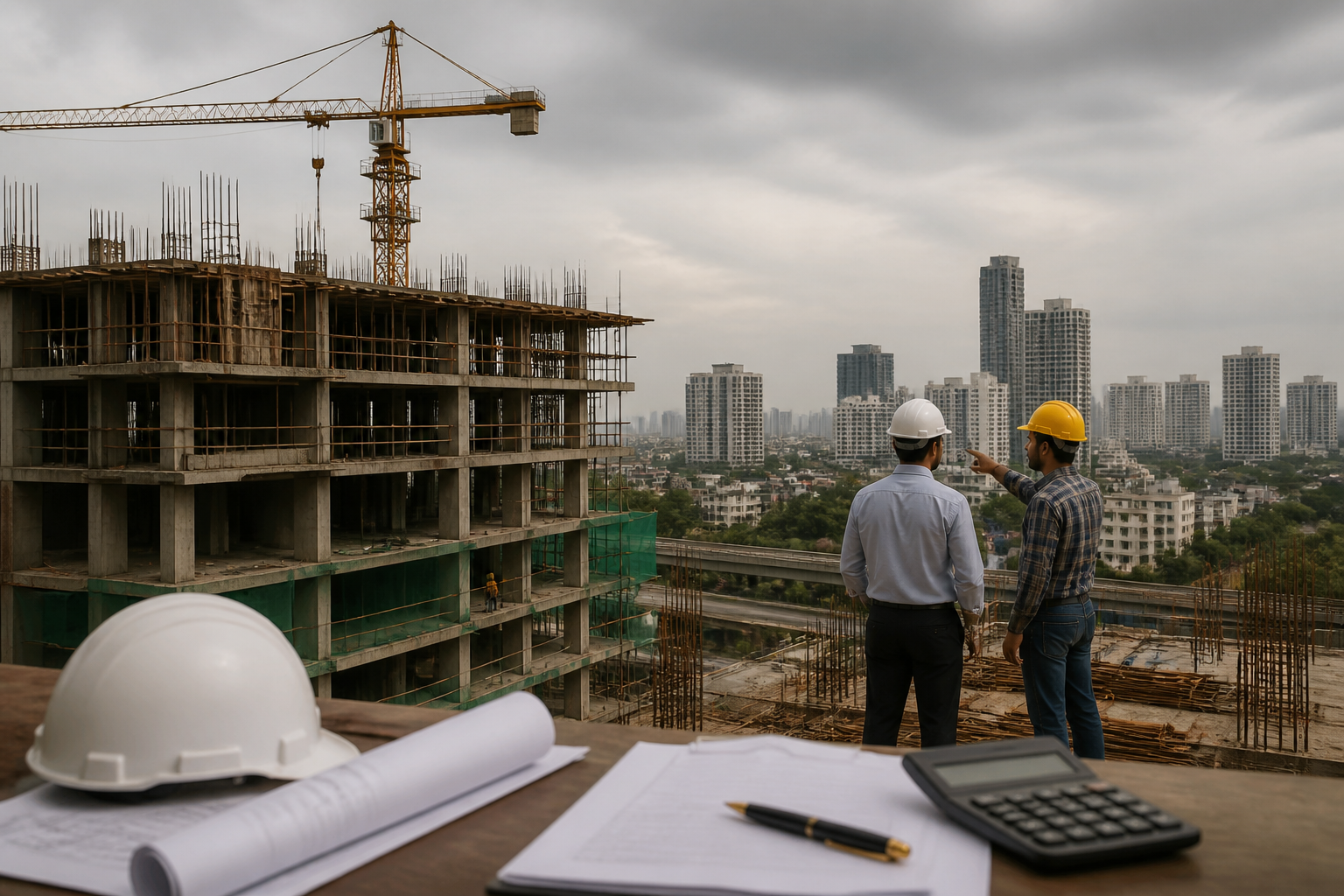
Expectations of an RBI rate hike in October are rising as economists point to accelerating inflation, abundant liquidity and higher interest rates in major economies. The debate matters beyond financial markets: a new tightening cycle could alter the cost of home loans, property demand and construction finance just as India’s urban economy adjusts to the monetary easing that began in 2025.
A poll of 12 economists conducted by The Times of India found that a majority expects the Monetary Policy Committee to raise the repo rate by 25 basis points in October. Some economists expect cumulative increases of 50-75 basis points during the financial year, although others believe the Reserve Bank of India will wait for more data before changing policy.
The difference between these views is not merely a question of timing. It reflects a disagreement over which risk should dominate the RBI’s next decision: inflation that may be broadening across the economy, or liquidity conditions that some economists believe have not yet stabilised. The outcome will determine whether borrowing costs remain supportive for urban consumption and investment or begin to rise again.
The repo rate was kept unchanged at 5.25% at the latest policy meeting. According to the report, this followed a period of gradual easing between February and December 2025, after the RBI had last raised rates in February 2023 to address the post-pandemic inflation surge. An October increase would therefore mark a reversal from the recent easing phase and the first hike since February 2023.
For cities, the most direct transmission would be through borrowing. Housing purchases commonly depend on long-term loans, while developers and contractors use debt to fund land acquisition, construction and project completion. The supplied evidence does not establish how much home-loan or construction-loan rates would rise after a 25-basis-point increase. It does, however, show that economists are debating a sequence of increases rather than an isolated move, with several estimates placing the possible cumulative rise at 50-75 basis points.
That distinction is important for the built environment. A single rate adjustment may be absorbed by borrowers or lenders, but a sequence can change the financial calculations behind a home purchase or a real estate project. For households, higher borrowing costs can affect affordability and purchasing decisions. For developers, higher finance costs can influence project cash flows and the pace at which new supply is brought to market. These are transmission channels, not outcomes established by the poll, and their scale would depend on how banks and other lenders pass on any policy change.
The inflation concern is central to the case for tightening. Upasana Bhardwaj, chief economist at Kotak Mahindra Bank, said average inflation in the second quarter could be around 20 basis points above the RBI’s estimate of 4.7%. IDFC First Bank chief economist Gaura Sengupta estimated that retail inflation in financial year 2026-27 could average 5%, with an upside risk, while expecting a shallow rate-hike cycle of 50-75 basis points.
The nature of the inflation pressure is also becoming part of the policy discussion. SBI chief economic adviser Soumya Kanti Ghosh said inflation was becoming generalised and argued for a 25-basis-point increase in both October and December, followed by a pause to assess incoming data. CareEdge Ratings chief economist Rajani Sinha said the MPC would also consider rising government bond yields and the broadening of price pressures.
These comments suggest that the policy debate is moving beyond a single headline inflation reading. Economists cited in the report are looking at the breadth of price pressures, the direction of bond yields, energy costs and liquidity. That wider set of indicators makes the October decision more difficult to read as a simple response to one number.
Energy prices could become an immediate trigger. ICRA Ratings chief economist Aditi Nayar said an October hike could be brought forward if crude oil prices remained elevated before the MPC meeting. Quant Eco Research economist Yuvika Singhal shared that view, while Emkay Global’s Madhavi Arora and ICICI Bank expected total increases of between 50 and 75 basis points depending on energy-price movements.
For urban households, energy costs and interest rates can interact in ways that affect monthly budgets. The supplied report does not quantify the effect on household spending, rents, home purchases or construction costs. It does establish that energy prices are being considered alongside inflation and liquidity by economists assessing the RBI’s next move. That combination is especially relevant to cities, where housing and transport costs already form a significant part of household financial decisions, although the report provides no city-level estimates.
The opposing case is that the RBI may not be ready to tighten. India Ratings chief economist D K Pant said there was a case for a hike but warned that it could be counterproductive in October because liquidity had not stabilised. He identified liquidity, rather than headline inflation, as the leading indicator for the upcoming meeting and assessed that the RBI could maintain the status quo.
Bank of Baroda economist Madan Sabnavis and HDFC Bank principal economist Sakshi Gupta also expected the MPC to wait. Sabnavis said a clearer picture of the inflation cycle would emerge only by December, after which a 25-50-basis-point increase could be considered. This view places greater weight on sequencing: preserve the current stance in October, observe the data, and act later if inflation remains persistent.
The disagreement reveals the institutional trade-off facing monetary policy. Raising rates may help contain inflation expectations and respond to broader price pressures, but doing so while liquidity is unsettled could produce an unintended drag on borrowing and economic activity. Holding rates may protect the recovery in credit-sensitive sectors, but it could leave the RBI responding later if inflation becomes more entrenched.
That trade-off reaches the urban economy through several institutions rather than one market. The MPC sets the policy rate, banks determine how lending rates respond, borrowers decide whether to proceed with purchases or investment, and developers manage construction schedules and financing exposure. Government bond yields and crude oil prices add further variables. The report does not provide project-level, city-level or bank-level evidence, so the precise impact on housing supply and demand cannot yet be established.
The international context is also influencing expectations. The Times of India report cites central banks in the United States and Japan raising interest rates. It does not specify the policy decisions, dates or transmission channels involved, but economists are treating global monetary conditions as part of the environment in which India’s RBI must act. This indicates that the October debate is not being framed only around domestic inflation; it is also connected to external financial conditions.
For real estate, the key issue is therefore not simply whether the repo rate rises by 25 basis points. It is whether October marks the beginning of a sustained reversal from the easing phase that followed February-December 2025. The poll shows that several economists expect 50-75 basis points of increases during the financial year, while others see a possible pause until December. Until the MPC decides, the direction of borrowing costs remains uncertain.
The evidence confirms that rate-hike expectations have strengthened, but it does not establish that an October increase is certain. The central questions for urban markets are whether inflation continues to broaden, whether liquidity stabilises, how energy prices move, and whether the MPC changes rates, its policy stance, or both. The October policy meeting, followed by the data available before December, will determine whether the concern becomes a new tightening cycle or remains a forecast that does not materialise.
